Carrizo Mountains
The Carrizo Mountains are a segment of the Colorado Plateau located in the extreme northeastern portion of Arizona, U.S. This range is an extinct volcanic…
What is Carrizo Mountains?
The Carrizo Mountains are a segment of the Colorado Plateau located in the extreme northeastern portion of Arizona, U.S. This range is an extinct volcanic formation characterized by an arid landscape. The highest elevation within the mountains is Pastora Peak, which reaches 9,412 feet (2,869 meters). These mountains are situated entirely within the Navajo Indian Reservation.1
What is the Colorado Plateau?
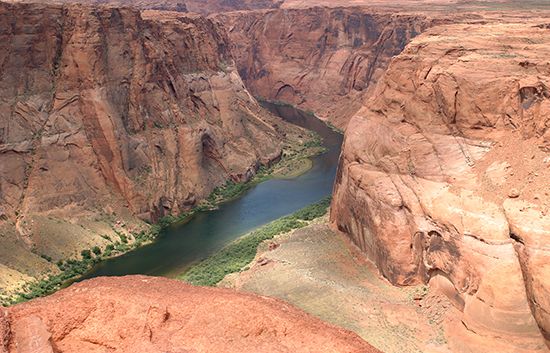
The Colorado Plateau is a vast physiographic province of the Intermontane Plateaus region, covering approximately 130,000 square miles (337,000 square km) across the southwestern United States. It extends over the southeastern half of Utah, southwestern Colorado, northwestern New Mexico, and the northern half of Arizona.2
Bounded by the Rocky Mountains, the Great Basin, and the Sonoran Desert, the region is characterized by high-elevation plateaus, deep river canyons, mesas, and buttes. Unlike adjacent regions, it lacks a history of intense folding, faulting, and volcanic activity, though it features distinct volcanic areas like the Datil section. The Colorado River system has famously carved the Grand Canyon through the plateau’s sedimentary rock layers.23
The province is divided into six sections, including the High Plateaus of Utah, the Uinta Basin, the Canyon Lands, the Navajo section, the Grand Canyon section, and the Datil section. It is home to numerous Native American reservations and protected conservation areas.2
How do extinct volcanic ranges form?
Extinct volcanic ranges are formed through the same fundamental geological processes as active volcanoes, primarily involving the rise of magma from the mantle through the Earth’s crust to the surface. The specific shape, height, and structure of these ranges are determined by several factors, including the volume and chemical composition of the erupted material, the geometry of the volcanic vents, and the environment in which the eruptions occurred.89
A volcano is classified as extinct when it has not erupted in over 10,000 years and is considered unlikely to erupt again. Over time, these once-active volcanic edifices—such as shield volcanoes, stratovolcanoes, or complex volcanoes—cease their eruptive activity as the underlying magmatic supply is exhausted or tectonic conditions change.109
Once activity stops, these ranges are no longer built up by new eruptions and instead become subject to the forces of erosion and weathering. While they no longer pose the risks associated with active volcanism, they remain as permanent geological features that reflect the historical tectonic and volcanic activity of their region.910
What is the history of the Navajo Nation in this region?
The Navajo (Diné) are an Indigenous people who migrated to the American Southwest from Canada, likely between 1100 and 1500 CE. Originally mobile hunters and gatherers, they settled in the region and adopted agricultural practices from the Pueblo peoples. Over centuries, the Navajo engaged in significant cultural exchange with their neighbors, incorporating weaving, pottery, and ceremonial traditions like dry-sand painting.12
In the 19th century, the Navajo faced severe conflict with the United States. In 1863, Colonel Kit Carson was ordered to subdue the tribe, leading to the systematic destruction of their crops and livestock. Approximately 8,000 Navajo were captured and forced on the “Long Walk” to internment at Bosque Redondo, New Mexico, where they remained from 1864 to 1868.1213
Today, the Navajo Nation maintains the largest reservation in the United States, spanning over 24,000 square miles across Arizona, New Mexico, and Utah. They continue to preserve their language and traditions while navigating modern challenges, including ongoing legal efforts to secure water rights for their lands.12
Sources
- Carrizo Mountains — Encyclopædia Britannica
- Colorado Plateau — Encyclopædia Britannica
- Colorado Plateau — Merriam-Webster
- Rocky Mountains - Physiography — Encyclopædia Britannica
- Colorado - Relief and drainage — Encyclopædia Britannica
- Colorado - Climate of Colorado — Encyclopædia Britannica
- Rocky Mountains - Climate — Encyclopædia Britannica
- mountain - Volcanism — Encyclopædia Britannica
- volcano - Determinants of size and shape — Encyclopædia Britannica
- Western Cordillera — Encyclopædia Britannica
- Are Volcanoes Dangerous When They’re Not Erupting? — Encyclopædia Britannica
- Navajo — Encyclopædia Britannica
- Indigenous peoples of the American Southwest - Accommodation and cultural preservation — Encyclopædia Britannica
- Four Corners — Encyclopædia Britannica
Published on · 3 min read