Chersky Range
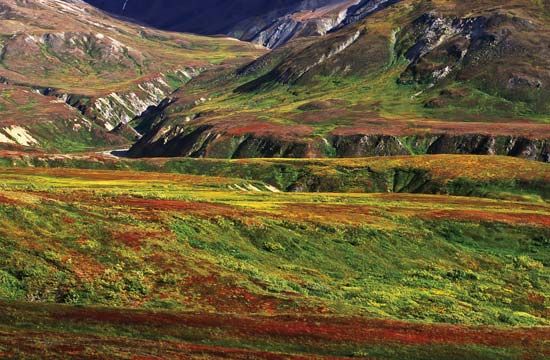
The Chersky Range is a mountain system located in northeastern Russia, stretching over 900 miles (1,500 km) through the Sakha republic and Magadan oblast.
What is Chersky Range?
The Chersky Range is a mountain system located in northeastern Russia, stretching over 900 miles (1,500 km) through the Sakha republic and Magadan oblast.1
As part of the broader Verkhoyansk mountain system, the range consists of parallel, highly dissected ridges. Several peaks reach elevations of approximately 10,000 feet (3,000 meters) above sea level, with Mount Pobeda standing as the highest at 10,325 feet (3,147 meters). The landscape is defined by the deep, narrow valleys of the Kolyma and Indigirka rivers, which carve through the mountains, while the southern portion of the range transitions into a series of plateaus and depressions.1
What is the significance of the Kolyma River in this region?
The Kolyma River is a significant waterway in northeastern Siberia, stretching 1,323 miles (2,129 km) from the Kolyma Upland to the East Siberian Sea. Its importance to the region is defined by both its geography and its somber history:
- Economic Role: The upper basin of the river is a vital site for gold mining, which remains the primary economic activity in the area.
- Historical Significance: During the rule of Joseph Stalin, the upper Kolyma valley served as the location for a massive complex of forced-labour camps. Between 1932 and 1954, more than one million prisoners perished in these camps, marking a tragic chapter in the region’s history.
- Hydrology and Transport: The river serves as a critical, albeit seasonal, transportation route. While it is navigable upstream, its utility is limited by a short ice-free period and severe flooding caused by spring ice jams.
How does the climate of the Chersky Range affect local wildlife?
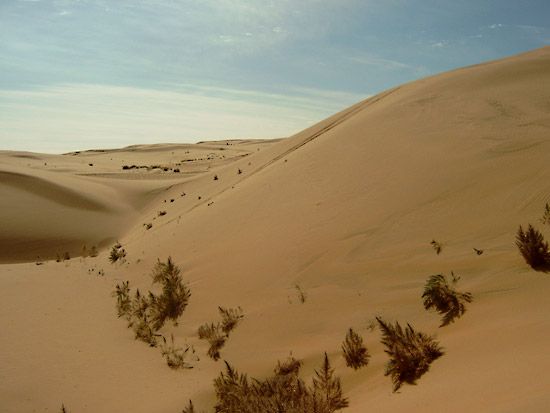
The provided search results do not contain specific information regarding the wildlife of the Chersky Range. However, the range is situated in a region characterized by harsh, cold conditions similar to other high-latitude and high-elevation tundra and cold desert environments.
In such mountainous, frigid regions, animal life is typically shaped by the need to survive extreme winter temperatures and limited food availability. Common survival strategies observed in similar alpine and arctic environments include:
- Vertical Migration: Many species move to lower, forested elevations during the winter to escape the harshest conditions and find shelter, returning to higher altitudes in the summer.6
- Hibernation: Small mammals, such as marmots and ground squirrels, consume large amounts of vegetation in warmer months to sustain themselves through winter hibernation.6
- Food Caching: Animals like pikas and voles store vegetation to feed on during the winter months.6
- Specialized Adaptations: Species in these regions often possess physiological or behavioral traits that allow them to thrive in sparse, cold habitats.7
What are the main differences between the Chersky Range and the Verkhoyansk Mountains?
The Verkhoyansk Mountains and the Chersky Range are both major mountain systems in northeastern Russia, but they differ significantly in scale, elevation, and structure.
Key Differences
Feature
Verkhoyansk Mountains
Chersky Range
Length
Approximately 700 miles (1,100 km)
Over 900 miles (1,500 km)
Maximum Elevation
7,838 feet (2,389 meters)
10,325 feet (3,147 meters)
Structure
A major anticlinal structure created by folding
A series of highly dissected parallel ranges and plateaus
Geography
Forms an arc east of the lower
Lena River
Runs northwest to southeast through Sakha and Magadan
While the Verkhoyansk Mountains are characterized by sparse tundra vegetation and are virtually uninhabited with no crossing routes, the Chersky Range is defined by its majestic gorges carved by the upper courses of the Kolyma and Indigirka rivers. Additionally, the Chersky Range is considered part of the broader Verkhoyansk mountain system.910
Sources
- Chersky Range — Encyclopædia Britannica
- Kolyma River — Encyclopædia Britannica
- Indigirka River — Encyclopædia Britannica
- Kolyma Upland — Encyclopædia Britannica
- Sakha — Encyclopædia Britannica
- Cold desert — Encyclopædia Britannica
- Altai Mountains - Animal life — Encyclopædia Britannica
- Tundra - Alpine mammals — Encyclopædia Britannica
- Verkhoyansk Mountains — Encyclopædia Britannica
- Russia - The mountains of the south and east — Encyclopædia Britannica
Published on · 3 min read