Changbai Mountains
The Changbai Mountains significantly shape their environment by acting as a moisture trap, making the area the wettest part of Northeast China (Manchuria)…
How do the Changbai Mountains influence the climate and ecosystem of the surrounding region?
The Changbai Mountains significantly shape their environment by acting as a moisture trap, making the area the wettest part of Northeast China (Manchuria) with annual precipitation between 30 and 50 inches. The range’s elevation, reaching up to 9,003 feet at Mount Baitou, dictates a harsh climate where higher peaks remain under snow for over six months annually, while the entire region experiences solid snow cover for at least two months.12
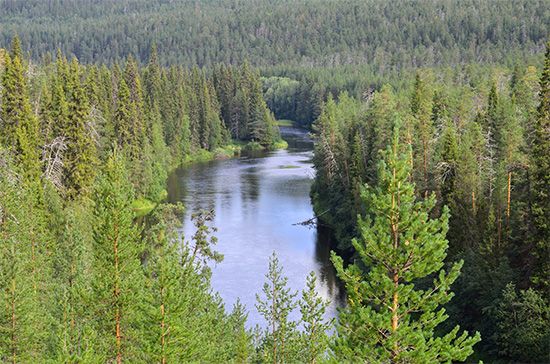
This climate supports a diverse ecosystem characterized by dense coniferous forests and mixed deciduous woodlands1. The vertical zonation of the mountains creates distinct habitats, with alpine meadows appearing only above 6,500 feet. The region’s unique geography—featuring volcanic cones, crater lakes, and hot springs—is protected within the Changbai Mountains Natural Reserve, which preserves a wide variety of wildlife and vegetation. Additionally, the mountains serve as a critical source of medicinal herbs and valuable furs, though human cultivation remains largely restricted to the valley floors.12
How has volcanic activity shaped the Changbai Mountains over time?
Volcanic activity has been a primary force in shaping the eastern sections of the Changbai Mountains during recent geological times. This activity occurred primarily along ancient fault lines, resulting in widespread lava eruptions that transformed the landscape.1
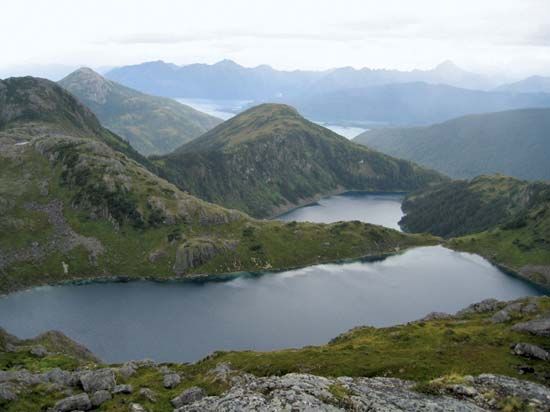
These geological processes led to the formation of numerous extinct volcanic cones and crater lakes throughout the range. The most prominent feature resulting from this activity is Mount Baitou, a volcanic cone that reaches an elevation of 9,003 feet (2,744 meters) and features a crater lake at its summit. Beyond these peaks, the volcanic history has contributed to the presence of hot springs in the region, which are now protected within the Changbai Mountains Natural Reserve.12
What is the cultural and historical significance of the Changbai Mountains to the local populations?
The Changbai Mountains hold deep historical and cultural significance as a long-standing, rugged frontier. The name itself—meaning “Forever White Mountains” in Chinese and “White-Topped Mountains” in Korean—reflects the region’s iconic snow-covered peaks, which have been recognized by these names since at least the 12th century. Historically, the area was known as Buxian Shan or Taibai Shan before adopting its current designation.1
For centuries, the mountains served as an inaccessible wilderness where central government control remained tenuous. The region was primarily inhabited by prospectors and trappers until the late 19th century, when it was formally brought under Chinese administration. The cultural landscape further evolved during the 20th century, particularly through the settlement of Korean communities in the mountain basins before and during the Japanese occupation of Northeast China. Today, this heritage is reflected in the Yanbian Korean Autonomous Prefecture, which encompasses a significant portion of the range within Jilin province, highlighting the enduring connection between the mountains and the local populations.1
What are some popular tourist attractions or activities in the Changbai Mountains?
The Changbai Mountains offer a variety of natural attractions, primarily centered around the Changbai Mountains Natural Reserve. Established in 1960, this protected area spans approximately 850 square miles and serves as a hub for visitors interested in the region’s unique geological and ecological features.
Key attractions and activities include:
- Crater Lake Exploration: Visitors can view the dramatic crater lake located at the summit of Mount Baitou, a prominent volcanic cone within the range.
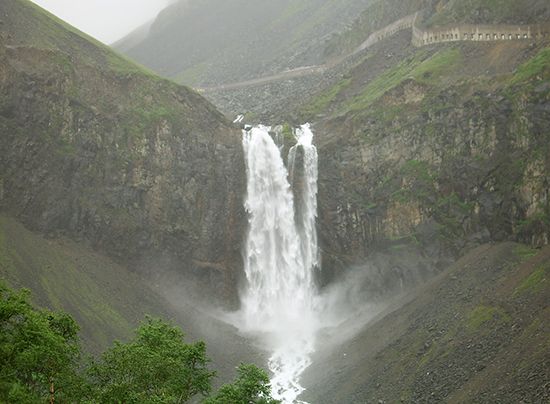
- Natural Landmarks: The reserve is home to a high waterfall and numerous hot springs, which are popular points of interest for those exploring the rugged, volcanic terrain.
- Nature Observation: The area features a great diversity of wildlife and vegetation, set within dense mixed deciduous and coniferous forests.
- Seasonal Activities: Given that the region experiences significant snowfall—with higher peaks covered for more than six months of the year—the mountains provide a distinct environment for winter-related scenery and exploration.
We could dive deeper into the specific types of wildlife found within the reserve or discuss the best times of year to visit these natural sites.
Sources
- Changbai Mountains — Encyclopædia Britannica
- China - The Changbai Mountains — Encyclopædia Britannica
Published on · 3 min read