Colorado River
Historically, various indigenous groups have relied on the Colorado River, utilizing its resources through distinct subsistence strategies based on their…
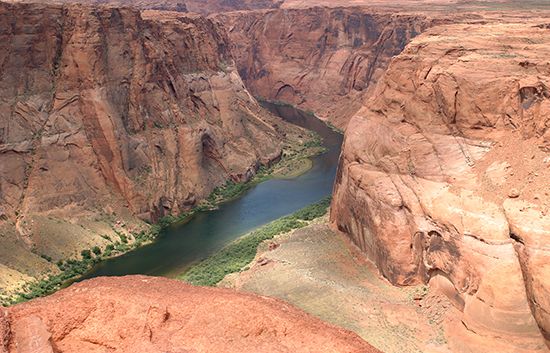
What indigenous peoples have historically lived along the Colorado River, and how did they use its resources?
Historically, various indigenous groups have relied on the Colorado River, utilizing its resources through distinct subsistence strategies based on their geography.
In the upper basin, Ute and Southern Paiute tribes traditionally engaged in hunting and gathering across the plateaus and canyonlands.1
In the lower basin, the “River Yuman” peoples—including the Mojave, Quechan, Cocopa, and Maricopa—settled densely along the fertile bottomlands. Because the river’s flow was too variable for canal irrigation, these groups practiced floodplain farming. They took advantage of the river’s natural spring overflows, which deposited fresh silt and moisture, allowing them to cultivate corn, beans, pumpkins, melons, and grasses. These harvests were supplemented by fishing, hunting small game, and gathering wild fruits and seeds.12
Other groups, such as the Upland Yuman, Akimel O’odham, and Tohono O’odham, adapted to smaller streams or ephemeral waterways by building stone canals or check dams to manage water for agriculture.2
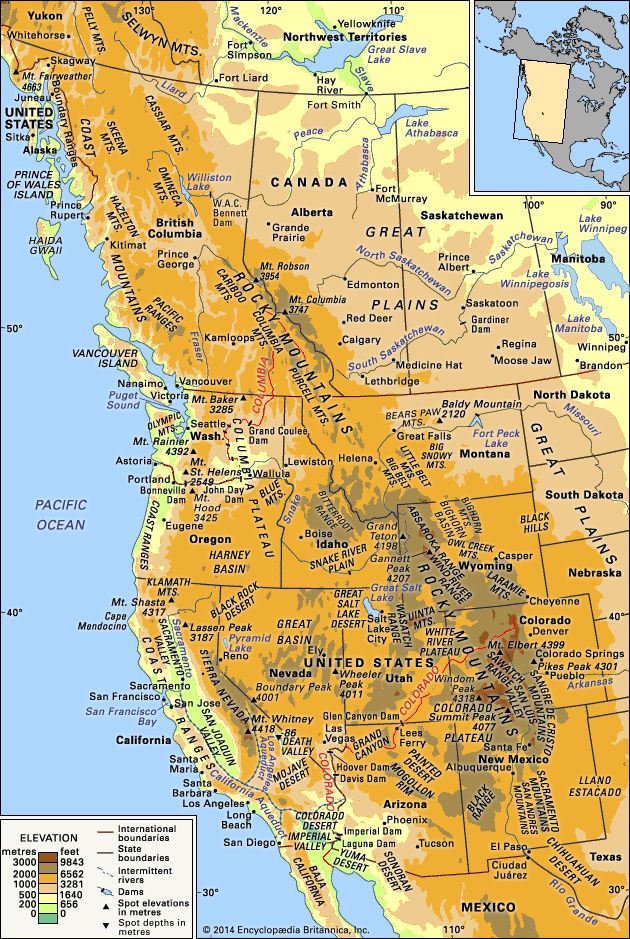
What are some of the main recreational activities associated with the Colorado River?
The Colorado River is a significant destination for outdoor recreation, largely facilitated by the construction of major dams and the creation of large reservoirs along its course.
Key recreational activities associated with the river include:
- Boating and Water Sports: The reservoirs created by the river’s dams, such as Lake Mead (formed by Hoover Dam) and Lake Powell, serve as major hubs for boating, swimming, and other water-based activities.3
- Hiking and Backpacking: Many areas along the river and its tributaries, such as those found in Capitol Reef National Park, offer extensive trail systems for day hiking and remote backpacking.4
- Sightseeing and Tourism: The dams themselves and the scenic landscapes they have shaped are major tourist attractions. Visitors frequently explore the surrounding canyonlands and geological formations, such as the Waterpocket Fold.34
- Camping: Developed campgrounds are maintained in various locations along the river system, providing opportunities for visitors to stay within these protected natural areas.4
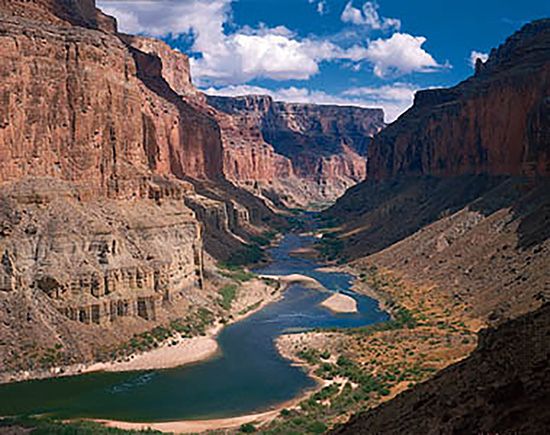
How has the Colorado River been important for the development of the American Southwest?
The Colorado River has been fundamental to the development of the American Southwest, serving as a vital lifeline in an otherwise arid region. Through the construction of extensive water-storage projects, the river has been transformed into a managed system that supports agriculture, municipal growth, and industry.
Key aspects of its development include:
- Multipurpose Infrastructure: Beginning with the Boulder Canyon Project Act in 1928, the river became the first drainage basin to utilize multipurpose dams, such as Hoover Dam, for hydroelectric power, flood control, and irrigation.
- Urban Expansion: Massive engineering feats like the Central Arizona Project transport water hundreds of miles to sustain major metropolitan areas, including Phoenix, Tucson, Los Angeles, and San Diego.36
- Interbasin Diversions: Complex networks of tunnels and pipelines, such as the Colorado–Big Thompson Project, divert water beneath the Continental Divide to support the growing population and agricultural needs of the eastern slope of the Rocky Mountains.37
While these projects enabled rapid regional growth, the river is now over-apportioned, leading to ongoing litigation, environmental challenges, and the need for innovative water management strategies.3
How do urban areas like Las Vegas and Phoenix rely on the Colorado River for their water supply?
Urban areas like Las Vegas and Phoenix rely heavily on the Colorado River to sustain their populations in the arid American Southwest. Because local groundwater supplies have been significantly depleted, these cities have developed extensive infrastructure to transport and manage river water.7910
Las Vegas
More than four-fifths of the water supply for Las Vegas is drawn directly from the Colorado River at Lake Mead, the reservoir created by Hoover Dam. As regional drought and population growth have caused water levels in the reservoir to drop to historic lows, the city has invested in specialized low-level pumping infrastructure to ensure continued access to this vital resource.911
Phoenix
The Phoenix metropolitan area relies on the Central Arizona Project (CAP), a massive system of pumps and canals that transports water 336 miles from Lake Havasu on the Colorado River. While the region historically depended on local groundwater and the Salt River, the depletion of these subterranean stores has made the Colorado River an essential component of the city’s municipal water portfolio.7810
Both cities operate within a complex framework of interstate agreements and conservation mandates, as the river is currently over-apportioned and faces ongoing challenges from long-term drought.123
Sources
- Colorado River - Early inhabitants — Encyclopædia Britannica
- Indigenous peoples of the American Southwest - The Yuman, Akimel O’odham , and Tohono O’odham — Encyclopædia Britannica
- Colorado River - Economic development — Encyclopædia Britannica
- Capitol Reef National Park — Encyclopædia Britannica
- Colorado River — Encyclopædia Britannica
- Rocky Mountains - Water resources — Encyclopædia Britannica
- Phoenix - City site — Encyclopædia Britannica
- Arizona: Top Questions — Encyclopædia Britannica
- Las Vegas - City site — Encyclopædia Britannica
- Arizona - Development of commercial agriculture — Encyclopædia Britannica
- 6 Lakes That Are Drying Up - Lake Mead — Encyclopædia Britannica
- Lake Mead — Encyclopædia Britannica
- water scarcity - Engineering technologies — Encyclopædia Britannica
Published on · 4 min read