Cedar
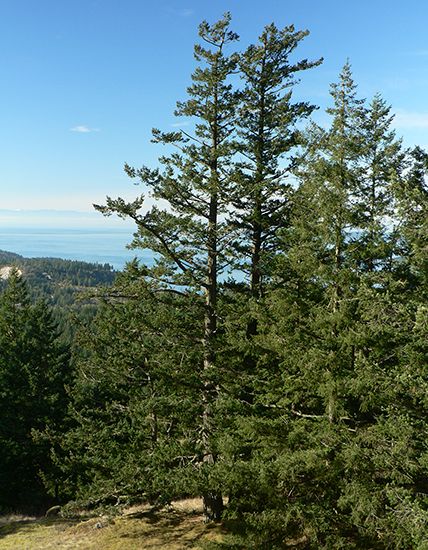
True cedars belong to the genus Cedrus (family Pinaceae) and consist of four species native to specific mountainous regions:
What are the main types of cedar trees and where are they typically found?
True cedars belong to the genus Cedrus (family Pinaceae) and consist of four species native to specific mountainous regions:1
- Atlas cedar (C. atlantica): Native to the Atlas Mountains of North Africa.1
- Cyprus cedar (C. brevifolia): Native to Cyprus.1
- Deodar (C. deodara): Native to the western Himalayas.1
- Cedar of Lebanon (C. libani): Native to the Mediterranean region.1
Many other trees are commonly called “cedars” but belong to the cypress family (Cupressaceae). These include:
- Western red cedar (Thuja plicata): Native to the Pacific coast of North America4.
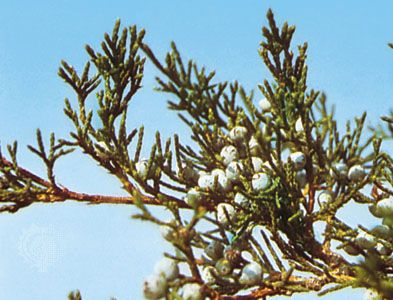
- Eastern red cedar (Juniperus virginiana): Native to eastern North America, often found in poor or limestone soils.2
- Incense cedar: Another conifer often grouped with these species due to its aromatic wood.1
While true cedars are valued for their timber and ornamental use, the term is broadly applied to various decay-resistant, aromatic evergreens.1
What are the traditional and modern uses of cedar wood?
Cedarwood is prized for being light, soft, resinous, and highly durable, maintaining its integrity even when exposed to soil or moisture. Because of these properties, it has long been a staple material for both traditional and modern applications.51
Common Uses
- Construction and Outdoor Structures: Due to its natural resistance to decay and moisture, cedar is frequently used for shingles, fence posts, pilings, and greenhouse fittings.514
- Storage and Preservation: Its aromatic qualities and insect-repellent nature make it a preferred material for chests and closet linings, which help protect stored items.51
- Manufacturing: The wood is a traditional choice for the production of pencils.51
- Marine Applications: Because it resists rot, it is also utilized in boat making.4
- Personal Care: An aromatic oil distilled from the wood is commonly used in various toiletries.1
While “true” cedars (Cedrus) are used as structural timber in their native regions, many other conifers—such as giant arborvitae, incense cedar, and red cedar—provide the majority of the cedarwood found in these commercial products.51
How long does it take for a cedar tree to reach maturity?
The provided search results do not contain specific information regarding the number of years it takes for a cedar tree to reach maturity. While the articles describe the physical characteristics of mature trees—such as their height, bark texture, and leaf structure—they do not specify a timeline for their growth stages.31
How do cedar trees differ from other coniferous trees like pine or spruce?
It is a common misconception that all trees called “cedar” belong to the same group; in fact, there is a distinct difference between “true” cedars and other conifers often referred to by the same name.
True Cedars vs. Other Conifers
True cedars belong to the genus Cedrus within the Pinaceae family, which also includes pine, spruce, and fir trees. There are only four species of true cedar: the Atlas cedar, the Cyprus cedar, the deodar, and the cedar of Lebanon.516
Many other trees commonly called “cedars”—such as the giant arborvitae, incense cedar, and certain junipers—are not members of the genus Cedrus. While these trees are also evergreen and share the aromatic, decay-resistant, and insect-repellent qualities of true cedarwood, they are botanically distinct.65
Key Characteristics
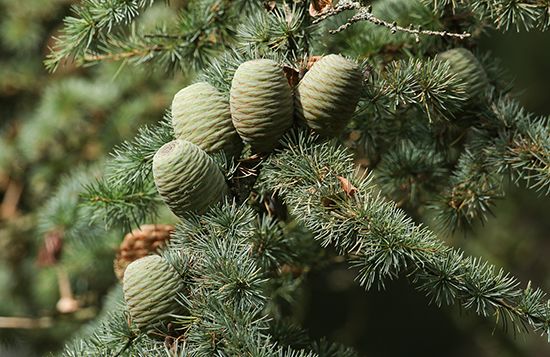
- True Cedars (Cedrus): These are tall trees with massive, spreading branches. Their needlelike leaves are rigid, three-sided, and grow in dense tufts on short spurs. They produce large, barrel-shaped, resinous female cones with thin, overlapping scales.5
- General Conifer Traits: Like other members of the Pinaceae family, true cedars bear both male and female reproductive structures on the same plant.1
Sources
- cedar — Encyclopædia Britannica
- red cedar — Encyclopædia Britannica
- eastern red cedar — Encyclopædia Britannica
- Western red cedar — Encyclopædia Britannica
- Did you know? — Merriam-Webster
- Pinaceae — Encyclopædia Britannica
Published on · 3 min read