Eastern Red Cedar
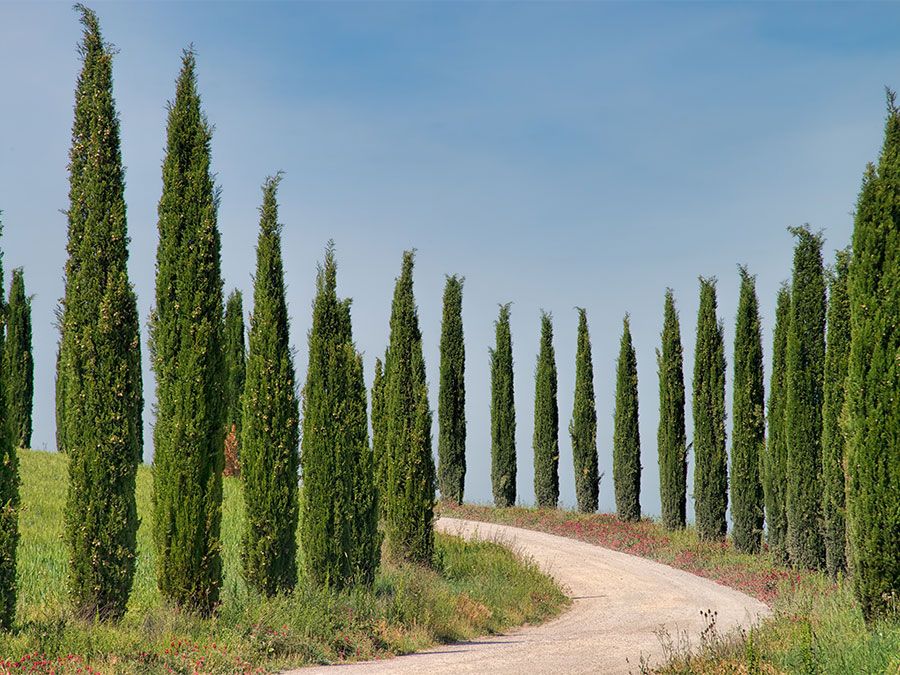
The eastern red cedar (Juniperus virginiana) is an evergreen tree belonging to the cypress family, native to North America.
What are the key characteristics and physical features of the eastern red cedar?
The eastern red cedar (Juniperus virginiana) is an evergreen tree belonging to the cypress family, native to North America.12
Physical Features
- Size: It typically reaches heights of 12 to 15 meters (40 to 50 feet) with a diameter of 30 to 60 cm.1
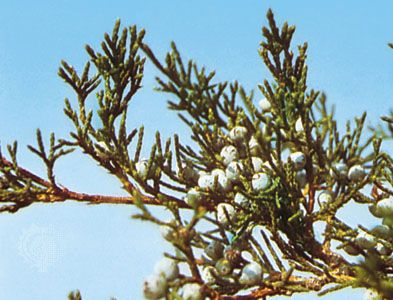
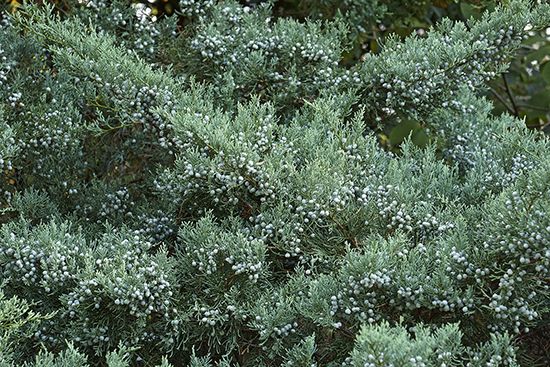
- Foliage: The tree features needlelike juvenile foliage, while mature leaves are dark green and scalelike.1
- Bark: Its fibrous bark ranges from reddish brown to ashy gray and separates into long, fringed scales.1
- Cones: The tree produces rounded, fleshy green cones (about 0.7 cm in diameter) that mature into a dark blue color, often covered by a gray, waxy material.1
Key Characteristics
The eastern red cedar is valued for its fragrant, decay-resistant wood, which is commonly used for cabinets, fence posts, and pencils. While it serves as an ornamental species, it is also known to aggressively colonize open areas like pastures and prairies, leading some land managers to classify it as a weed.13
What are some common diseases or pests that affect eastern red cedar trees?
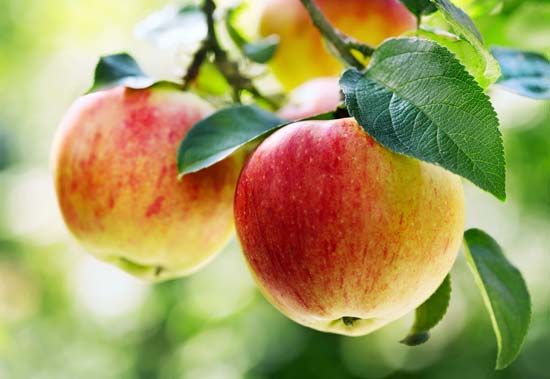
The eastern red cedar (Juniperus virginiana) is primarily susceptible to a group of fungal diseases known as rusts. These diseases require two different hosts to complete their life cycles, typically alternating between the eastern red cedar and members of the rose family, such as apple and crabapple trees.tree) and crabapple trees.4
Common Fungal Diseases
- Cedar-apple rust: Caused by the fungus Gymnosporangium juniperi-virginianae, this disease manifests on cedars as greenish-brown to chocolate-brown galls known as “cedar apples.” During rainy spring weather, these galls produce jellylike yellow to orange-brown spore horns.4
- Related Rusts: Similar infections include cedar-quince rust (caused by G. clavipes) and cedar-hawthorn rust (caused by G. globosum), which also infect junipers and various rose family members.4
These diseases can be managed by removing one of the host species from the area or by applying fungicides at appropriate times during the spring. Interestingly, while the tree is vulnerable to these fungi, its wood is famously resistant to moths and other pests, which is why it is frequently used for cedar chests and closet linings.45
Are there any threats or challenges facing eastern red cedar populations?
Contrary to the implication that eastern red cedar populations are under threat, the species is actually highly successful and often considered an invasive nuisance in its native range. Rather than facing decline, the eastern red cedar (Juniperus virginiana) is known for its aggressive expansion into new environments.1
Challenges of Overpopulation
- Invasive Behavior: The tree frequently colonizes open grassy areas, including pastures, prairies, and glades. This rapid spread can displace native grasses and alter local ecosystems.1
- Management Concerns: Because of its tendency to dominate open landscapes, many botanists and land managers classify the eastern red cedar as an undesirable weed. Efforts are often required to control its growth and prevent it from overtaking agricultural or ecologically sensitive lands.1
While the species is a valuable source of timber for cabinets and pencils, its primary “challenge” is not survival, but rather its status as a prolific colonizer that requires active management to keep its populations in check.1
Where is the eastern red cedar native to, and in what types of environments does it thrive?
The eastern red cedar (Juniperus virginiana) is native to eastern North America.1
This evergreen tree is highly adaptable and thrives particularly well in poor or limestone soils. Beyond these specific soil conditions, the species is a prolific colonizer that frequently invades various open environments, including:1
- Glades
- Pastures
- Prairies
- Other open grassy areas1
Because of its ability to rapidly establish itself in these diverse landscapes, it is sometimes viewed as an undesirable weed by land managers and botanists, despite its historical value as a source of fragrant, durable timber for items such as cabinets, fence posts, and pencils.16
Sources
- eastern red cedar — Encyclopædia Britannica
- red cedar — Encyclopædia Britannica
- cedar — Encyclopædia Britannica
- Cedar-apple rust — Encyclopædia Britannica
- juniper — Encyclopædia Britannica
- eastern red cedar — Merriam-Webster
Published on · 3 min read