Charolais
The Charolais is a breed of large, light-colored cattle that originated in the Charolais region of France. Originally developed for draft purposes, the breed…
What is Charolais?
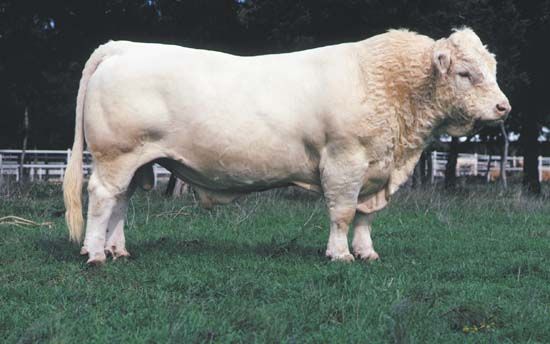
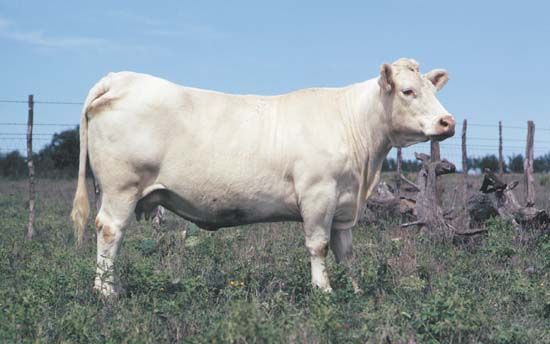
The Charolais is a breed of large, light-colored cattle that originated in the Charolais region of France. Originally developed for draft purposes, the breed is now primarily kept for beef production and is recognized as the foremost meat-cattle breed in Europe.12
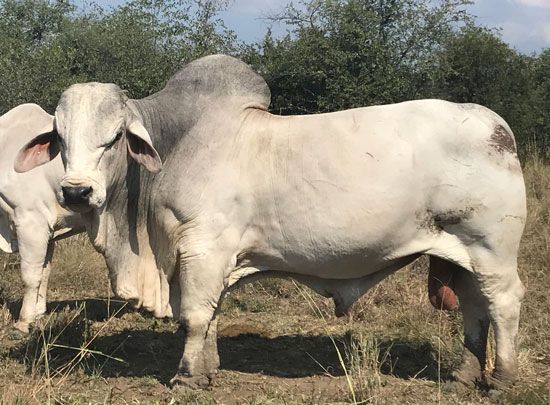
Typical Charolais cattle are massive, horned, and cream-colored or white. They are highly valued for their superior size, heavy muscling, and rapid rate of weight gain. Because of these traits, the breed is extensively used for crossbreeding with other beef and dairy cows to improve market cattle production and leverage hybrid vigour. A notable example of such a cross is the Charbray, which is a mixture of Charolais and Brahman genetics. While the breed was introduced to the United States in 1936, its population growth was initially limited by disease-related import restrictions.132
What is the difference between beef cattle and dairy cattle?
The primary difference between beef and dairy cattle lies in their selective breeding, which has been tailored over generations to emphasize specific economic outputs—meat versus milk.45
Key Differences
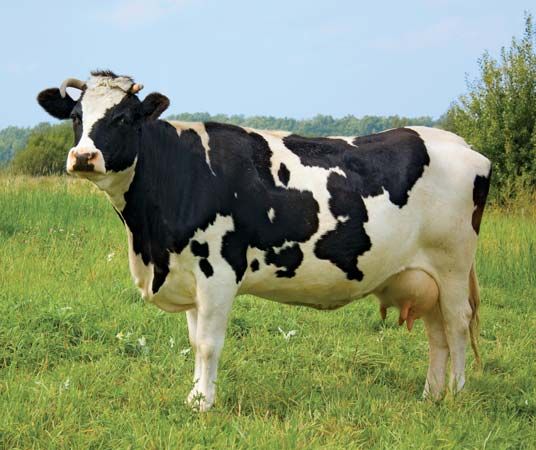
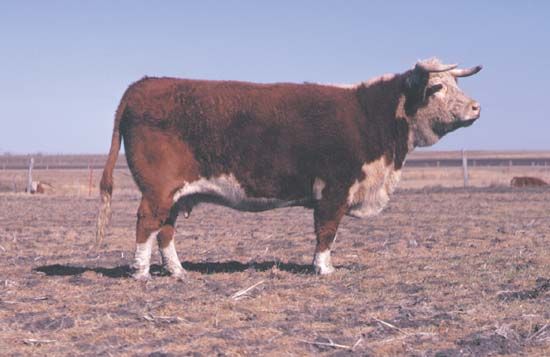
- Primary Purpose: Dairy cattle, such as the Holstein-Friesian, are bred to produce large quantities of milk. In contrast, beef cattle, such as the Hereford and Aberdeen-Angus, are bred for muscle development and efficient weight gain.4
- Physical Characteristics: Beef cattle tend to be much heftier than dairy cows, as their physiology is optimized for meat production. Dairy cows often exhibit a more wedge-shaped or deep, fleshy body structure depending on the breed.45
- Management and Farming: Dairy operations are typically more intensive, as cows are handled daily for milking. Beef cattle are often farmed in less intensive systems, frequently spending much of their lives on pasture before moving to feedlots for finishing.46
- Breeding Practices: Because dairy bulls can be aggressive, modern dairy breeding relies heavily on artificial insemination. Beef cattle management often utilizes pasture breeding or crossbreeding to leverage hybrid vigour for better growth rates.42
While these specializations exist, some breeds are considered “dual-purpose,” capable of providing both milk and meat.5
Why do farmers choose to crossbreed different cattle breeds?
Farmers choose to crossbreed cattle primarily to combine complementary traits and to capitalize on heterosis, or hybrid vigour. By mating animals from two different breeds, producers can enhance the economic value of the offspring, as the resulting animals often display performance levels that exceed the average of their parent breeds, particularly in traits like size, growth rate, and fertility.9
Crossbreeding allows farmers to merge desirable characteristics that may not exist in a single breed. For example, crossing Angus cattle, known for high-quality beef, with Charolais, known for their large size, produces offspring that possess both qualities. Additionally, crossbreeding is essential for adapting livestock to specific environments. The Santa Gertrudis and Brangus breeds were developed by crossing Brahman cattle with other breeds to introduce heat and insect resistance while maintaining desirable carcass qualities.910
Because hybrid vigour is most pronounced in the first generation, farmers must maintain purebred lines to continue producing high-performing crossbred stock.9
What are some other famous cattle breeds from France?
France is home to several prominent cattle breeds, many of which are recognized globally for their contributions to beef and dairy production. Beyond the well-known Charolais, other significant French breeds include:
- Limousin: Originating in west-central France, this is the second most important meat breed in Europe after the Charolais. These cattle are heavily muscled, relatively lean, and typically finer-boned than the Charolais.1
- Normande: This is the most prevalent breed in France. Unlike the specialized beef breeds, the Normande was developed as a dual-purpose animal, making it valuable for both milk and meat production.1
- Maine-Anjou: This breed is notable for being the largest of the French cattle breeds.1
These breeds reflect France’s long history of livestock development, with cattle raising remaining a vital component of the country’s agricultural economy, particularly in the humid western regions and the Massif Central.3
Sources
- Charolais — Encyclopædia Britannica
- Cow - Beef cattle breeds — Encyclopædia Britannica
- Livestock farming - Beef cattle breeds — Encyclopædia Britannica
- Cow - Domestication and economic production — Encyclopædia Britannica
- Livestock farming - Beef cattle management — Encyclopædia Britannica
- Dairy cattle breeds — Encyclopædia Britannica
- Livestock farming - Beef cattle feed — Encyclopædia Britannica
- Cattle — Encyclopædia Britannica
- Animal breeding - Crossbreeding — Encyclopædia Britannica
- Origins of agriculture - Beef cattle — Encyclopædia Britannica
- France - Dairying and livestock — Encyclopædia Britannica
- Holstein-Friesian: Top Questions — Encyclopædia Britannica
Published on · 3 min read