Hereford
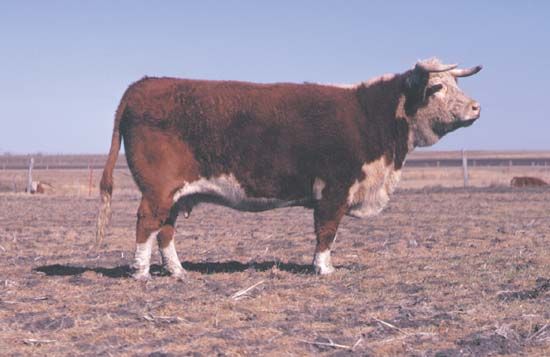
The Hereford is a prominent beef cattle breed characterized by its red coat with white markings and a white face. Developed in England, the breed is noted…
How does the Hereford breed compare to other popular beef cattle breeds?
The Hereford is a prominent beef cattle breed characterized by its red coat with white markings and a white face. Developed in England, the breed is noted for its early maturity, compact, low-set conformation, and a notable ability to thrive under adverse environmental conditions.12
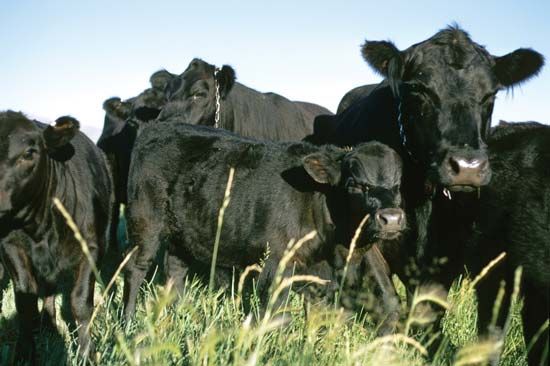
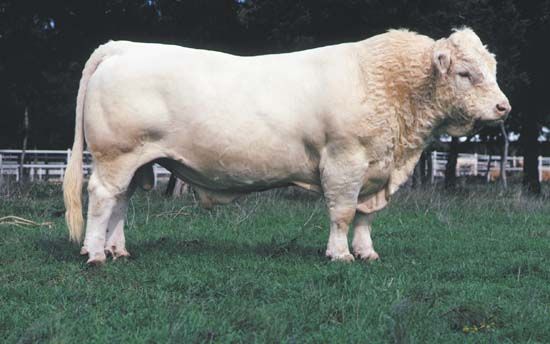
Compared to other popular breeds, the Hereford’s traits offer distinct advantages in various global range conditions. While breeds like the Angus are recognized for their adaptability to varied climates and hornless nature, and the Charolais is prized for its large size and utility in crossbreeding, the Hereford remains a staple for its hardiness. Additionally, the Polled Hereford strain was developed in the United States to provide a naturally hornless version of the traditional breed, further increasing its versatility for producers.123
Whether you are interested in the specific history of British breeds or the genetic development of crossbred cattle like the Brangus or Santa Gertrudis, we could dive deeper into how these different lineages are utilized in modern agriculture.
What are some of the notable genetic traits that Hereford cattle are known for?
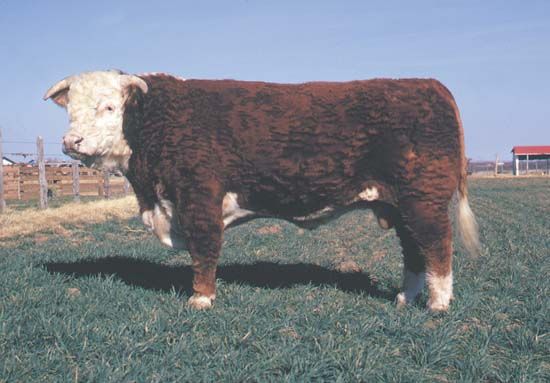
Hereford cattle are recognized for several notable genetic and physical traits developed through generations of selective breeding. Their most iconic characteristic is their distinct color pattern: a red body (ranging from cherry to mahogany) with a white face, white flanks, white underline, white stockings, and a white crest on the neck.13
Key genetic and performance traits include:
- Hardiness: The breed is highly regarded for its ability to thrive under adverse environmental conditions, which has contributed to its widespread success in diverse climates across North America, Australia, and South America.1
- Conformation: They are typically of medium size with a compact, low-set body structure.14
- Maturity: The breed is known for its early maturity.1
- Adaptability and Improvement: While traditionally horned, the Polled Hereford strain was developed in the United States around 1900 from naturally hornless mutations. This strain retains the general characteristics of the horned Hereford but offers the advantage of being hornless, and it is often noted for a faster rate of weight gain.13
Modern breeding efforts continue to focus on increasing the breed’s mature size and rate of weight gain to meet the market demand for leaner, more economical beef.3
How has the Hereford breed influenced modern cattle breeding and the beef industry?
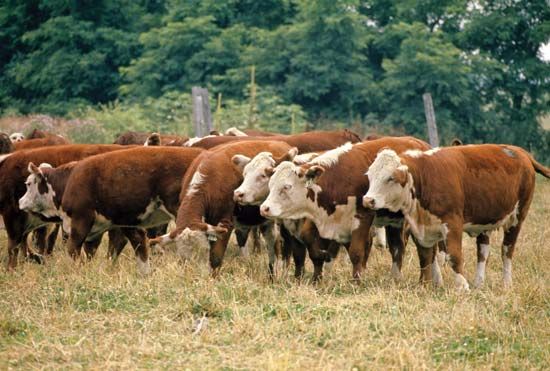
The Hereford breed has played a foundational role in the global beef industry, serving as a primary model for selective breeding and crossbreeding programs. Originating in England, the breed was among the first to be systematically developed for beef production, establishing standards for uniformity, early maturity, and hardiness that influenced cattle farming worldwide.145
Its influence on modern breeding is evident in several key areas:
- Genetic Development: The breed’s success in diverse climates—from North America to Australia and South America—made it a preferred choice for range cattle production. Breeders have continuously refined the Hereford to meet evolving market demands for leaner, more economical beef by increasing mature size and growth rates.14
- Innovation in Traits: The development of the Polled Hereford around 1900, which utilized naturally hornless mutations, demonstrated the power of systematic mating and genetic selection to improve livestock management and safety.143
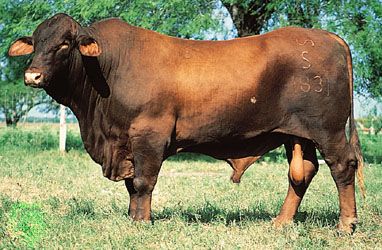
- Crossbreeding Foundation: The Hereford is a critical component in the creation of new, specialized breeds. For example, the Beefmaster breed incorporates Hereford genetics alongside Brahman and Shorthorn to balance hardiness with fertility and conformation.435
What are the main purposes for raising Hereford cattle (e.g., meat, dairy, or dual-purpose)?
Hereford cattle are primarily raised for beef production.143
Historically, in their native region of Herefordshire, England, the breed was developed for both beef and draft purposes. However, as the breed became established and gained global popularity, selective breeding focused heavily on their efficiency and quality as a beef breed. Today, they are recognized as one of the most prominent beef cattle breeds worldwide, valued for their uniformity, early maturity, and ability to thrive in diverse range conditions.143
Unlike some other breeds, such as the Normande or certain strains of Shorthorn, the Hereford is not classified as a dual-purpose breed for milk and meat. Modern breeding efforts continue to refine the Hereford specifically to meet market demands for leaner, more economical beef.4
Sources
- Hereford — Encyclopædia Britannica
- Cow - Beef cattle breeds — Encyclopædia Britannica
- Beef cattle breeds — Encyclopædia Britannica
- Livestock farming - Beef cattle breeds — Encyclopædia Britannica
- Origins of agriculture - Beef cattle — Encyclopædia Britannica
Published on · 3 min read