Angus
The Angus breed, historically known as Aberdeen Angus, originated in the northeastern counties of Aberdeen and Angus in Scotland. The breed descended from…
What are the origins and history of the Angus cattle breed?
The Angus breed, historically known as Aberdeen Angus, originated in the northeastern counties of Aberdeen and Angus in Scotland. The breed descended from naturally hornless, aboriginal cattle native to that region. While its exact ancestry remains somewhat obscure, the Angus is considered closely related to the Galloway, another Scottish breed known for its curly coat.123
The modern type of Angus cattle was established and improved during the early 19th century through the efforts of constructive breeders, most notably Hugh Watson and William McCombie. Following its development, the breed gained international prominence for its high-quality, marbled meat and efficient feed conversion.2
The Angus was introduced to the United States in 1873, where it became a foundational breed for the beef industry. Today, it is widely utilized in crossbreeding programs—such as the development of the Brangus—to enhance maternal traits, growth performance, and overall beef quality.23
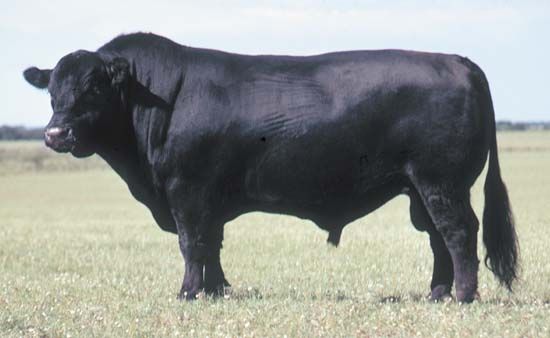
What are the distinctive physical characteristics of Angus cattle?
Angus cattle are defined by several distinct physical and physiological characteristics that contribute to their status as a premier beef breed:
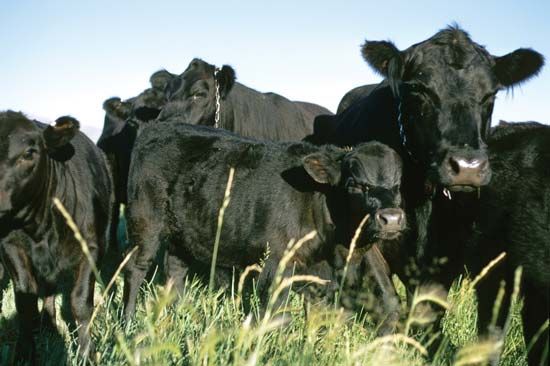
- Appearance: They are characteristically black in color and polled (naturally hornless). Their bodies are compact and low-set.12
- Size: Males typically reach an average weight of 1,000 kg (2,204 pounds) and a height of 1.45 meters (4.75 feet) at the withers. Females are smaller, averaging 650 kg (1,433 pounds) and 1.35 meters (4.43 feet) in height.12
- Hardiness: Their black coats provide natural resistance to sunburn and cancer eye. They are also noted for their ability to withstand extreme temperatures.12
- Meat Quality: The breed is highly regarded for its fine-quality flesh, which is tender and well-marbled with intramuscular fat. They also exhibit a high dressing percentage.12
- Efficiency: Angus cattle are known for their efficient feed conversion, meaning they effectively transform fodder into meat and milk.12
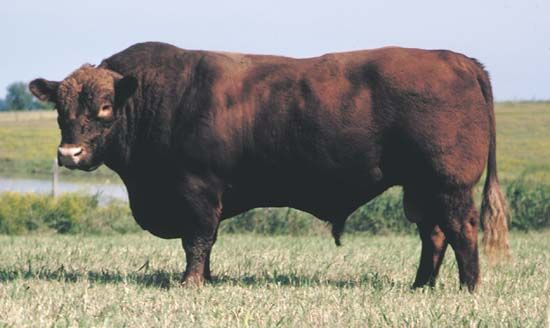
How does the Angus breed compare to other popular cattle breeds in terms of meat quality?
The Angus breed is widely recognized for producing high-quality beef characterized by its tenderness and significant intramuscular fat, known as marbling. This marbling is a key factor in the meat’s flavor and juiciness, contributing to the breed’s status as a top-tier choice for beef production.245
When compared to other breeds, Angus is often distinguished by its balance of quality and efficiency. For instance, while Western beef breeds like Angus are prized for their juiciness and marbling, they differ from Wagyu cattle. Wagyu are genetically predisposed to produce significantly higher levels of intramuscular marbling than any other Western beef cattle, resulting in a unique, velvety texture that sets it apart from the traditional juiciness of an Angus steak.1
In the global market, meat quality standards vary; while the U.S. system prioritizes marbling for grading, other regions may emphasize different traits, such as leanness. Despite these variations, the Angus remains a benchmark for quality, frequently used in crossbreeding programs to enhance the overall beef value of other herds.52
How has the Angus breed influenced the beef industry worldwide?
The Angus breed has exerted a profound influence on the global beef industry since its introduction to the United States in 1873 and its subsequent expansion worldwide. Renowned as a beef breed of the highest rank, Angus cattle are prized for their exceptional meat quality, characterized by tenderness and superior marbling.23
Their influence is primarily felt through:
- Genetic Improvement: Angus cattle are used extensively in crossbreeding programs to enhance maternal traits, growth performance, and overall market value. By crossing Angus with other breeds—such as the Charolais—producers can combine the high meat quality of the Angus with the larger size and growth rates of other breeds.238
- Development of New Breeds: The breed has served as a foundation for developing specialized cattle, such as the Brangus, which integrates the heat resistance of Brahman stock with the desirable beef traits of the Angus.21
- Operational Efficiency: Their calm temperament, ease of calving, and efficient feed conversion make them a preferred choice for commercial producers seeking to optimize production.23
Sources
- Angus: Top Questions — Encyclopædia Britannica
- Angus — Encyclopædia Britannica
- Livestock farming - Beef cattle breeds — Encyclopædia Britannica
- Beef cattle breeds — Encyclopædia Britannica
- Kobe beef — Encyclopædia Britannica
- Cow - Beef cattle breeds — Encyclopædia Britannica
- meat processing - Meat grading — Encyclopædia Britannica
- Animal breeding - Crossbreeding — Encyclopædia Britannica
Published on · 3 min read