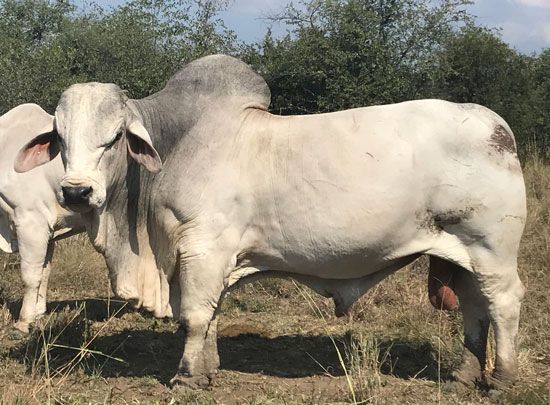
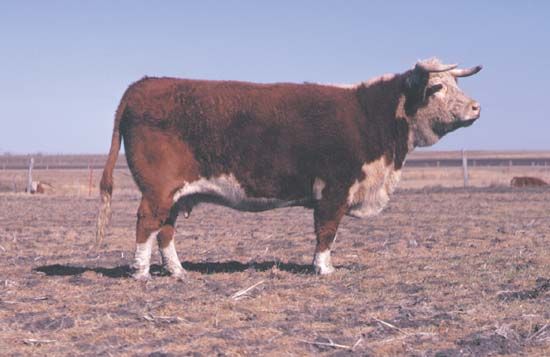
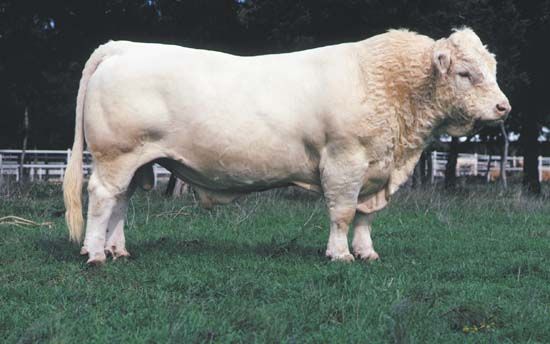
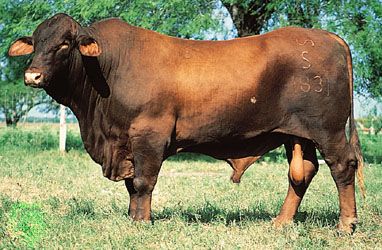
Santa Gertrudis
Santa Gertrudis cattle are highly adaptable to a wide range of climates and environments, a trait developed through the crossbreeding of Brahman and…
How well do Santa Gertrudis cattle adapt to different climates and environments?
Santa Gertrudis cattle are highly adaptable to a wide range of climates and environments, a trait developed through the crossbreeding of Brahman and Shorthorn cattle and Shorthorn cattle. Originally bred to thrive in the harsh conditions of Texas, the breed is now established in approximately 40 countries.21
Key factors contributing to their adaptability include:
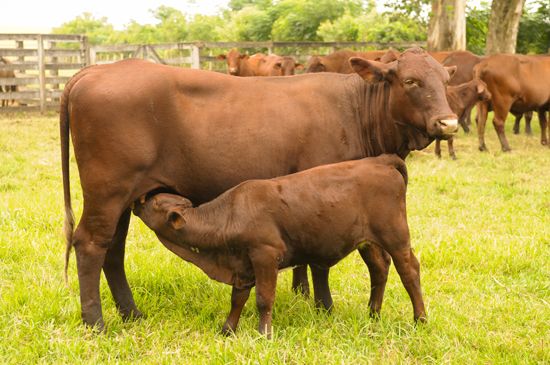
- Environmental Resilience: They possess significant heat tolerance and are well-suited to regions like the U.S. Gulf Coast. Their thick skin provides insulation against heat and protection from insect pests, while their eye hoods help prevent ocular conditions.21
- Foraging Ability: They are efficient foragers capable of traveling long distances to locate food and water in challenging environments.21
- Health and Hardiness: The breed demonstrates strong resistance to ticks and bloat.21
- Versatility: Beyond their success in open range conditions, they perform effectively in feedlots.1
What role has genetic improvement played in the development of the Santa Gertrudis breed?
Genetic improvement was fundamental to the development of the Santa Gertrudis breed, transforming it from experimental crossbreeding into a standardized, globally recognized beef cattle breed.12
The process relied on two primary scientific methods:
- Crossbreeding: Initial efforts at the King Ranch in 1910 involved crossing Brahman bulls with Shorthorn cows. This combination was specifically engineered to merge the heat and insect resistance of the Brahman with the meat quality of the Shorthorn.23
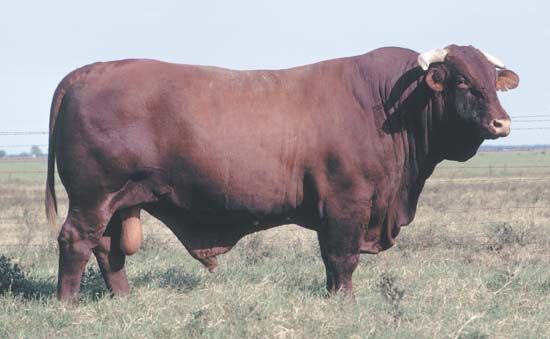
- Selective Breeding: Following the identification of a foundation sire named “Monkey” in 1920, years of rigorous selection were employed to stabilize the breed’s traits. Breeders prioritized specific physical characteristics, such as coat color and conformation, while maintaining the desired genetic balance of approximately five-eighths Shorthorn and three-eighths Brahman.23
Progeny testing and careful selection for traits like fertility, growth rate, and hardiness ensured the breed’s consistency. This systematic approach allowed the breed to achieve hybrid vigor, resulting in cattle that excel in both harsh range conditions and feedlots.23
What are the typical breeding and management practices for Santa Gertrudis cattle?
Management of Santa Gertrudis cattle focuses on leveraging their natural hardiness and maternal traits. Because they are efficient foragers capable of traveling long distances for food and water, they are well-suited for extensive grazing systems in harsh environments.21
Key breeding and management practices include:
- Reproductive Management: Females typically reach sexual maturity at 12–14 months and produce their first calf by age two. The breed is noted for strong maternal instincts and high milk production, which supports rapid calf growth.2
- Growth and Nutrition: Calves exhibit strong daily growth rates of 1.6–2 kg (3.5–4.4 pounds). The breed demonstrates efficient feed conversion, gaining 1 kg of weight for every 6 kg of feed consumed, making them effective performers in both pasture and feedlot settings.2
- Health Maintenance: Their thick skin provides natural insulation against heat and protection from insect pests. Additionally, the presence of eye hoods helps reduce the incidence of pink eye and cancer eye. The breed is also recognized for its inherent resistance to ticks and bloat.21
- Crossbreeding: Breeders often utilize Santa Gertrudis females in crossbreeding programs, as they produce offspring with exceptional physical traits and strong hybrid vigor.2
How has the Santa Gertrudis breed influenced or contributed to the development of other cattle breeds?
The Santa Gertrudis breed has served as a significant model for the development of other beef cattle breeds by demonstrating the success of systematic crossbreeding between Brahman and British cattle.11
While the provided search results do not explicitly detail specific breeds that were directly derived from Santa Gertrudis genetics, they highlight the breed’s broader influence on the industry through its proven ability to combine heat tolerance, disease resistance, and meat quality. The success of the Santa Gertrudis, which was the first beef cattle breed recognized by the U.S. Department of Agriculture in 1940, established a blueprint for creating composite breeds capable of thriving in harsh climates.12
Furthermore, the breed’s widespread use in crossbreeding programs—where Santa Gertrudis females are crossed with various bulls to produce offspring with strong hybrid vigor—has made it a foundational component in many modern commercial cattle operations.1
Sources
- Santa Gertrudis: Top Questions — Encyclopædia Britannica
- Santa Gertrudis — Encyclopædia Britannica
- Origins of agriculture - Beef cattle — Encyclopædia Britannica
Published on · 3 min read