Chinese Alligator
The Chinese alligator (Alligator sinensis) is a small, critically endangered crocodilian native to the Yangtze River basin in east-central China. It is one…
What is a Chinese alligator?
The Chinese alligator (Alligator sinensis) is a small, critically endangered crocodilian native to the Yangtze River basin in east-central China. It is one of only two extant species in the genus Alligator, the other being the American alligator.12
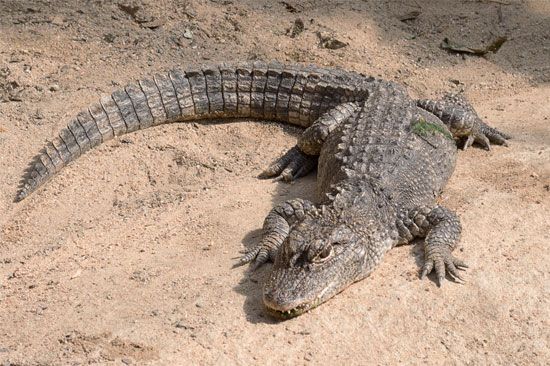
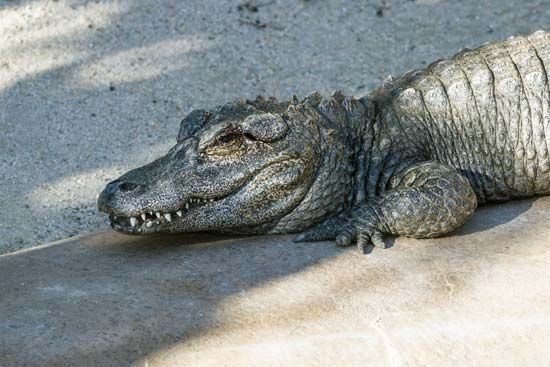
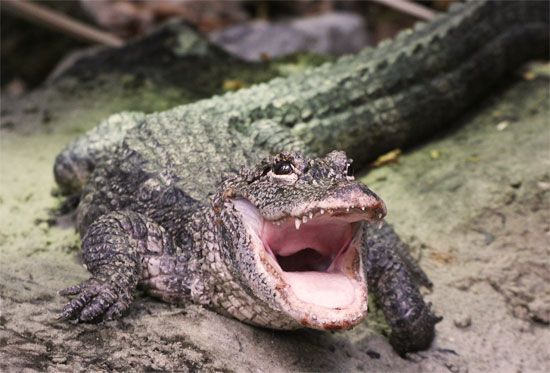
Physically, the Chinese alligator is the smallest of all crocodilians, typically reaching about 1.5 meters (4.9 feet) in length. It is distinguished from its American counterpart by its smaller size, a shorter and broader head, an upturned snout, and the presence of bony plates on its eyelids and belly.1
The species is primarily nocturnal and spends much of its time in underground burrows, which provide shelter during the winter months when the animals become dormant. Due to severe habitat loss, hunting, and pollution, wild populations have dwindled to fewer than 200 individuals. However, successful captive breeding programs have helped maintain the species, with some individuals being reintroduced into the wild.12
Where does the Chinese alligator live?
The Chinese alligator (Alligator sinensis) is native to the lower Yangtze River basin in east-central China.1
While the species was once widespread throughout the Yangtze basin, its current geographic range has contracted significantly due to habitat loss and other human-related pressures. Today, the remaining wild population is restricted to a handful of small, fragmented habitats located in southeastern Anhui province. Within these areas, they inhabit stream, pond, and wetland ecosystems, where they construct underground burrows along riverbanks or in soft soil to rest and escape extreme weather conditions.13
How is the Chinese alligator different from the American alligator?
The Chinese alligator (Alligator sinensis) and the American alligator (Alligator mississippiensis) are the only two extant species in the genus Alligator, yet they differ significantly in size, physical features, and conservation status.
Physical Differences
- Size: The Chinese alligator is the smallest of all crocodilians, typically reaching about 1.5 meters (4.9 feet) in length, with a maximum of about 2.2 meters (7.2 feet). In contrast, the American alligator is much larger, typically ranging from 1.8 to 3.7 meters (6 to 12 feet) in length.31
- Head and Snout: The Chinese alligator possesses a shorter, broader head and a distinctively upturned snout compared to the American alligator.1
- Armor: The Chinese alligator features unique physical traits absent in its American counterpart, including small bony plates on its eyelids and osteoderms (bony plates) on its belly.1
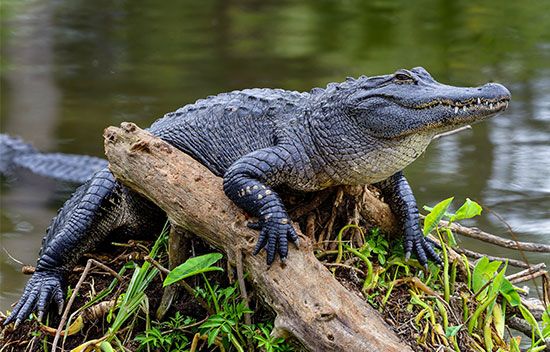
- Coloration: While both species are dark with lighter undersides, the Chinese alligator is generally gray with faint yellowish markings. The American alligator is typically black with yellow banding as a juvenile, fading to a brownish color as an adult.31
Conservation Status
The American alligator has made a successful recovery from population declines and is no longer considered endangered. Conversely, the Chinese alligator is critically endangered, with fewer than 200 individuals estimated to remain in the wild due to habitat loss, hunting, and pollution.31
What do Chinese alligators eat in the wild?
In the wild, the diet of the Chinese alligator varies by age:
Sources
- Chinese alligator — Encyclopædia Britannica
- Chinese alligator — Merriam-Webster
- alligator — Encyclopædia Britannica
Published on · 3 min read