Titanoboa
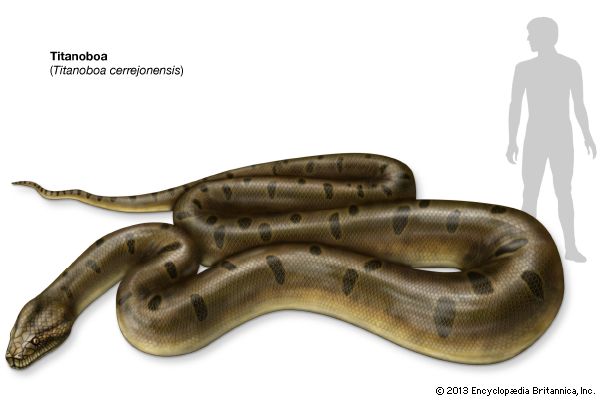
Titanoboa (Titanoboa cerrejonensis) is widely considered the largest snake to have ever existed, significantly surpassing both modern species and other known…
How does Titanoboa compare to other prehistoric giant snakes?
Titanoboa (Titanoboa cerrejonensis) is widely considered the largest snake to have ever existed, significantly surpassing both modern species and other known prehistoric giants.12
Comparison with Other Snakes
- Modern Snakes: No living snake approaches the scale of Titanoboa. While the green anaconda and reticulated python are the largest extant species, they typically measure between 3 and 9 meters in length. Titanoboa, by contrast, reached lengths of approximately 13 to 15 meters and weighed roughly 1,135 kg—a mass comparable to an adult female giraffe.12
- Prehistoric Giants: In 2024, fossils of another massive prehistoric snake, Vasuki indicus, were discovered in India. Estimated to have lived about 88 million years ago, Vasuki indicus is thought to have reached lengths of 11 to 15 meters, placing it in a similar size category to Titanoboa.2
Biological Context
Titanoboa lived during the Paleocene Epoch in an exceptionally warm, waterlogged environment. Because snakes are poikilothermic (cold-blooded), their growth is heavily influenced by ambient temperature; scientists believe this tropical climate was essential for Titanoboa to achieve its massive proportions.1
How was Titanoboa discovered, and where were its fossils found?
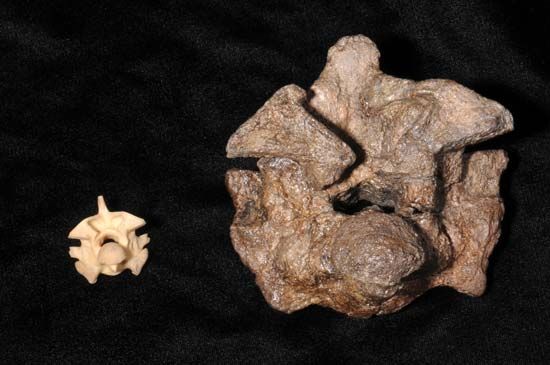
Titanoboa (Titanoboa cerrejonensis) was first described in 2009, following its excavation from the Cerrejón coal mine in Colombia. The discovery site is located west of the mouth of Lake Maracaibo, where the fossils were found embedded in rocks formed from an ancient Paleocene Epoch swamp.1
Paleontologists have recovered the remains of approximately 30 individuals from this location. Most of the specimens consist of vertebrae and ribs, which is common for snake fossils, though at least one nearly complete specimen including a skull has been unearthed. These findings have allowed scientists to confirm that the massive proportions of Titanoboa were the norm for the species, rather than an anomaly.1
Are there any modern snakes that are considered distant relatives of Titanoboa?
Yes, Titanoboa (Titanoboa cerrejonensis) is considered a relative of modern anacondas and boas. While it is clearly related to these modern constrictor snakes, paleontologists have not yet determined whether it shares a closer evolutionary affinity with one group over the other.3
Like its modern relatives, Titanoboa was a large, nonvenomous constrictor. Its habits are also thought to have mirrored those of the modern anaconda; given its massive size, which would have made terrestrial movement difficult, it likely spent the majority of its time in water, ambushing prey from the shallows of its swampy environment.13
What can Titanoboa fossils tell us about the ancient climate?
The fossils of Titanoboa (Titanoboa cerrejonensis) serve as a significant indicator of the exceptionally warm climate that characterized the Paleocene Epoch (66 million to 56 million years ago).1
Because Titanoboa was a poikilothermic, or cold-blooded, animal, its metabolic rate and growth were directly influenced by the temperature of its ambient environment. Scientists have concluded that for a snake to reach such massive proportions—averaging 13 metres (42.7 feet) in length and 1,135 kg (1.25 tons) in weight—it would have required a consistently and exceptionally warm tropical climate to support its metabolism and growth.1
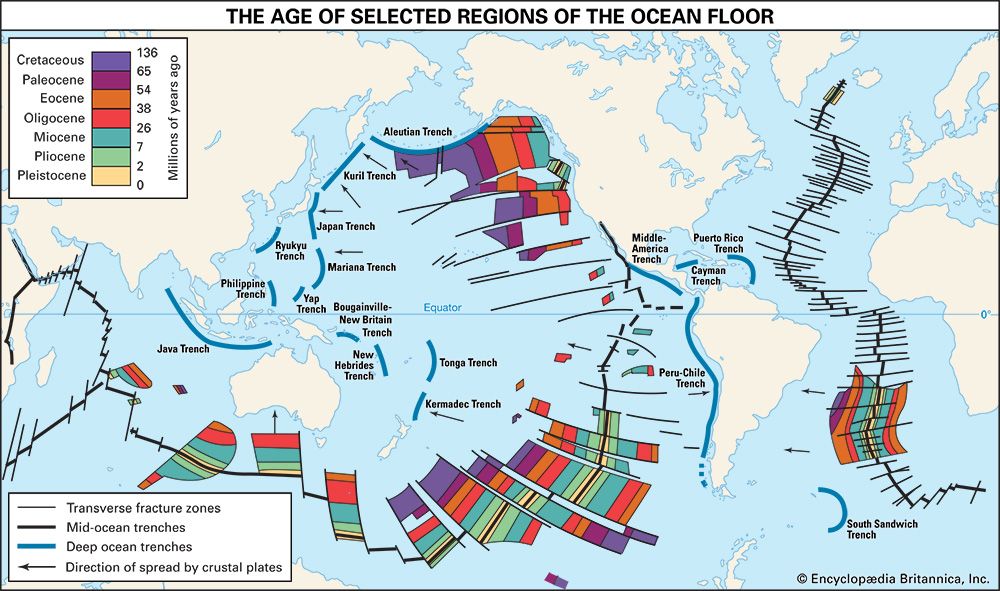
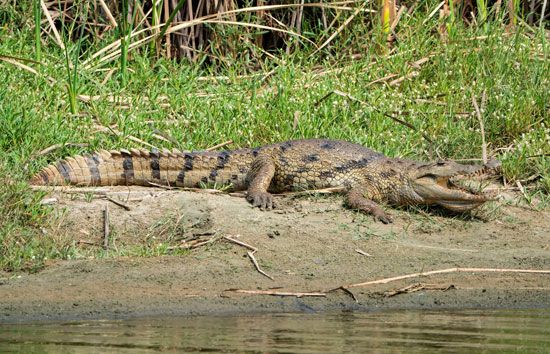
The geological context of the fossils further supports this. The remains were excavated from the Cerrejón coal mine in Colombia, which formed from deposits in an extensive, waterlogged swamp situated in the tropics. The presence of these fossils, alongside other water-loving organisms like crocodilians and turtles, confirms that the region was a hot, humid environment during the Paleocene.1
Sources
- Titanoboa — Encyclopædia Britannica
- What is the largest snake in the world? — Encyclopædia Britannica
- boa — Encyclopædia Britannica
- Paleocene Epoch — Encyclopædia Britannica
- Climate change - Evidence for climate change — Encyclopædia Britannica
- Global warming - Prehistorical climate records — Encyclopædia Britannica
Published on · 3 min read