Tapinocephalus
Tapinocephalus is an extinct genus of therapsids—relatives of mammals—that lived during the middle Permian Period (approximately 299 million to 251 million…
What is Tapinocephalus?
Tapinocephalus is an extinct genus of therapsids—relatives of mammals—that lived during the middle Permian Period (approximately 299 million to 251 million years ago).1
These animals were large, bulky creatures characterized by various herbivorous specializations. They are representative of the Tapinocephaloidea, a group of therapsids known for their distinct physical traits. Fossils of Tapinocephalus have been discovered in South Africa, where they serve as a vital horizon marker for a specific geological layer known as the Tapinocephalus zone.1
What are therapsids and how are they related to modern mammals?
Therapsids are a major clade of tetrapods that flourished during the Permian and Triassic periods. While traditionally called “mammal-like reptiles,” they are not part of the reptile lineage; rather, they represent the evolutionary stock that gave rise to mammals.4
The relationship between therapsids and modern mammals is defined by several key evolutionary transitions:
- Skull and Teeth: Like mammals, therapsids possessed a single temporal opening in the skull. Many species evolved differentiated teeth, including incisors, canines, and grinding cheek teeth, mirroring mammalian dental patterns.4
- Anatomy: Advanced therapsids developed a bony palate, a feature shared with mammals. However, they retained a more primitive, reptilian lower jaw composed of multiple bones rather than the single bone found in modern mammals.4
- Evolutionary Lineage: Therapsids evolved from pelycosaurs and eventually branched into various groups, including cynodonts, which are closely linked to the emergence of early mammals.4
What does the term ‘Permian Period’ signify in Earth’s history?
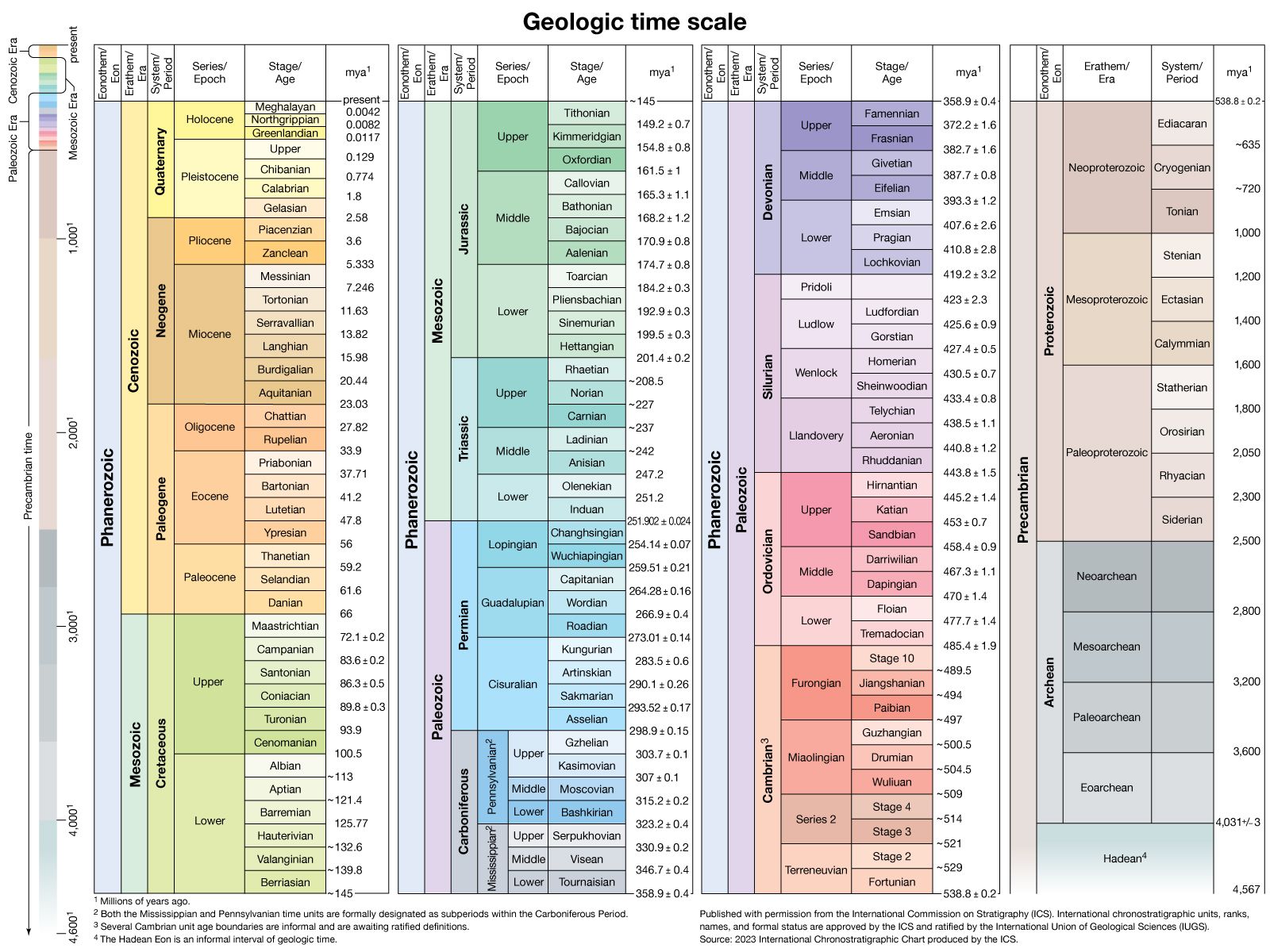
The Permian Period (298.9 million to 252.2 million years ago) represents the final interval of the Paleozoic Era, serving as a critical crossroads in Earth’s geological and biological history.5
The period is defined by several major developments:
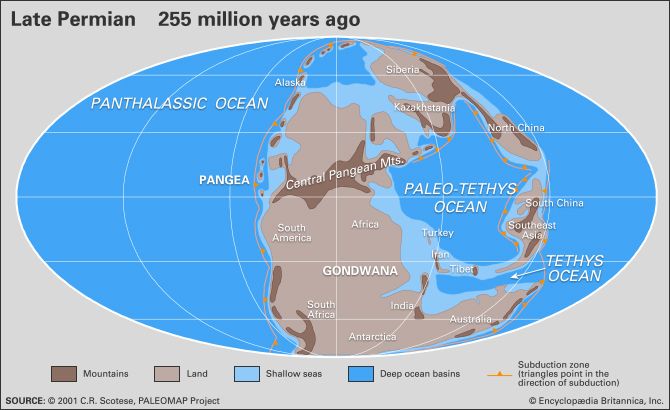
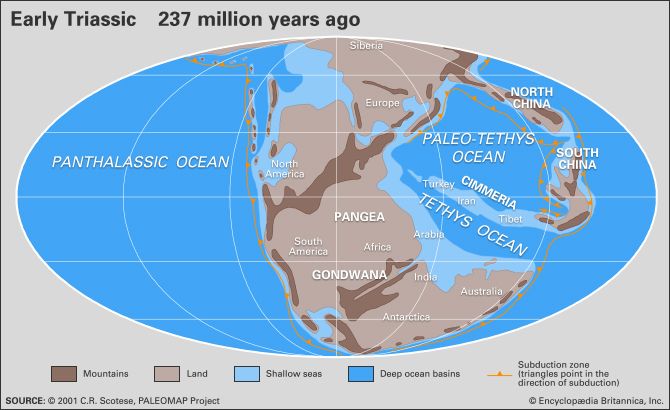
- Geographic Transformation: Most of Earth’s landmasses converged to form the supercontinent of Pangea, which was surrounded by the massive Panthalassa ocean.657
- Climatic Shifts: The period began with widespread glaciation, but the climate gradually warmed, eventually becoming hot and dry. This shift significantly impacted global habitats.65
- Biological Evolution: Terrestrial plants and insects underwent rapid diversification. Crucially, the period saw the emergence of important reptile lineages, including synapsids, the ancestors of mammals.658
- Mass Extinction: The Permian concluded with the largest mass extinction in Earth’s history, which eliminated over 90 percent of species, likely driven by severe environmental and temperature crises.659
How do paleontologists use ‘horizon markers’ to date fossils?
Paleontologists and geologists use “marker horizons”—often referred to as key beds—as distinctive, easily recognizable layers within rock sequences to correlate strata across widely separated geographic locations. By identifying a unique layer that shares specific physical or chemical attributes, researchers can establish that the rocks at different sites were formed during the same interval of geologic time.1213
Key features of these markers include:
- Distinctive Composition: A marker horizon is defined by unique characteristics, such as specific mineralogy, texture, color, or fossil content, which allow it to be identified without extensive testing.1213
- Volcanic Ash: Volcanic ash layers are among the most valuable markers because they are deposited almost instantaneously over vast areas. They also frequently contain crystals that allow for precise radiometric dating, providing an absolute age for the adjacent fossil-bearing units.1213
- Correlation: Once a marker horizon is identified, it serves as a reference point to link sedimentary layers, helping scientists integrate the fossil record from different regions to build a more complete picture of evolutionary history.1213
Sources
- Tapinocephalus — Encyclopædia Britannica
- dinosaur - Dinosaur ancestors — Encyclopædia Britannica
- dinosauromorph — Encyclopædia Britannica
- therapsid — Encyclopædia Britannica
- A Journey Through Time Since the Precambrian - Permian Period: 298.9 million to 252.2 million years ago — Encyclopædia Britannica
- Permian Period - Marine and terrestrial life — Encyclopædia Britannica
- Permian Period — Encyclopædia Britannica
- Permian Period - The Permian environment — Encyclopædia Britannica
- Permian Period - Temperature crises — Encyclopædia Britannica
- Permian extinction - Other potential causes — Encyclopædia Britannica
- Permian Period - Emergence of important reptiles — Encyclopædia Britannica
- index fossil — Encyclopædia Britannica
- dating - Principles and techniques — Encyclopædia Britannica
- biostratigraphy — Merriam-Webster
- tephrochronology — Encyclopædia Britannica
- dating - Distinctions between relative-age and absolute-age measurements — Encyclopædia Britannica
- horizon — Encyclopædia Britannica
Published on · 3 min read