Choiseul
The term "Choiseul" refers to two distinct subjects:
What is Choiseul?
The term “Choiseul” refers to two distinct subjects:
Geographical Location
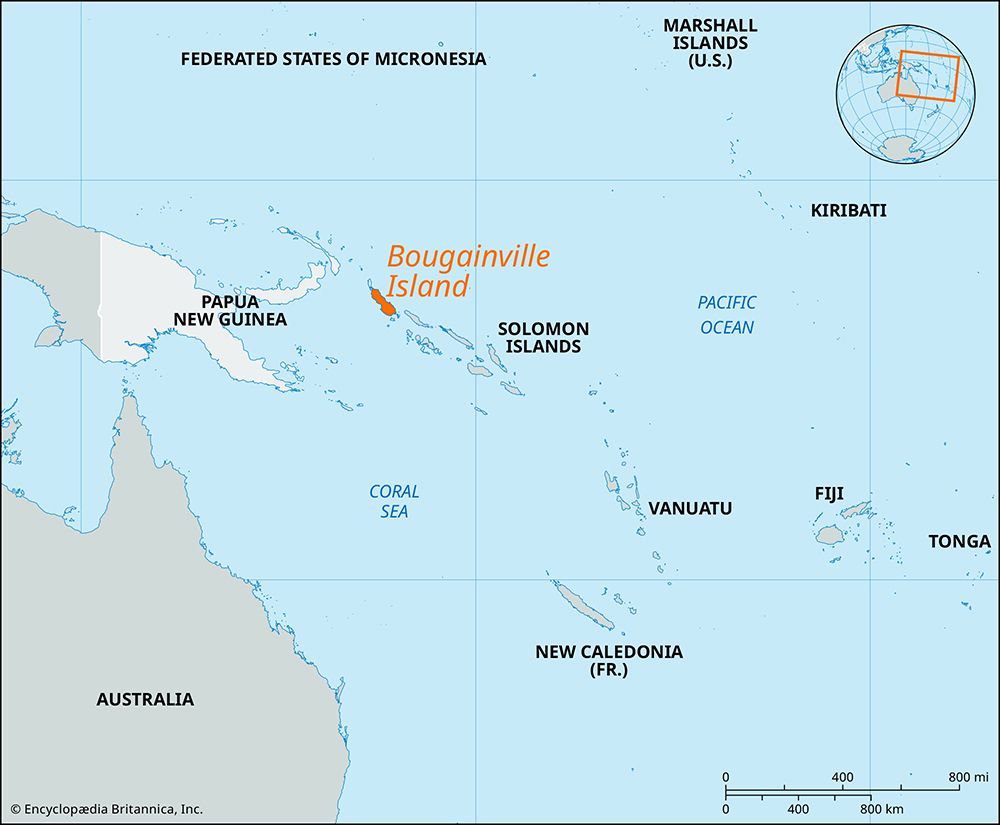
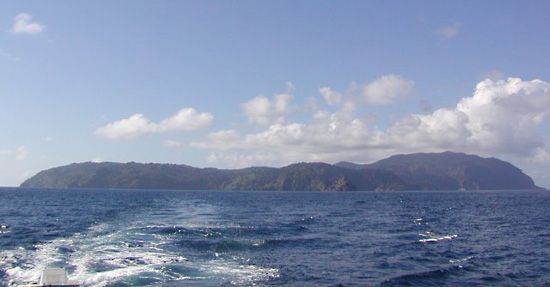
Choiseul is an island in the western Solomon Islands located in the southwestern Pacific Ocean3. Situated southeast of Bougainville Island, the island is characterized by dense forests and mountainous terrain, reaching an elevation of 3,500 feet at Mount Maetambe. Its economy relies primarily on copra production and subsistence farming. During World War II, the island was occupied by Japanese forces from 1942 until 1945.1
Historical Figure
Étienne-François de Choiseul, Duke de Choiseul (1719–1785), was a prominent French statesman who served as the foreign minister under King Louis XV from 1758 to 1770. He played a critical role in navigating the aftermath of the Seven Years’ War and the Treaty of Paris, while later focusing on rebuilding French military and naval power.2
What role did the Solomon Islands play during World War II?
During World War II, the Solomon Islands served as a critical theater of conflict in the Pacific War. Japanese forces began occupying the protectorate in early 1942, but their southward expansion was halted when U.S. forces invaded on August 7, 1942.45
The subsequent 15 months of fighting were among the most intense in the Pacific, centered largely on the Battle of Guadalcanal. This campaign, which included significant naval engagements such as the Battle of the Eastern Solomons, the Battle of Cape Esperance, and the Battle of Santa Cruz, proved to be a decisive turning point in favor of the Allies. Throughout these operations, Allied forces received strong support from the local islanders.4675
Following the war, the infrastructure left behind—including airfields and military buildings—led to the relocation of the capital from Tulagi to Honiara on Guadalcanal.45
How do barrier reefs affect the geography of Pacific islands?
Barrier reefs significantly shape the geography of Pacific islands by acting as a buffer between the open ocean and the landmass, creating distinct environmental and structural features.
Influence on Island Development
Barrier reefs typically develop offshore from a non-reef landmass, separated by a lagoon or channel. According to the subsidence theory popularized by Charles Darwin, these reefs represent a transitional stage in the life cycle of volcanic islands. As a volcanic island gradually sinks, the reef grows upward and outward, maintaining its position near the surface while the distance between the reef and the shoreline increases.8910
Geographic Impacts
- Lagoon Formation: The reef creates a sheltered, quiet-water environment between the barrier and the island. These lagoons are maintained at moderate depths through sedimentation, which compensates for the subsidence of the underlying volcanic foundation.11
- Island Evolution: If the volcanic cone completely subsides, the barrier reef remains as an atoll, enclosing a central lagoon. In this final stage, the only land present consists of low-lying coral islands formed by the accumulation of reef debris and sand.9108
- Erosion and Accretion: Barrier reefs protect the central island from direct wave action, influencing the island’s stability. Conversely, the reef itself provides the material for accretion, where storm-driven debris and currents build up land on the reef top, creating the low-lying islands inhabited by Pacific peoples.118
What were the major consequences of the Seven Years’ War for France?
The Seven Years’ War (1756–1763) resulted in profound geopolitical and financial consequences for France, marking a significant decline in its global standing.
Territorial and Colonial Losses
The Treaty of Paris (1763) formalized France’s disastrous defeat. Having held a dominant position in North America at the start of the conflict, France was forced to cede Canada to Great Britain and relinquish all claims to lands east of the Mississippi River. Additionally, France lost key possessions in India and the Caribbean to the British, effectively ending its status as a major colonial and military power on the North American continent.131415
Financial and Political Impact
The war was prohibitively expensive, exacerbating the French crown’s financial instability. The high cost of maintaining a navy and funding global military campaigns led to an ever-swelling deficit. This fiscal crisis forced the monarchy to seek financial assistance from the country’s elites, who were unwilling to provide support without conditions. This inability to manage the national debt and implement necessary administrative reforms contributed significantly to the political tensions that ultimately led to the collapse of the monarchy in 1789.1415
Sources
- Étienne-François de Choiseul, duke de Choiseul — Encyclopædia Britannica
- Choiseul — Merriam-Webster
- Choiseul — Encyclopædia Britannica
- history of Solomon Islands - The Solomons during World War II — Encyclopædia Britannica
- Battle of Guadalcanal — Encyclopædia Britannica
- Battle of Guadalcanal - The Battles of the Eastern Solomons, Cape Esperance, and Santa Cruz — Encyclopædia Britannica
- Solomon Islands - World War II — Encyclopædia Britannica
- coral reef - Origin and development of reefs — Encyclopædia Britannica
- atoll — Encyclopædia Britannica
- lagoon - Factors involved in lagoon formation — Encyclopædia Britannica
- lagoon — Encyclopædia Britannica
- coral island — Encyclopædia Britannica
- French and Indian War - The Treaty of Paris — Encyclopædia Britannica
- Seven Years’ War — Encyclopædia Britannica
- France - Foreign policy and financial crisis — Encyclopædia Britannica
- Seven Years’ War: Top Questions — Encyclopædia Britannica
- history of France - Foreign policy and financial crisis — Encyclopædia Britannica
Published on · 3 min read