Coral Sea Islands
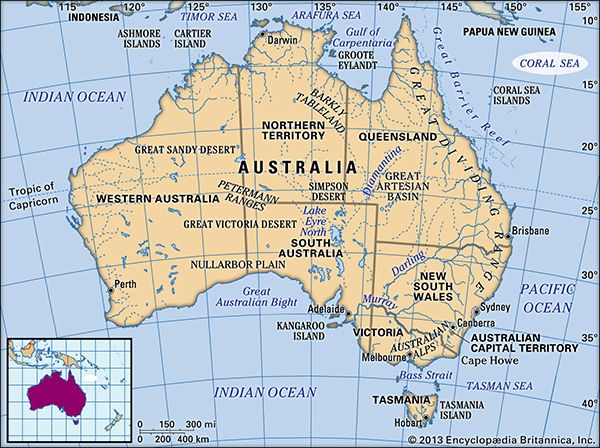
The Coral Sea Islands Territory is an external territory of Australia located in the South Pacific Ocean, situated east of Queensland.
What is the geographical location and extent of the Coral Sea Islands Territory?
The Coral Sea Islands Territory is an external territory of Australia located in the South Pacific Ocean, situated east of Queensland.1
The territory encompasses a vast maritime area of approximately 300,000 to 400,000 square miles (780,000 to 1,000,000 square km). Despite this expansive sea coverage, the actual land area consists of only a few square miles, comprising widely scattered coral reefs and sand cays located off the outer edge of the Great Barrier Reef.12
Established as an Australian territory in 1969, the region includes various formations such as the Willis group, Cato Island, and Lihou Reef, with Elizabeth and Middleton reefs added to the territory in 1997. While much of the area is designated as national nature reserves, the islands are generally uninhabited, with the exception of a manned weather station in the Willis group.1
How did the Coral Sea Islands Territory come under Australian control?
The Coral Sea Islands Territory was officially declared an Australian territory in 1969 following the passage of the Coral Sea Islands Act.
While the region had been explored by Captain James Cook in 1770 and saw commercial activity such as guano collection in the late 1800s, it was not formally established as an external territory until the 1969 legislation. The territory was later expanded in 1997 to include Elizabeth and Middleton reefs, which are located southeast of Brisbane.1
What are the main islands and reefs that make up the Coral Sea Islands Territory?
The Coral Sea Islands Territory consists of a vast maritime area containing widely scattered coral reefs and sand cays. Because these formations are small and dispersed, the territory’s total land area is only a few square miles.1
Key islands and reefs within the territory include:
- Willis Group: Home to a manned weather station.1
- Cato Island: One of the better-known islands in the group.1
- Coringa Group: Includes Chilcott Islet.1
- Wreck Reefs: Includes Bird Islet and West Islet.1
- Mellish Reef: Includes Herald’s Beacon Islet.1
- Lihou Reef: A significant formation within the territory.1
- Frederick Reef: A notable reef formation.1
- Bougainville Reef: A recognized reef in the region.1
- Elizabeth and Middleton Reefs: Located southeast of Brisbane, these were added to the territory in 1997.1
Much of this area is designated as national nature reserves to protect the environment and the large populations of seabirds that inhabit the cays.1
How does the Coral Sea Islands Territory affect Australia’s maritime boundaries?
The Coral Sea Islands Territory significantly expands Australia’s maritime reach and economic interests in the South Pacific Ocean. By establishing sovereignty over these scattered reefs and cays, Australia is entitled to claim surrounding maritime zones under the Law of the Sea treaty.13
Specifically, the territory allows Australia to assert exclusive rights that extend approximately 200 nautical miles (370 km) into the surrounding waters. Within these zones, Australia possesses sovereign rights to:7
- Resource Management: Explore, exploit, conserve, and manage natural resources, including commercial fishing and potential petroleum deposits.137
- Jurisdiction: Exercise authority over artificial installations and scientific research, such as the manned weather station in the Willis group.137
- Environmental Protection: Protect and preserve the marine environment, which is supported by the designation of much of the territory as national nature reserves.137
These claims are consistent with international law, which permits coastal states to establish an exclusive economic zone and claim rights over the adjacent continental shelf to manage resources effectively.32
Sources
- Coral Sea Islands — Encyclopædia Britannica
- Australian External Territories — Encyclopædia Britannica
- Coral Sea — Encyclopædia Britannica
- Cocos Islands — Encyclopædia Britannica
- Ashmore and Cartier Islands — Encyclopædia Britannica
- list of islands - Australia — Encyclopædia Britannica
- International law - Maritime spaces and boundaries — Encyclopædia Britannica
- Territorial waters — Encyclopædia Britannica
Published on · 3 min read