Chondrosteiformes
Chondrosteiformes is an extinct order of ray-finned saltwater fishes belonging to the class Actinopterygii. Comprising the single family Chondrosteidae…
What is Chondrosteiformes?
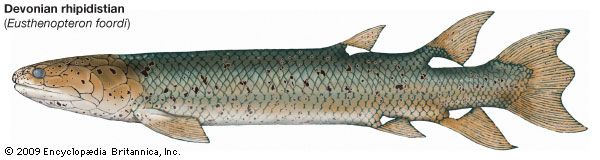
Chondrosteiformes is an extinct order of ray-finned saltwater fishes belonging to the class Actinopterygii. Comprising the single family Chondrosteidae, these fishes were prominent in marine environments during the Early Triassic to Late Jurassic periods, approximately 251 million to 146 million years ago.1
Some species within this order were suctorial feeders and are believed to have potentially given rise to modern sturgeons. The order is categorized under the broader, often debated, subclass Chondrostei, which includes primitive bony fishes. Because the relationships between various fossil and living chondrosteans are complex and often considered paraphyletic, the classification of these groups remains a subject of ongoing scientific discussion.123
What are the main differences between sturgeons and other ray-finned fish?
Sturgeons are distinct from most other ray-finned fish due to their primitive anatomical features, which reflect their evolutionary history as members of the subclass Chondrostei.
The primary differences include:
- Skeletal Composition: Unlike more advanced bony fish that possess fully ossified skeletons, the internal skeleton of a sturgeon is composed largely of cartilage, a trait reflected in their name, which means “cartilage bone.”56
- Notochord: Sturgeons retain a persistent notochord throughout their lives, whereas in advanced bony fish, the notochord is typically replaced by a fully ossified vertebral column.67
- External Armor: Instead of the typical scales found on most ray-finned fish, sturgeons are covered by five rows of enlarged bony plates known as scutes, with their heads also protected by bony plates.56
- Feeding Adaptations: Sturgeons are specialized bottom feeders. They possess a subterminal, toothless mouth preceded by four fleshy barbels and protractile lips equipped with taste buds.5
- Tail Structure: They feature a heterocercal tail, where the vertebral column extends into the larger upper lobe, a characteristic often associated with more primitive fish lineages.56
How do scientists use fossils to classify extinct fish species?
Scientists classify extinct fish species primarily through the comparative study of the skeleton, as fossilized remains are often limited to bony structures. By examining these remains, researchers can perform a comparative analysis of body structures to understand evolutionary adaptations and relationships.1112
The methodology for this classification has evolved significantly:
- Comparative Anatomy: Ichthyologists analyze homologous structures—features inherited from a common ancestor—to trace evolutionary lineages. This involves measuring dimensions like head and body length and counting external characters such as teeth, fin rays, and scales.121311
- Cladistics: Modern classification relies heavily on cladistics, which groups species based on their most recent common ancestor. Scientists identify synapomorphies, or shared derived characteristics, that are unique to a specific lineage and its descendants.14
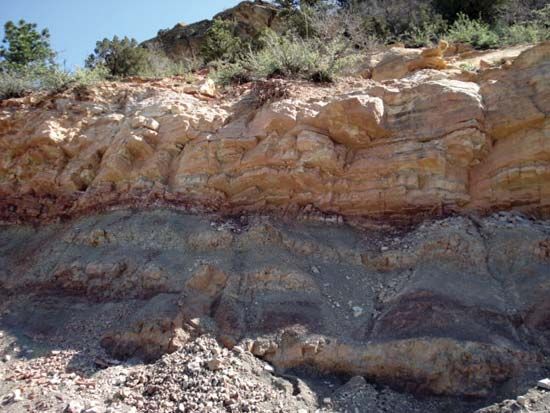
- Geologic Context: Fossils are placed within a chronological framework using geologic dating techniques. This allows scientists to correlate the appearance and disappearance of species with specific time periods, helping to map the succession of better-adapted groups over time.1516
While comparative anatomy remains a cornerstone, it is increasingly complemented by molecular data when possible, though fossil classification remains largely dependent on skeletal morphology.13
What does it mean for a group of animals to be paraphyletic?
In biological classification, a group of animals is considered paraphyletic when it includes a common ancestor but excludes some of its descendants.1916
While a monophyletic group—often called a clade—consists of an ancestor and all of its descendants, a paraphyletic group is incomplete because it leaves certain lineages out. In phylogenetic trees, you can identify a paraphyletic group by the fact that it cannot be separated from the rest of the tree with a single cut; doing so would require multiple slices.19
These groups are often referred to as “grades” rather than clades. They are sometimes retained in more conservative classification systems because they highlight physical or ecological similarities, even though they do not strictly reflect the full evolutionary history of the organisms involved.1620
Common examples include:
- Reptilia: This group is paraphyletic because it excludes birds, which are evolutionarily modified descendants of dinosaurs.16
- Fish (Pisces): The traditional class of fishes is rarely used in modern systematics because it excludes the descendants that evolved into amphibians, mammals, reptiles, and birds.16
- Invertebrates: This is a grade consisting of all animals except vertebrates, rather than a formal evolutionary group.16
Sources
- Chondrosteiformes — Encyclopædia Britannica
- chondrostean - Distinguishing taxonomic features — Encyclopædia Britannica
- chondrostean - Evolution — Encyclopædia Britannica
- chondrostean — Encyclopædia Britannica
- chondrostean - Form and function — Encyclopædia Britannica
- chondrostean - Reproduction and life cycle — Encyclopædia Britannica
- chondrostean - Annotated classification — Encyclopædia Britannica
- skeleton - Lower chordates and fishes — Encyclopædia Britannica
- Vertebrate - The teleostomes — Encyclopædia Britannica
- protacanthopterygian - Annotated classification — Encyclopædia Britannica
- fish - Distinguishing taxonomic features — Encyclopædia Britannica
- Comparative anatomy — Encyclopædia Britannica
- protacanthopterygian - Evolutionarily important taxonomic characters — Encyclopædia Britannica
- fish - Evolution and paleontology — Encyclopædia Britannica
- dating — Encyclopædia Britannica
- phylogeny - Phenetics versus cladistics — Encyclopædia Britannica
- phylogeny - Evidence for specific phylogenies — Encyclopædia Britannica
- holostean - Annotated classification — Encyclopædia Britannica
- protist - Paraphyletic nature — Encyclopædia Britannica
- Philosophy of biology - Taxonomy — Encyclopædia Britannica
- How Do You Read Phylogenetic Trees? — Encyclopædia Britannica
- Chordate - Critical appraisal — Encyclopædia Britannica
Published on · 3 min read