Dating
Stratigraphy is the scientific study of rock layers and their interpretation within a geologic time scale. It plays a fundamental role in determining the…
What role does stratigraphy play in determining the age of rocks and fossils?
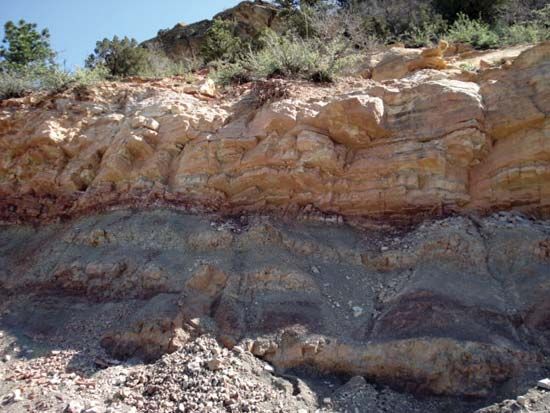
Stratigraphy is the scientific study of rock layers and their interpretation within a geologic time scale. It plays a fundamental role in determining the relative age of rocks and fossils through several key principles:1
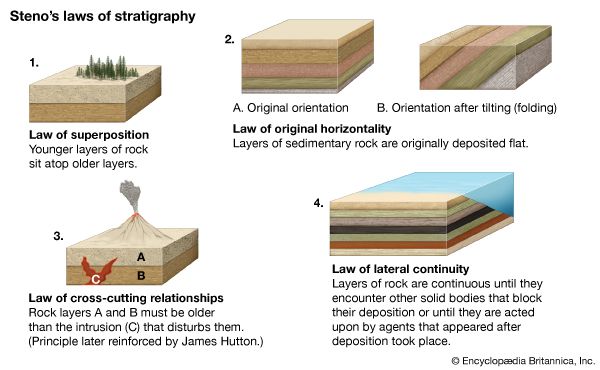
- Law of Superposition: This foundational principle states that in an undisturbed sequence of sedimentary rocks, the oldest layers are at the bottom and the layers become progressively younger toward the top.23
- Correlation: Stratigraphy allows geologists to correlate rock units across different locations by identifying unique features, such as specific mineralogy or fossil content, known as marker horizons.4
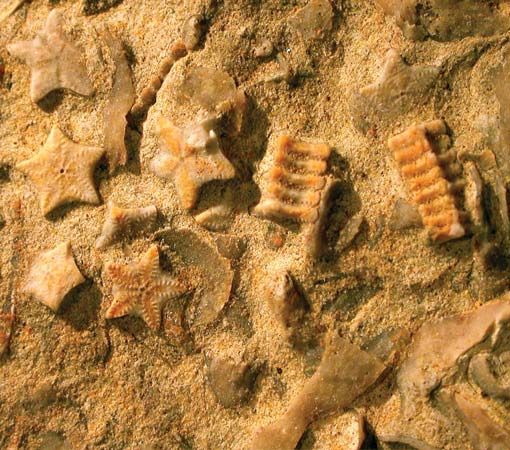
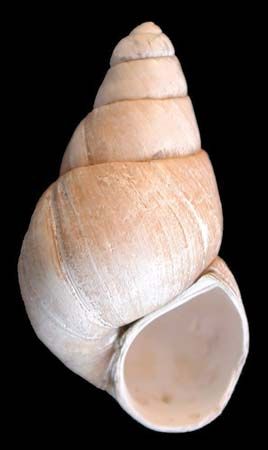
- Biostratigraphy: This specialized branch uses the fossil record to determine relative ages. By identifying index fossils—organisms that were abundant, widespread, and existed for a short geologic duration—scientists can define boundaries in the geologic time scale and date rock strata.567
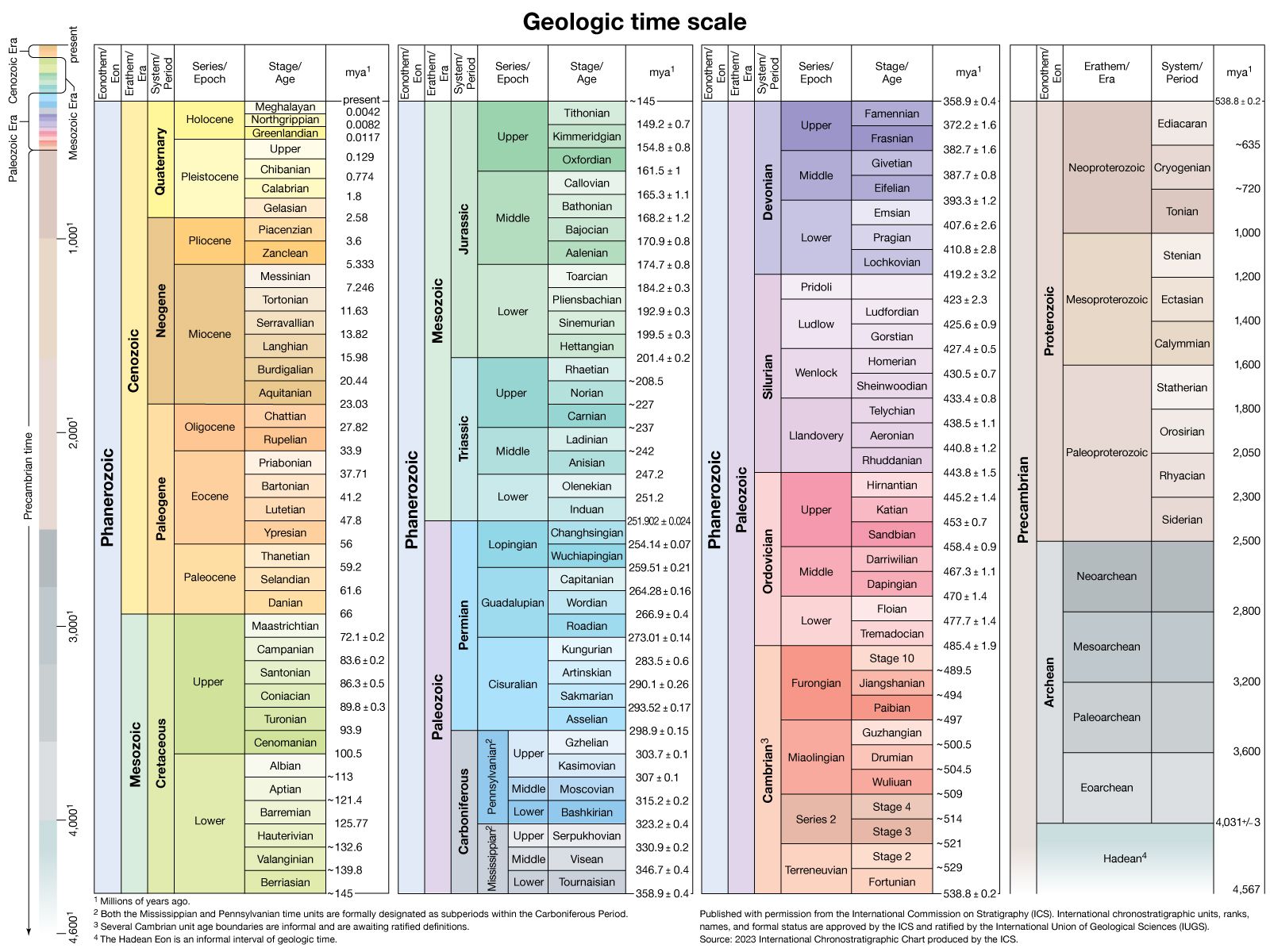
While stratigraphy provides the relative sequence of events, it is often integrated with radiometric dating to calibrate these sequences and establish absolute ages.16
What are the main methods used in radiometric dating?
Radiometric dating determines the age of materials by measuring the ratio of radioactive parent isotopes to their stable daughter products. Because radioactive isotopes decay at a constant, known rate—defined by their half-life—scientists can calculate the time elapsed since a rock or mineral formed.89
Common Radiometric Dating Methods
Different isotope systems are selected based on the material being dated and the expected age range:8
- Carbon-14 dating: Used for organic materials up to approximately 50,000 years old. It relies on the decay of radiocarbon into nitrogen.810
- Potassium-argon dating: Measures the ratio of radioactive argon-40 to potassium-40. It is highly versatile, used for dating volcanic rocks and minerals ranging from 20,000 to billions of years old.11
- Uranium-thorium-lead dating: Utilizes the decay of uranium and thorium isotopes into lead. This method is essential for dating very old igneous and metamorphic rocks, including those used to estimate the age of the Earth.1213
- Isochron Methods: Techniques such as rubidium-strontium or samarium-neodymium dating analyze multiple samples to account for initial isotopic ratios, providing internal consistency checks.139
These methods require that the sample has remained a “closed system,” meaning no parent or daughter atoms have been added or lost since the material formed.9
What is the difference between absolute and relative dating methods?
The primary difference between relative and absolute dating lies in how they measure the timing of geologic events and materials.
Relative Dating
Relative dating determines the chronological order of past events without assigning a specific numerical age. It relies on logical deductions and visual observations of rock layers and fossils. Key principles include:814
- Law of Superposition: In undisturbed sedimentary rock, the oldest layers are at the bottom and the youngest are at the top.814
- Crosscutting Relationships: Features like dikes or faults that cut across existing rock units must be younger than the units they displace.14
- Correlation: Geologists use marker horizons or fossil records to link rock units across different locations.152
Absolute Dating
Absolute dating provides numerical ages, measuring the time elapsed between a rock-forming event and the present. This method typically involves:82
- Radiometric Analysis: Scientists measure the decay of radioactive isotopes within minerals, such as uranium-lead or potassium-argon, to calculate age.815
- Precision Equipment: These techniques require sophisticated laboratory equipment, such as mass spectrometers, to analyze minute quantities of isotopes.8152
While relative dating establishes the sequence of history, absolute dating calibrates that sequence, providing the specific duration of geologic time.152
How does carbon-14 dating work, and what are its limitations?
Carbon-14 dating is a method used to determine the age of organic remains by measuring the decay of the radioactive isotope carbon-14.1216
How It Works
Carbon-14 is continuously created in the upper atmosphere when cosmic rays collide with nitrogen-14 atoms. This isotope enters the carbon cycle, where it is absorbed by plants and subsequently consumed by animals. While an organism is alive, it maintains a stable ratio of carbon-14 to stable carbon isotopes. Upon death, the organism stops taking in carbon, and the carbon-14 in its tissues begins to decay into nitrogen-14 at a constant rate, characterized by a half-life of 5,730 ± 40 years. By measuring the remaining carbon-14 using an accelerator mass spectrometer, scientists can calculate the time elapsed since the organism died.12161718
Limitations
- Age Range: The method is generally effective for samples between 500 and 50,000 years old; beyond this, too little carbon-14 remains for accurate measurement.1216
- Contamination: The presence of modern materials, such as rootlets or recent carbonates, can skew results, necessitating rigorous cleaning techniques.18
- Temporal Variations: Atmospheric carbon-14 levels have fluctuated over time due to cosmic ray intensity and human activity (e.g., fossil fuel burning and nuclear testing), requiring the use of calibration curves based on dendrochronology to ensure accuracy.1816
- Environmental Factors: Non-atmospheric carbon sources, such as volcanic CO2 or deep ocean water, can deplete carbon-14 levels in certain organisms, creating an appearance of “built-in” age.18
Sources
- stratigraphy — Encyclopædia Britannica
- dating - Determination of sequence — Encyclopædia Britannica
- law of superposition — Encyclopædia Britannica
- dating - Distinctions between relative-age and absolute-age measurements — Encyclopædia Britannica
- geologic time — Encyclopædia Britannica
- biostratigraphy — Merriam-Webster
- index fossil — Encyclopædia Britannica
- dating: Top Questions — Encyclopædia Britannica
- potassium-argon dating — Encyclopædia Britannica
- uranium-thorium-lead dating — Encyclopædia Britannica
- dating - Origin of radioactive elements used — Encyclopædia Britannica
- carbon-14 dating — Encyclopædia Britannica
- dating - Principles of isotopic dating — Encyclopædia Britannica
- dating - Double uranium-lead chronometers — Encyclopædia Britannica
- geologic history of Earth - Time scales — Encyclopædia Britannica
- dating - Carbon-14 dating and other cosmogenic methods — Encyclopædia Britannica
- carbon-14 — Encyclopædia Britannica
- How does carbon dating work? — Encyclopædia Britannica
Published on · 4 min read