Pteraspis
Pteraspis is a genus of extinct, jawless, fishlike vertebrates that lived during the Early Devonian period, approximately 398 million to 416 million years…
What is Pteraspis?
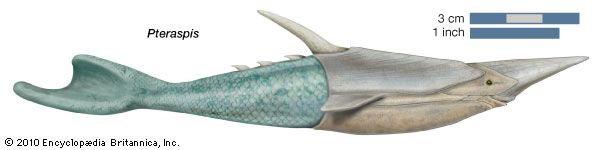
Pteraspis is a genus of extinct, jawless, fishlike vertebrates that lived during the Early Devonian period, approximately 398 million to 416 million years ago. Fossils of these creatures have been discovered in North America and Europe.1
Measuring about 16 cm (6.5 inches) in length, Pteraspis was characterized by a heavy, rounded, bony shield that protected the front of its body, while the rest of its frame was covered in small scales. As the type genus of the family Pteraspidae, it is classified as an ostracoderm, a group of early armored jawless fish, and is noted for having dorsal armor composed of seven large plates. Scientists believe that Pteraspis was an active, though likely inefficient, swimmer.12
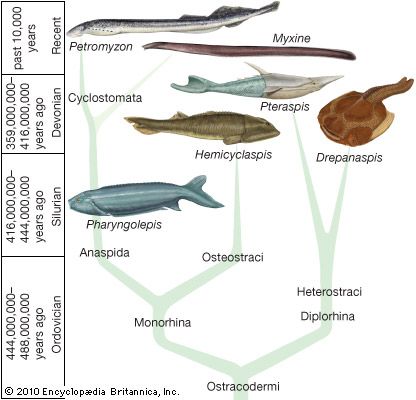
What are ostracoderms?
Ostracoderm is an archaic and informal term used to describe a group of armored, jawless, fishlike vertebrates that emerged during the early Paleozoic Era (542–251 million years ago).5
Key characteristics of these creatures include:
- Physical Structure: They were typically small, measuring less than 12 inches (30.5 cm) in length. Most forms featured a broad head encased in a heavy, bony shield of fused plates, with a slender, scaly posterior body.67
- Evolutionary Significance: They are among the earliest known vertebrates to possess bone, which served as a critical development for vertebrate evolution. Unlike their ancestors, which used gills for both feeding and breathing, ostracoderms were the first known forms to use gills exclusively for respiration.86
- Classification: The term encompasses various extinct groups, such as the heterostracans and osteostracans, as well as modern jawless fish like hagfishes and lampreys/hagfish) and lampreys.5
Ostracoderms are believed to have become extinct by the end of the Devonian period, likely replaced by more efficient, jawed vertebrates such as placoderms and early bony fishes.8
How did jawless fish survive without teeth?
Early jawless vertebrates, such as the extinct agnathans, survived without teeth by utilizing filter feeding as their primary method of nutrition.6
These early organisms likely gathered small food particles from the bottom of their environment through a nibbling or sucking action of the mouth. This food was then drawn into the large gill cavity along with water. Within this cavity, the gill apparatus served a dual purpose: it functioned as a respiratory organ for breathing and as a straining mechanism that captured small organisms, which were then directed into the food canal.6
While modern jawless fish like lampreys and hagfishes have evolved specialized structures to feed, such as rasping, tongue-like organs or suctorial mouths to consume tissue and fluids, these are distinct from the primitive filter-feeding mechanisms of their ancient ancestors.69
What was the environment like during the Devonian Period?
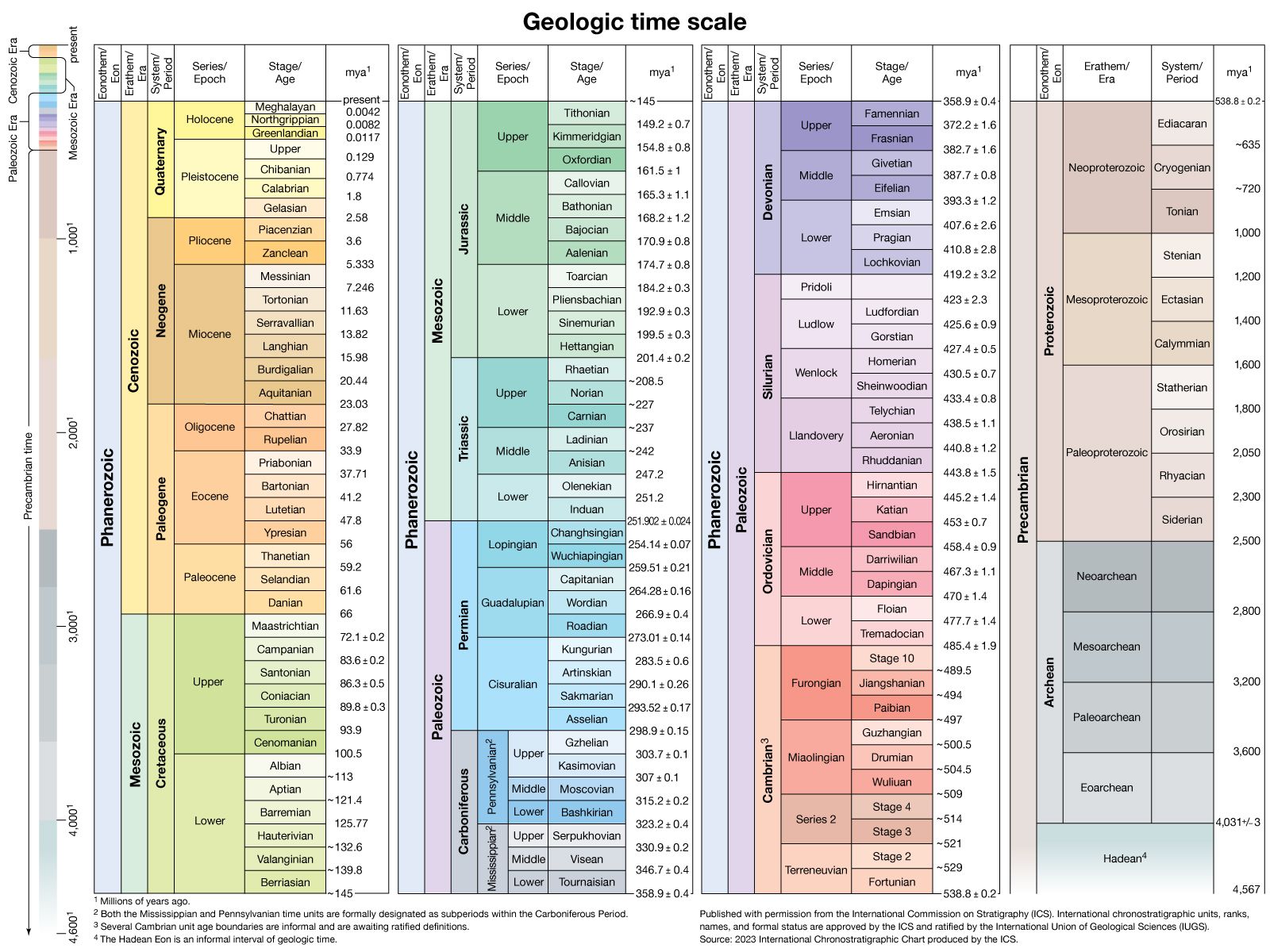
The Devonian Period (approximately 419.2 to 359 million years ago) is famously known as the “Age of Fishes” due to the immense diversity and abundance of marine life that thrived during this time.1112
Geography and Climate
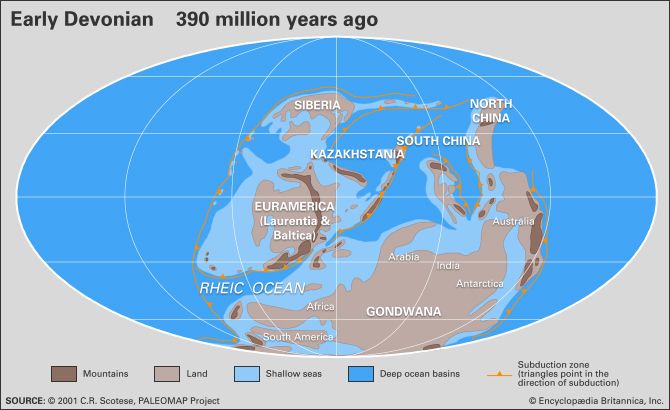
During the Devonian, the Earth’s geography was dominated by the supercontinent Gondwana in the south and a smaller northern landmass called Laurussia (or Euramerica), formed by the collision of Laurentia and Baltica. Approximately 85 percent of the globe was covered by oceans.1113
The climate was generally warm and equitable, with significantly smaller or nonexistent polar ice caps compared to today. Evidence for this warmth includes widespread evaporite basins, carbonate reefs, and coal deposits found in high-latitude regions. However, the period also experienced significant environmental fluctuations, including frequent sea-level changes and episodes of ocean anoxia (reduced oxygen levels), which are linked to major extinction events.11141315
Life and Terrestrial Development
The Devonian marked a pivotal era for life on Earth:
- Marine Life: The seas were dominated by diverse fish, including the armored ostracoderms and placoderms, as well as the first chondrichthians (sharklike fishes) and bony fishes) and bony fishes.16
- Land Colonization: This period saw the rise of vascular plants and the first in-place forests. By the late Devonian, the first four-legged amphibians appeared, signaling the colonization of land by vertebrates.1211
Sources
- Pteraspis — Encyclopædia Britannica
- heterostracan — Merriam-Webster
- Pteraspis — Merriam-Webster
- heterostracan — Merriam-Webster
- ostracoderm — Encyclopædia Britannica
- fish - Agnatha: early jawless fishes — Encyclopædia Britannica
- ostracoderm — Merriam-Webster
- Ostracodermi — Merriam-Webster
- Vertebrate - The cyclostomes — Encyclopædia Britannica
- ostariophysan - Feeding habits — Encyclopædia Britannica
- A Journey Through Time Since the Precambrian - Devonian Period: 419.2 million to about 359 million years ago — Encyclopædia Britannica
- Devonian Period - Paleoclimate — Encyclopædia Britannica
- Devonian Period - Significant geologic events — Encyclopædia Britannica
- Devonian Period - Extinction events — Encyclopædia Britannica
- Devonian Period - Devonian life — Encyclopædia Britannica
- Devonian Period - Vertebrates — Encyclopædia Britannica
Published on · 3 min read