Pycnodontiformes
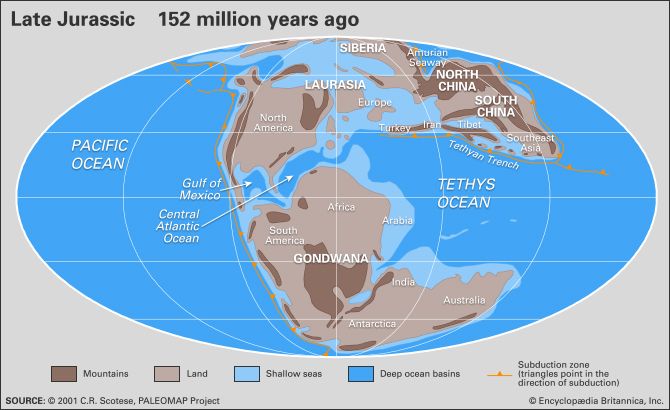
Pycnodontiformes is an order of extinct fishes belonging to the class Actinopterygii that thrived in Jurassic seas approximately 200 million to 146 million…
What is Pycnodontiformes?
Pycnodontiformes is an order of extinct fishes belonging to the class Actinopterygii that thrived in Jurassic seas approximately 200 million to 146 million years ago.1
These fish are characterized by their distinct, deep, and nearly disk-shaped bodies, which suggest they were slow but highly maneuverable swimmers. Their unique anatomy includes elongated dorsal and anal fins, an externally symmetrical caudal fin, and, in many genera, a lack of scales on the posterior body to increase flexibility.12
A defining feature of the order is their specialized feeding apparatus. They possessed a downturned beak and a small mouth equipped with an open pavement of rounded, bulblike teeth with thick enamel, which allowed them to crush shelled invertebrates found in coral reefs. While their anterior teeth were often incisiform—likely used for grasping—their overall skull structure remains a subject of scientific study, as their braincase ossification patterns do not closely match other known groups.12
What kind of environment did coral reefs provide for these fish?
Coral reefs provided a specialized feeding environment for Pycnodontiformes, serving as a primary habitat where these fish could access their preferred food sources.
The reefs were rich in shelled invertebrates, which constituted the main diet of these fish. The unique anatomy of the Pycnodontiformes—specifically their downturned beaks and mouths filled with an open pavement of rounded, thick-enameled, bulblike teeth—was perfectly adapted to crush the hard shells of these reef-dwelling organisms. Their deep, disk-shaped bodies and fin structures suggest they were slow but highly maneuverable, allowing them to navigate the complex, three-dimensional architecture of coral reef ecosystems effectively.12
How do scientists determine the diet of extinct fish from their teeth?
Scientists determine the diet of extinct fish and other animals by analyzing the morphology and arrangement of their teeth, as dental structure is a direct reflection of specialized feeding habits.
Key methods and indicators include:
- Dental Morphology: The shape of the teeth provides significant clues. For example, teeth with high, sharp cusps are typically used for tearing flesh, while low, rounded cusps (termed bunodont) are associated with omnivorous diets. In contrast, Pycnodontiformes utilized an open pavement of rounded, bulblike teeth to crush hard-shelled invertebrates.23
- Occlusion and Arrangement: How teeth meet (occlusion) and their overall arrangement are critical. Animals with massive, fused dentition often feed on hard-shelled prey, whereas those with specialized shearing blades, such as ceratopsian dinosaurs, likely consumed tough, fibrous vegetation.45
- Functional Context: Scientists also look at the broader skull structure and body plan. A downturned beak or an elongated jaw can indicate specific foraging behaviors, such as probing for food in recesses or sand.34
- Direct Evidence: While dental analysis provides strong inferences, researchers also look for direct evidence, such as fossilized stomach contents or coprolites (fossilized feces), which can confirm the consumption of specific prey items.56
What are some other examples of extinct fish from the Jurassic period?
Beyond the specialized Pycnodontiformes, the Jurassic seas were home to a variety of other fish species, ranging from massive giants to ancestral forms of modern groups:
- Leedsichthys: Recognized as the largest bony fish to have ever lived, this massive creature reached lengths of approximately 20 meters (66 feet) during the Jurassic period.71
- Chondrosteiformes: This order of ray-finned saltwater fishes was prominent from the Early Triassic through the Late Jurassic. These fish included suctorial feeders and are considered to be the ancestors of modern sturgeon.8
- Chondrichthians: This group, which includes sharks, remained a common and diverse component of Jurassic marine vertebrate life.71
- Teleosts: While they are the dominant type of fish today, teleosts began to acquire their modern appearance during the Jurassic, developing ossified vertebrae and evolving significant changes in their fin and tail structures.7
Sources
- Pycnodontiformes — Encyclopædia Britannica
- holostean - Extinct groups — Encyclopædia Britannica
- mammal - Teeth — Encyclopædia Britannica
- tetraodontiform - Feeding habits — Encyclopædia Britannica
- dinosaur - The plant eaters — Encyclopædia Britannica
- dinosaur - The flesh eaters — Encyclopædia Britannica
- Jurassic Period - Vertebrates — Encyclopædia Britannica
- Jurassic Period - Marine life — Encyclopædia Britannica
- A Journey Through Time Since the Precambrian - Jurassic Period: 201.3 million to 145 million years ago — Encyclopædia Britannica
- Chondrosteiformes — Encyclopædia Britannica
Published on · 3 min read