Chota Nagpur Plateau
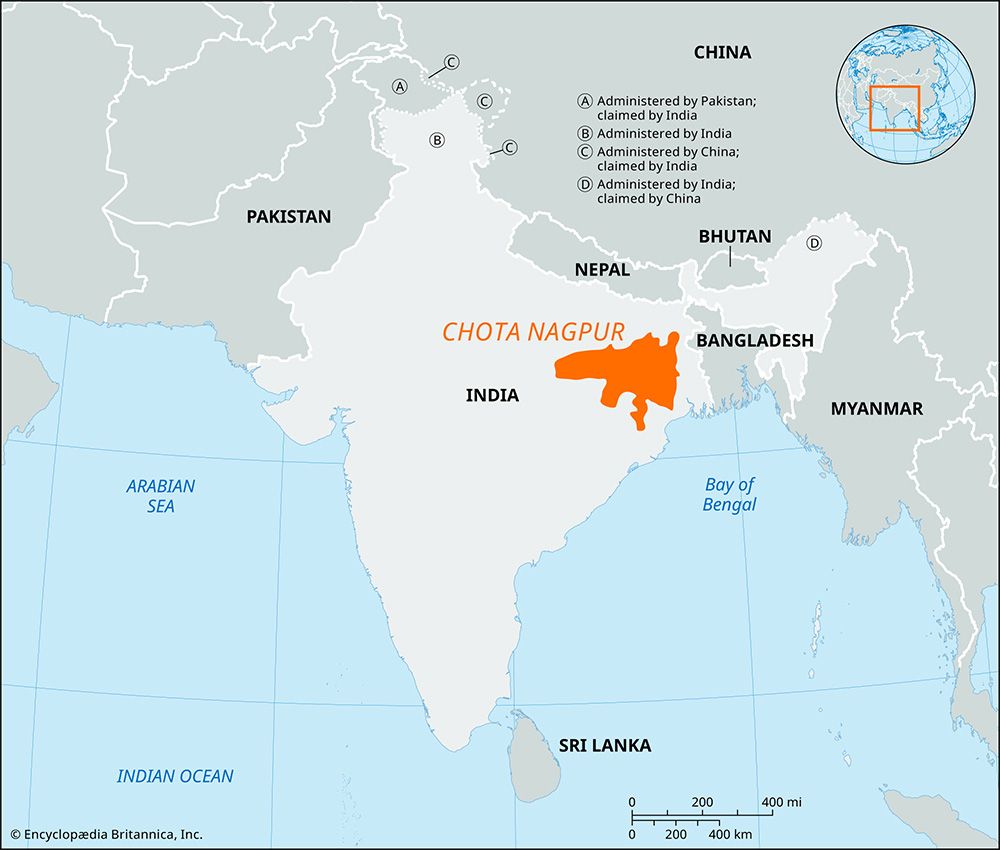
The Chota Nagpur plateau holds significant historical and economic importance in India. Historically, the region was governed by indigenous chiefs before…
What is the historical significance of the Chota Nagpur Plateau in Indian history?
The Chota Nagpur plateau holds significant historical and economic importance in India. Historically, the region was governed by indigenous chiefs before falling under British control in 1765 as part of Bihar. During the 18th and 19th centuries, the plateau became a site of significant resistance against British expansion, most notably during the Ho revolt (1820–27) and the Munda uprising (1831–32).1
The region’s long-standing struggle for autonomy, driven by the concerns of its indigenous populations, culminated on November 15, 2000, when the area was separated from Bihar to form the state of Jharkhand.1
Beyond its political history, the plateau is the richest mineral belt in India. Its vast resources—including coal, iron ore, copper, and mica—have been central to the nation’s industrial development, particularly through the Damodar River valley’s energy and steel production projects.23
What are the major rivers that originate from or flow through the Chota Nagpur Plateau?
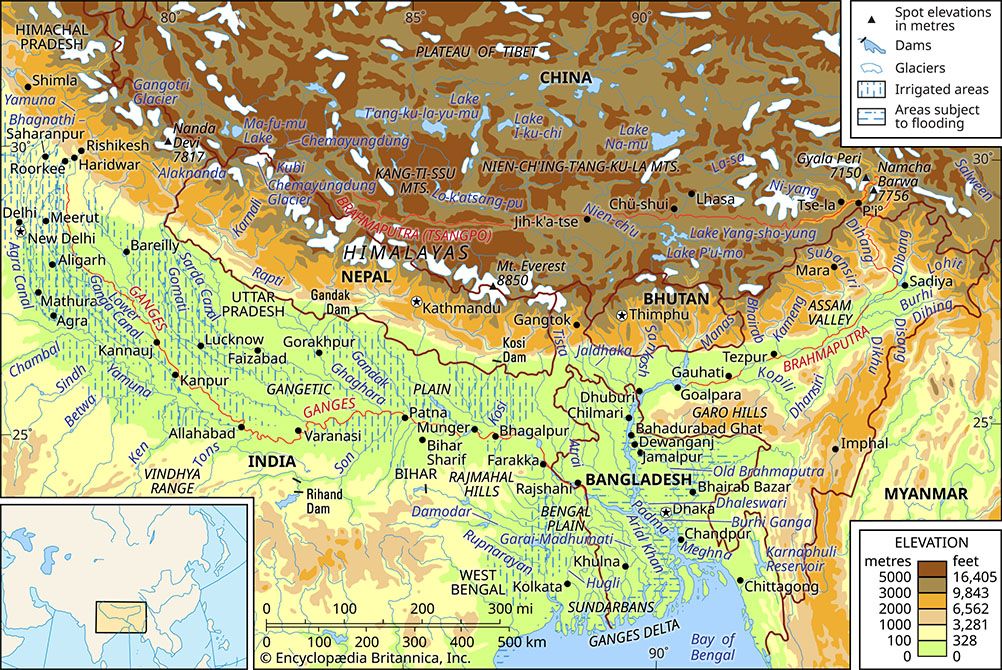
The Chota Nagpur Plateau serves as a vital watershed for several major rivers in eastern India. The region is situated between the basins of the Ganges (Ganga) and Son rivers to the north and the Mahanadi River to the south.1
Key rivers associated with the plateau include:
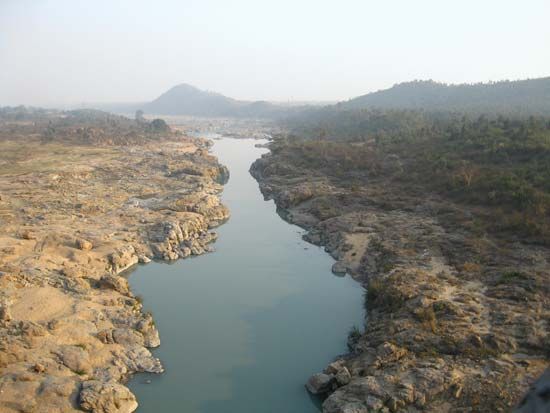
- Damodar River: This river runs through the center of the plateau from west to east, flowing through a faulted, coal-bearing valley. It rises in the plateau with several tributaries, including the Bokaro and Konar rivers.okaro](https://www.britannica.com/place/Bokaro) and Konar rivers.14
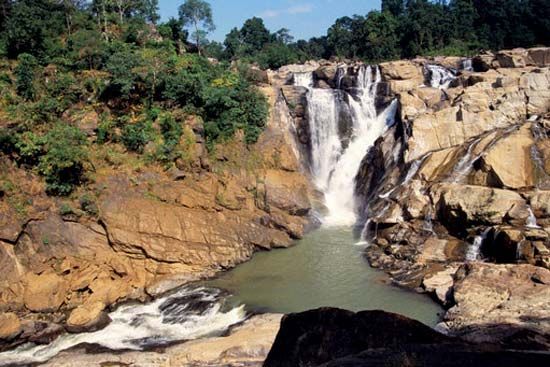
- Subarnarekha River: Rising in southern Bihar, this river flows eastward across the plateau, exiting via the Hundrugbagh waterfall before continuing toward the Bay of Bengal. Its primary tributaries include the Kanchi and Karkari rivers.56
- Brahmani River: This river drains the southern portion of the plateau region.6
- Son River: While it does not originate on the plateau, it flows along much of the northwestern boundary of the region.6
How has the Chota Nagpur Plateau influenced the development of nearby urban centers?
The Chota Nagpur Plateau has been a primary driver of urbanization in eastern India, largely due to its status as the country’s richest mineral belt. The abundance of essential resources—such as coal, iron ore, and mica—has necessitated the development of industrial hubs directly within or near the plateau.138
The influence of the plateau on urban centers is evident in several ways:
- Industrial Concentration: The Damodar River valley, rich in coal, has fostered the growth of major industrial cities like Bokaro, Dhanbad, Jharia, and Sindri. These centers host large-scale operations, including steel mills and thermal power plants, which serve as the backbone of India’s heavy industry.69138
- Planned Development: Jamshedpur, often called Tatanagar, exemplifies this growth; it was established following the opening of a steel plant in 1911 and has since become a major urban agglomeration and rail junction.10
- Infrastructure Connectivity: The need to transport minerals and industrial goods has led to the creation of dense rail and road networks that connect these plateau cities to major metropolitan areas like Kolkata and Patna, further integrating the region into the national economy.19
What indigenous tribal groups inhabit the Chota Nagpur Plateau, and what are their cultural characteristics?
The Chota Nagpur Plateau is home to several prominent indigenous tribal groups, each with distinct linguistic and cultural traditions.
Major Tribal Groups
- Munda: These groups speak Munda languages of the Austroasiatic stock. Historically, they inhabited remote, forested areas and are primarily agriculturists who have maintained their cultural identity despite external influences.12
- Oraon: Also known as the Kurukh, they speak a Dravidian language. Their social structure is organized into clans associated with totems, and they feature a unique “bachelors’ dormitory” system used for training and socializing the youth.13
- Santhal: One of the largest groups, they speak Santhali, a Munda language. They are organized into 12 patrilineal clans with strict marriage prohibitions between members of the same clan.14
Cultural Characteristics
- Social Organization: Many of these tribes, such as the Santhal and Oraon, utilize a system of village headmen assisted by councils of elders to manage local affairs.1314
- Religion: Traditional beliefs often center on the worship of supreme gods, ancestors, and various spirits. However, these practices have been influenced by Hinduism, and many individuals have converted to Christianity.1314
- Economy: While traditionally dependent on agriculture—particularly rice cultivation—many tribal members have integrated into the modern economy, working in coal mines and steel factories in industrial centers like Jamshedpur like Jamshedpur.14
Sources
- Chota Nagpur plateau — Encyclopædia Britannica
- Jharkhand - History — Encyclopædia Britannica
- Jharkhand - Resources and power — Encyclopædia Britannica
- Subarnarekha River — Encyclopædia Britannica
- Jharkhand - Relief, drainage, and soils — Encyclopædia Britannica
- Damodar River — Encyclopædia Britannica
- Chota Nagpur — Merriam-Webster
- Jharkhand - Settlement patterns — Encyclopædia Britannica
- Nagpur — Encyclopædia Britannica
- economy of India - Industrial distribution and regional development — Encyclopædia Britannica
- Jamshedpur — Encyclopædia Britannica
- Munda — Encyclopædia Britannica
- Oraon — Encyclopædia Britannica
- Santhal — Encyclopædia Britannica
- Odisha - The arts — Encyclopædia Britannica
- Jashpur Pats — Encyclopædia Britannica
Published on · 3 min read