Brahmani River
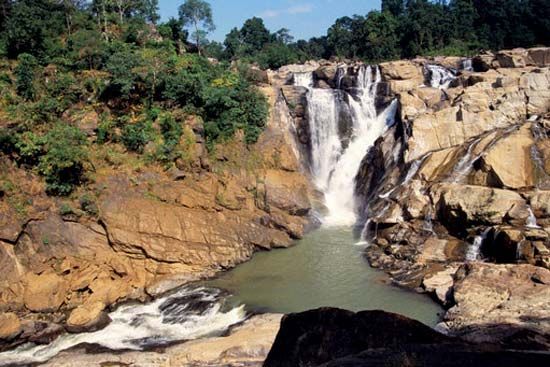
The Brahmani River is a 300-mile (480-km) waterway located in eastern India, primarily flowing through the state of Odisha.
What is Brahmani River?
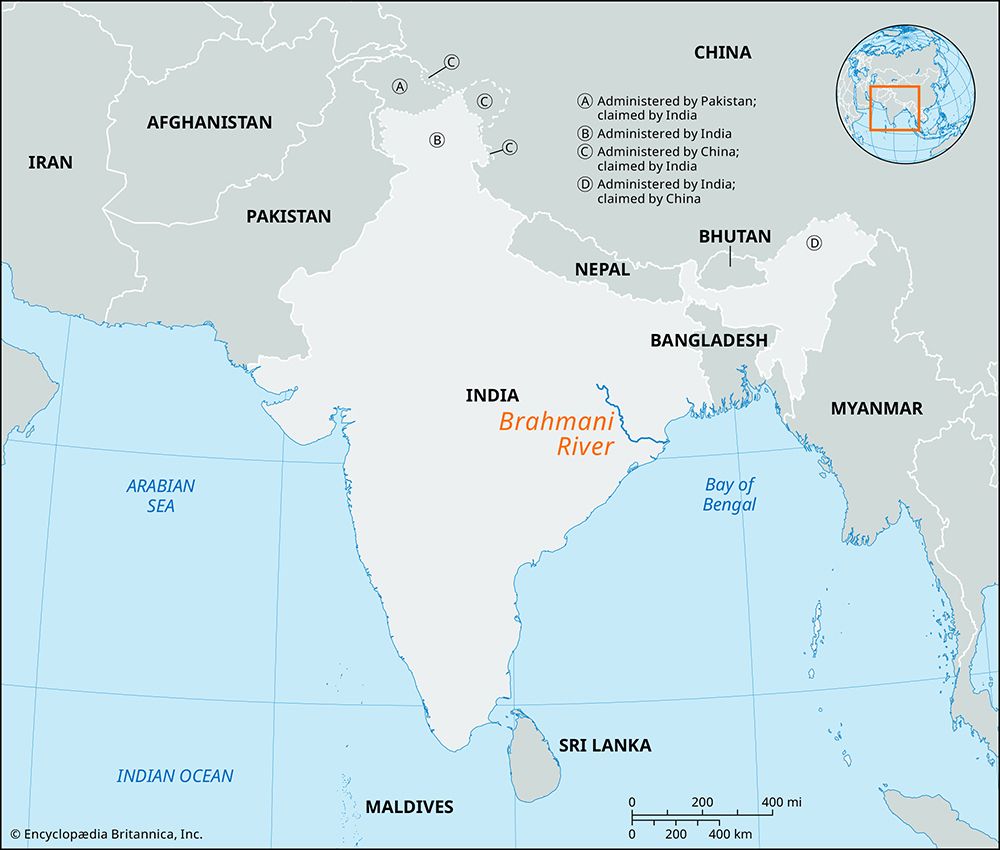
The Brahmani River is a 300-mile (480-km) waterway located in eastern India, primarily flowing through the state of Odisha.1
It is formed by the confluence of the Sankh and South Koel rivers in southern Bihar. The river follows a south-southeast course, passing through Bonaigarh and Talcher before turning east to join the northern branches of the Mahanadi River, ultimately emptying into the Bay of Bengal at Palmyras Point.1
Notably, the Brahmani is one of the few rivers that cuts across the Eastern Ghats. It also features a minor gorge at Rengali, the site of a significant dam.1
What are the Eastern Ghats?
The Eastern Ghats are a series of discontinuous and dissimilar hill masses that form the eastern edge of the Deccan plateau in peninsular India. These mountains trend generally northeast-southwest along the Bay of Bengal, separated from the coast by a strip of level land.2
Key characteristics include:
- Elevation: The range has an average elevation of about 2,000 feet (600 meters), with some peaks reaching 4,000 feet (1,200 meters) or higher. The high point is Arma Konda, which stands at 5,512 feet (1,680 meters) in Andhra Pradesh. in Andhra Pradesh.2
- Geography: The chain is interrupted by a 100-mile (160-km) wide gap through which the Krishna and Godavari rivers flow toward the coast. Southwest of Chennai, the range continues as the Javadi and Shevaroy hills before merging with the Western Ghats.2
- Vegetation: The slopes of these mountains contain sparse forests that provide valuable timber.2
How do dams like the one at Rengali affect river ecosystems?
Dams, such as the one at Rengali, significantly alter river ecosystems by regulating water flow for purposes like irrigation, flood control, and hydroelectric power generation. While these projects are often viewed as essential for industrial and technological progress, they frequently face criticism for causing substantial ecological damage and destroying local livelihoods.56
Key impacts on river ecosystems include:
- Disruption of Migration: Dams can obstruct the movement of aquatic species, particularly migratory fish. While technologies like fish ladders and fish locks are sometimes employed to help fish bypass these barriers, their success is difficult to sustain, often leading to dramatic population declines.7
- Sedimentation: Reservoirs can become filled with silt, which reduces their storage capacity and alters the natural sediment transport essential for downstream habitats.8
- Habitat Alteration: The creation of large reservoirs can submerge vast areas, displacing human populations and destroying terrestrial and aquatic habitats.6
- Flow Regulation: By controlling water release, dams change the natural pulse of a river, which can negatively affect the fragile ecosystems that rely on seasonal flow variations.6
What is the significance of the Mahanadi River delta?
The Mahanadi River delta is a significant geographical feature in eastern India, formed by the river’s extensive silt-depositing activity as it enters the Bay of Bengal near Paradip. Historically, the delta was prone to devastating floods, earning the river the epithet “the sorrow of Odisha,” which led to the construction of the Hirakud Dam to manage water flow and provide irrigation.12
The delta’s significance includes:
- Agricultural and Economic Support: The river system provides essential water for irrigation through a vast canal network, supporting agriculture across the Odisha plains.1213
- Cultural and Religious Importance: The region hosts major pilgrimage sites, including Puri and the ancient sun temple at Konark.12
- Geological Character: As part of the predominantly deltaic eastern coastal plain, the area is defined by deep sedimentation and is traversed by numerous distributaries, such as the Kathjodi and Birupa.1214
Sources
- Brahmani River — Encyclopædia Britannica
- Ghats — Encyclopædia Britannica
- Eastern Ghats — Merriam-Webster
- Western Ghats — Encyclopædia Britannica
- water infrastructure in India - Dams — Encyclopædia Britannica
- Why do beavers build dams? — Encyclopædia Britannica
- dam - Fish passes — Encyclopædia Britannica
- river - Falls attributable to constructional processes — Encyclopædia Britannica
- dam - Construction techniques — Encyclopædia Britannica
- Tehri Dam — Encyclopædia Britannica
- dam - Reservoirs — Encyclopædia Britannica
- Mahanadi River — Encyclopædia Britannica
- Odisha - Resources and power — Encyclopædia Britannica
- India - Coastal areas — Encyclopædia Britannica
- Mahanadi — Merriam-Webster
- Ganges River - Plant and animal life — Encyclopædia Britannica
Published on · 3 min read