Damodar River
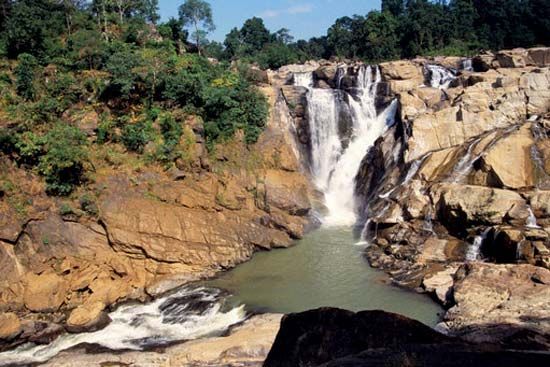
The Damodar River rises in the Chota Nagpur plateau and is fed by several tributaries. Among its most notable tributaries are the Bokaro and the Konar rivers.
What are the major tributaries of the Damodar River?
The Damodar River rises in the Chota Nagpur plateau and is fed by several tributaries. Among its most notable tributaries are the Bokaro and the Konar rivers.1
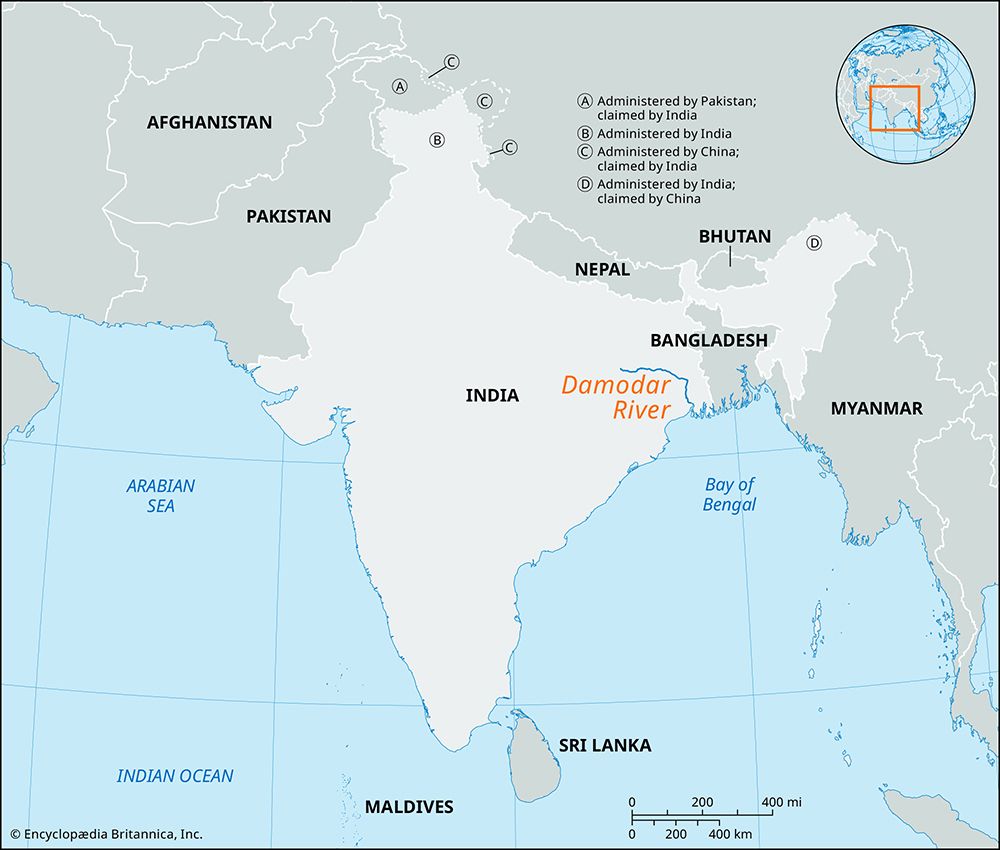
What is the geographical location and course of the Damodar River in India?
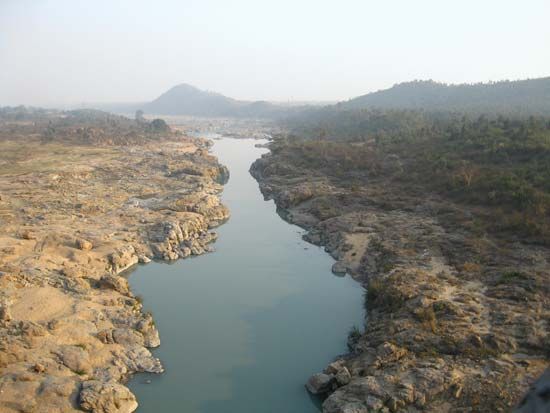
The Damodar River is located in northeastern India. It originates in the Chota Nagpur plateau, specifically within the south-central region of Bihar state.1
From its source, the river follows a generally eastward course for approximately 368 miles (592 km). It flows through the state of West Bengal before ultimately joining the Hugli (Hooghly) River southwest of Kolkata. The river runs through a faulted valley that serves as a major center for coal and mica mining, and its path is characterized by significant industrial development supported by the Damodar Valley Corporation.12
How has the Damodar River influenced the industrial development of the region it flows through?
The Damodar River has been a cornerstone of industrial development in northeastern India, primarily due to its location within a rich mineral-bearing region. The Damodar valley contains India’s most significant coal- and mica-mining fields, including the major sites of Jharia, Raniganj, and Giridih.1
The Damodar Valley Corporation, established in 1948, transformed the region by constructing multipurpose dams and reservoirs that provide essential hydroelectricity and support coal-fired thermal power plants. Furthermore, an 80-mile navigation canal links these coalfields directly to the Hugli-Kolkata industrial complex, facilitating the transport of resources.1
This infrastructure has fostered a robust industrial corridor, hosting major facilities such as steel plants in Durgapur and Burnpur, as well as a locomotive plant at Chittaranjan. Beyond heavy industry, the river’s management supports extensive irrigation, agriculture, and a dense network of rail and road connections that link urban centers like Jharia and Sindri, driving the region’s economic growth.31
How has the Damodar Valley Corporation (DVC) impacted the management of the river and its resources?
The Damodar Valley Corporation (DVC), established in 1948, has fundamentally transformed the management of the Damodar River and its surrounding resources through a comprehensive, multipurpose approach.1
Infrastructure and Resource Management
The DVC has implemented a series of engineering projects designed to harness the river’s potential while mitigating its risks:
- Dams and Reservoirs: The corporation constructed four major multipurpose dams—Tilaiya, Maithon, Konar, and Panchet Hill—to create a system of reservoirs that regulate water flow.1
- Flood Control and Irrigation: These structures provide critical flood control and support the irrigation of approximately 950,000 acres (385,000 hectares) of land, primarily within West Bengal.1
- Navigation: The project includes the Durgapur diversionary barrage and an 80-mile (130-km) navigation canal, which provides a vital transport link between the region’s coalfields and the Hugli-Kolkata industrial complex.1
Power Generation and Regional Development
The DVC serves as a primary driver of energy and economic stability in the region:
- Energy Grid: The DVC operates a network of hydroelectric dams and coal-fired thermal power plants. These stations are integrated into a unified grid that supplies electricity to both urban and rural areas across Jharkhand and West Bengal.14
- Integrated Development: Beyond energy and water management, the corporation’s initiatives encompass afforestation, fish breeding, and recreational development, fostering the general economic growth of the valley.1
Sources
- Damodar River — Encyclopædia Britannica
- Chota Nagpur plateau — Encyclopædia Britannica
- West Bengal - Industry — Encyclopædia Britannica
- Jharkhand - Resources and power — Encyclopædia Britannica
Published on · 2 min read