Christmas Cactus
The Christmas cactus (Schlumbergera × buckleyi) derives its common name from its characteristic habit of blooming annually around Christmastime in the…
How did the Christmas cactus get its name, and when does it typically bloom?
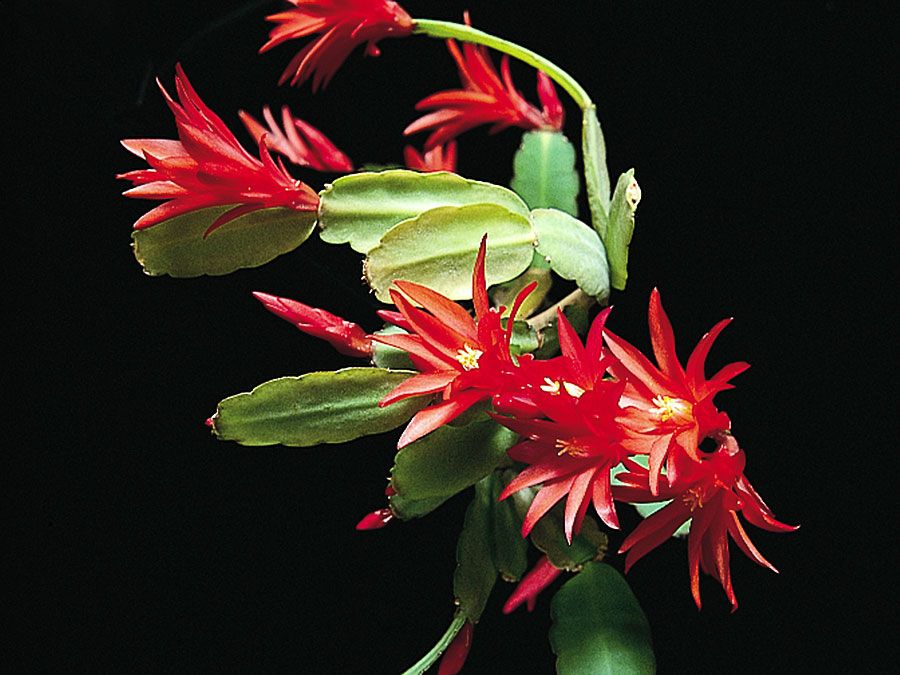
The Christmas cactus (Schlumbergera × buckleyi) derives its common name from its characteristic habit of blooming annually around Christmastime in the Northern Hemisphere.123
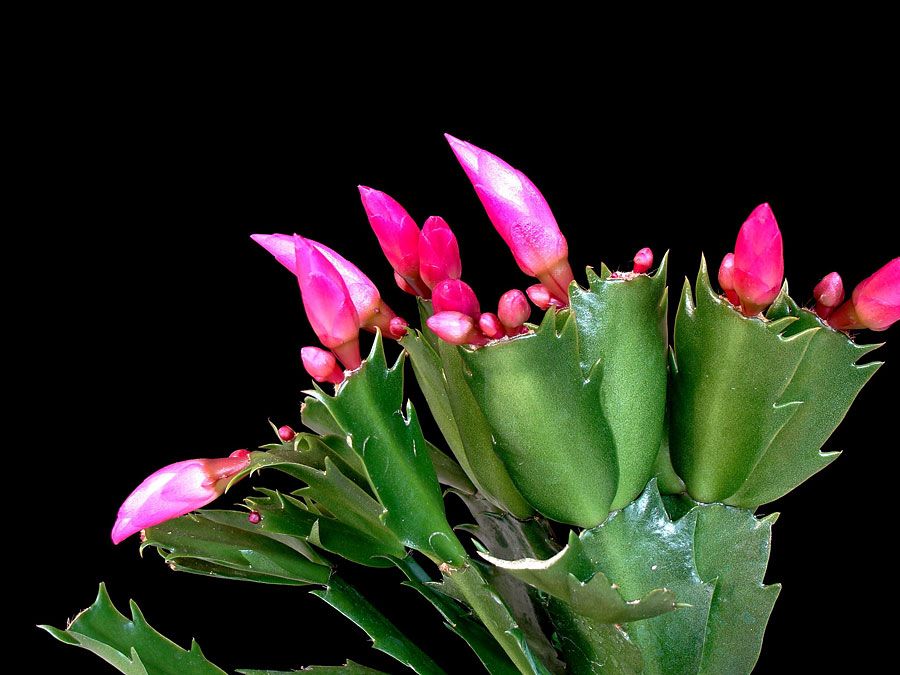
While often confused with the Thanksgiving cactus (Schlumbergera truncata), which typically flowers in late fall, the true Christmas cactus is a hybrid native to the Brazilian rainforests. These plants grow as epiphytes, meaning they naturally thrive on trees or shrubs rather than in soil. The distinction between the two is often found in their stem margins: the Christmas cactus features rounded, scalloped indentations, whereas the Thanksgiving cactus has sharply saw-toothed edges.14
Because they are popular houseplants known for their vivid, showy flowers, they have been a traditional holiday gift since the mid-19th century.1
What are some popular cultivars of Christmas cactus?
While the term “Christmas cactus” is often used as a general label for various Schlumbergera hybrids, the provided search results do not identify specific named cultivars. Instead, they clarify that the plant is a hybrid of Schlumbergera truncata and Schlumbergera russelliana.13
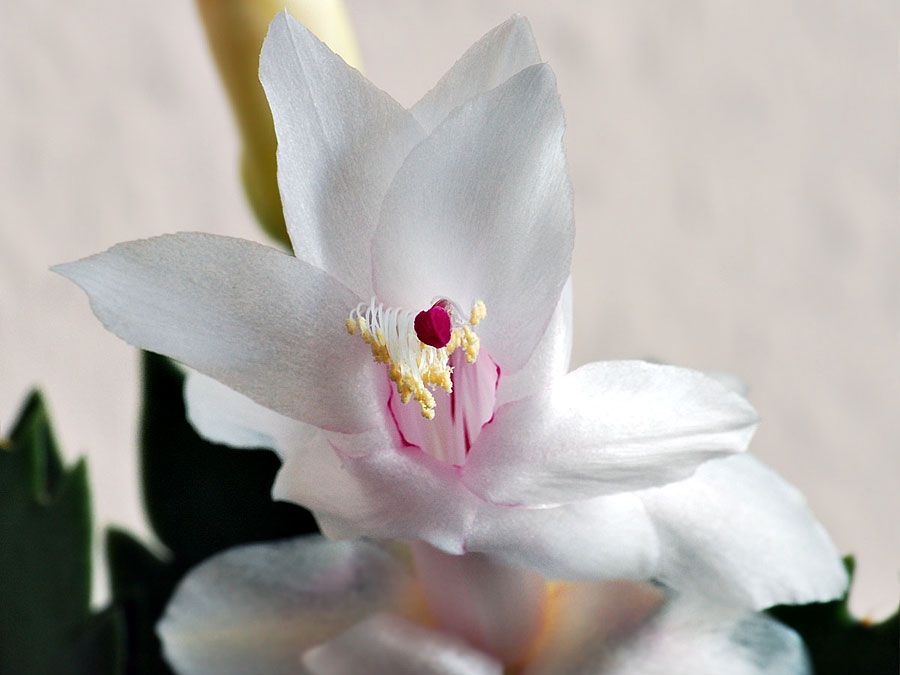
Because these plants are frequently cross-bred, they are categorized by their physical traits rather than specific cultivar names. They are generally distinguished by their flower colors—which include red, pink, white, violet, and yellow—and the shape of their stem margins. It is common for the Thanksgiving cactus to be marketed under the name “Christmas cactus,” even though the two are distinct; the true Christmas cactus features rounded, scalloped stem edges, while the Thanksgiving cactus has sharply saw-toothed margins.243
What is the scientific classification of the Christmas cactus?
The Christmas cactus is a hybrid plant belonging to the Cactaceae family. Its scientific classification is generally denoted as Schlumbergera × buckleyi (or alternatively S. bridgesii).12
As a hybrid, it is the result of crossing two species native to the Brazilian rainforests: Schlumbergera truncata (the Thanksgiving cactus) and Schlumbergera russelliana. Within the genus Schlumbergera, the plant is also frequently associated with the synonym Zygocactus.12
These plants are classified as epiphytes, meaning they typically grow on trees or shrubs rather than in the ground. While they are often confused with the Easter cactus—which has been reclassified from S. gaertneri to Hatiora gaertneri—the Christmas cactus remains distinct due to its specific blooming cycle and the rounded, scalloped margins of its stem joints.12
How does the Christmas cactus differ from other types of cacti?
The Christmas cactus (Schlumbergera × buckleyi) differs significantly from the stereotypical desert cactus in both its habitat and physical structure. Unlike many cacti adapted to arid, sun-drenched environments, the Christmas cactus is an epiphyte native to the Brazilian rainforests, where it typically grows on trees or shrubs in shaded, humid conditions.135
Key differences include:
- Growth Habit: It is a spineless, leafless plant that utilizes photosynthetic stem segments called cladodes rather than traditional leaves or sharp, needlelike spines.5
- Stem Morphology: The stems are flattened and feature rounded, crenated margins, which distinguish them from the sharply saw-toothed edges of the related Thanksgiving cactus.3
- Pollination: The plant produces elongated, vivid flowers adapted specifically for hummingbirds, rather than the small or inconspicuous flowers found on many desert species.15
It is important to note that the “desert Christmas cactus” (a type of cholla) is an entirely different plant, characterized by cylindrical, spiny joints and a desert habitat, and should not be confused with the holiday-blooming Schlumbergera hybrid.6
Sources
- Christmas plants and animals: 12 festive species - Christmas cactus ( Schlumbergera × buckleyi ; alternatively, S. bridgesii ) — Encyclopædia Britannica
- Christmas cactus — Merriam-Webster
- Christmas cactus — Encyclopædia Britannica
- 7 Especially Fitting Common Names for Plants | Christmas Cactus — Merriam-Webster
- Schlumbergera — Encyclopædia Britannica
- Did you know? — Merriam-Webster
Published on · 3 min read