Echeveria
Echeveria is a genus of approximately 150 species of succulent plants belonging to the stonecrop family (Crassulaceae). Native to regions ranging from Texas…

What are the defining characteristics of Echeveria plants?
Echeveria is a genus of approximately 150 species of succulent plants belonging to the stonecrop family (Crassulaceae). Native to regions ranging from Texas to Argentina, these plants are defined by several distinct characteristics:1
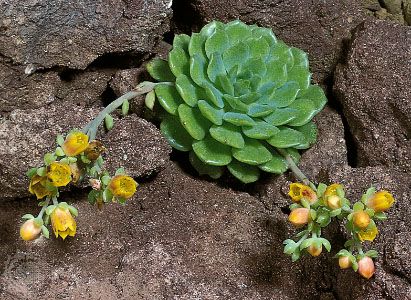
- Growth Habit: They are widely recognized for their compact, symmetrical leaf rosettes. Many species are colloquially known as hen-and-chicks due to their tendency to produce clusters of new plantlets, or offsets, around the parent plant.1
- Foliage: The leaves are typically broad and fleshy, featuring surfaces that may be waxy, velvety, or powdery. They often exhibit iridescence and can develop red edges when exposed to bright sunlight.1
- Flowers: A key feature is the prominent, stalked inflorescence—a flower cluster that typically rises high above the foliage. These flowers often feature erect petals.12
Because of their aesthetic appeal and manageable size, many varieties are popular choices for container gardening and succulent collections.1
How many species of Echeveria exist, and where are they native to?
The genus Echeveria consists of approximately 150 species of succulent plants within the stonecrop family. These plants are native to a broad geographic range extending from Texas to Argentina.1
What are some popular Echeveria varieties for indoor gardening?
Several Echeveria varieties are well-suited for indoor gardening due to their compact size and attractive, symmetrical rosettes. Smaller species are particularly favored for use as pot plants or in dish gardens.
Popular varieties for indoor cultivation include:
- Wax rosette (Echeveria ×gilva): A compact variety prized for its aesthetic form in small containers.1
- Pearl echeveria (E. elegans): Also known as the Mexican snowball, this is a classic choice for indoor succulent collections.1
- Plush plant (E. pulvinata): Notable for its velvety leaf texture, making it a handsome addition to dish gardens.1
These plants are generally appreciated for their fleshy, often iridescent leaves and the way they produce clusters of new plantlets, or offsets, around the parent plant. When grown indoors, they thrive in environments that mimic their natural preference for bright light and well-drained conditions.13
How do Echeveria plants differ from other succulents in the Crassulaceae family?
Echeveria plants are distinguished from other members of the Crassulaceae family primarily by their growth habit and floral structure. While the broader family is characterized by thick, fleshy leaves and Crassulacean Acid Metabolism, Echeveria is specifically noted for its compact, symmetrical leaf rosettes.14
Key differences include:
- Rosette Formation: Unlike many other genera in the family, such as the mat-forming Sempervivum (also called hen-and-chicks) or the shrubby Crassula, Echeveria is highly prized by collectors for its distinct, symmetrical rosette shape.14
- Inflorescence: Echeveria produces a prominent, stalked flower cluster that typically rises high above the leaves, whereas other genera may have different flowering patterns.1
- Leaf Surface: The leaves often feature unique waxy, velvety, or powdery surfaces that can appear iridescent or develop red edges when exposed to bright sunlight.1
- Reproduction: While some other genera like Kalanchoe produce clonal plantlets on their leaf margins, Echeveria typically develops offsets in a cluster around the base of the parent plant.14
Sources
- echeveria — Encyclopædia Britannica
- echeveria — Merriam-Webster
- houseplant - Succulents — Encyclopædia Britannica
- Crassulaceae — Encyclopædia Britannica
Published on · 2 min read