Dyckia
Dyckia is a genus of approximately 80 species of plants native to South America, belonging to the pineapple family (Bromeliaceae).
What is Dyckia?
Dyckia is a genus of approximately 80 species of plants native to South America, belonging to the pineapple family (Bromeliaceae).1
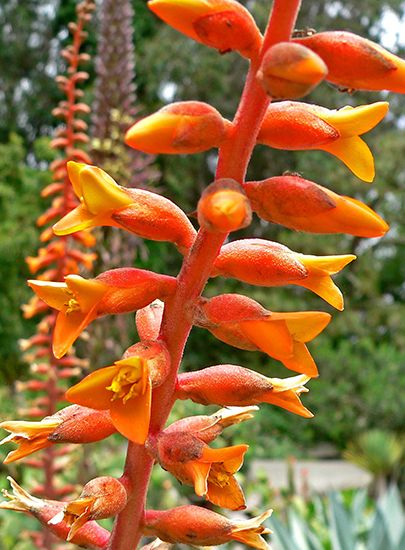
These plants are typically stemless and characterized by dense rosettes of long, stiff, and often fleshy leaves that feature spiny edges and sharp tips. They produce small, generally yellow or orange flowers. Two specific species, D. rariflora and D. sulphurea (also known as D. brevifolia), are frequently grown indoors as decorative houseplants.1
D. rariflora is noted for its nearly stalkless flower cluster that can reach about 45 cm (17 inches) in height, while D. sulphurea produces a flower stalk rising approximately 30 cm (12 inches) that supports 30 to 40 yellow blooms.1
What are the main characteristics of the Bromeliaceae family?
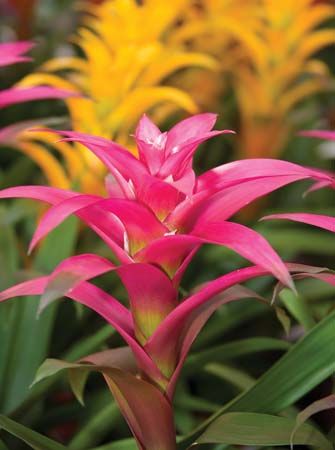
The Bromeliaceae family, commonly known as the pineapple family, consists of more than 3,000 species of herbaceous evergreen perennials within the order Poales. Native primarily to the tropical New World and the West Indies, these plants exhibit several distinct characteristics:
- Growth Habit: Many members are short-stemmed epiphytes that grow on trees or cacti for physical support, though many others are terrestrial.
- Leaves: They feature simple, spirally arranged leaves. In some rainforest species, these leaves form a hollow tube known as a tank bromeliad, which collects water and provides a habitat for various animals.
- Flowers: The flowers typically have three parts with contrasting sepals and petals, often appearing in long spikes surrounded by brightly coloured bracts.
- Fruit: Most species produce fleshy fruit, while others develop dry capsules.
- Specialization: A few species, such as Brocchinia reducta, have evolved to be carnivorous.
How do Dyckia plants adapt to their native South American environments?
Dyckia plants are well-adapted to their native South American environments through several specialized physical traits. Their primary survival strategy involves a growth habit characterized by dense rosettes of long, stiff, and often fleshy leaves. This structure helps the plant conserve moisture and provides structural integrity in often harsh or arid conditions.
Furthermore, the leaves are equipped with spiny edges and sharp tips, which serve as a defense mechanism against herbivores. While the provided information focuses on their morphology, these features collectively allow Dyckia to thrive in their specific ecological niches within the Bromeliaceae family.
What are some tips for growing succulents indoors?
Growing succulents indoors is popular because many of these plants are well-adapted to survive with minimal care. To successfully cultivate them, consider the following tips:
- Light Requirements: Most succulents thrive in bright, direct sunlight. When choosing a location, ensure the plant receives ample light to maintain its health and form.5
- Watering Habits: These plants have developed specialized tissues to store water, allowing them to survive in arid conditions. Consequently, they require very little water. Overwatering is a common mistake; allow the soil to dry out significantly between waterings.65
- Plant Selection: If you are a beginner or have a location with less-than-ideal light, consider durable options like Sansevieria (snake plants), which are known for tolerating neglect. Other popular indoor choices include Aloe, Echeveria, Kalanchoe, and Crassula (jade plants).56
- Understanding Physiology: Many succulents utilize crassulacean acid metabolism, an adaptation that minimizes water loss by keeping their stomata closed during the day5.
Sources
- Dyckia — Encyclopædia Britannica
- Bromeliaceae — Encyclopædia Britannica
- list of plants in the family Bromeliaceae — Encyclopædia Britannica
- epiphyte — Encyclopædia Britannica
- succulent — Encyclopædia Britannica
- houseplant - Succulents — Encyclopædia Britannica
Published on · 2 min read