Christmas Island
Christmas Island was first sighted in 1615 by Richard Rowe and was later named on Christmas Day 1643 by Captain William Mynors of the British East India…
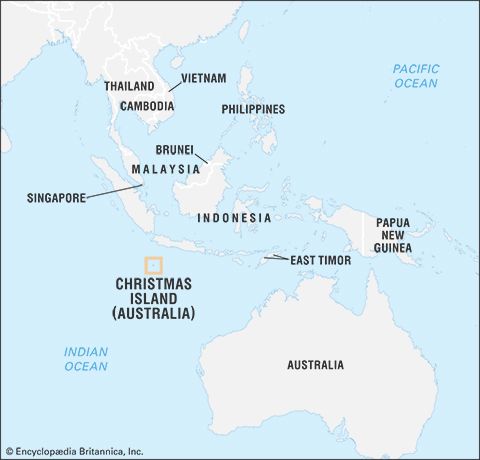
What is the history of Christmas Island’s discovery and colonization?
Christmas Island was first sighted in 1615 by Richard Rowe and was later named on Christmas Day 1643 by Captain William Mynors of the British East India Company.1
The island remained largely uninhabited until the late 19th century. Following the discovery of high-quality phosphate deposits, Great Britain annexed the island in 1888. The first settlement was established at Flying Fish Cove by George Clunies-Ross, and mining operations soon followed under a lease granted to Clunies-Ross and the naturalist John Murray.1
In 1900, the island was incorporated into the British crown colony of the Straits Settlements. During World War II, it was occupied by Japanese forces. Following the war, the governments of Australia and New Zealand acquired the mining assets, and in 1958, the island officially became an Australian territory.1
What role does Christmas Island play in Australia’s immigration policies?
In the early 21st century, Christmas Island served as the location for one of Australia’s controversial detention centers used for the offshore processing of asylum seekers attempting to reach the Australian mainland.1
These facilities were established as part of broader government strategies to manage maritime arrivals and regulate immigration. The use of such remote, external territories for processing has been a subject of significant public and political debate regarding the treatment of individuals seeking asylum and the ethical implications of offshore detention policies.1
What is the cultural makeup of Christmas Island’s population?
The population of Christmas Island is ethnically diverse, reflecting its history as a site for phosphate mining operations. The demographic makeup primarily includes:
- Ethnic Chinese: A significant portion of the population.
- Malay: Laborers who were historically recruited from Malaysia, Singapore, and the Cocos (Keeling) Islands.
- European: A smaller segment of the population is of European ancestry.1
Most residents are Australian citizens or residents under the statutes of the Christmas Island Act and the Citizenship Act. Traditionally, the population consisted largely of employees associated with the island’s phosphate mining industry, though the economic focus has shifted toward tourism in recent decades.1
How has phosphate mining affected Christmas Island’s economy and environment?
Phosphate mining has been the defining force in the economic and environmental history of Christmas Island.
Economic Impact
For much of the 20th century, the island’s economy was almost entirely dependent on the mining and extraction of phosphate. Following the discovery of high-quality deposits in the late 1880s, the industry drove the island’s development, with most residents traditionally employed by the mining company. Operations were managed by the British Phosphate Commission for the Australian and New Zealand governments until 1987, after which the industry transitioned to private operation in 1990. As recoverable reserves neared exhaustion in the early 1990s, the economy began a shift toward tourism to ensure future viability.1
Environmental Impact
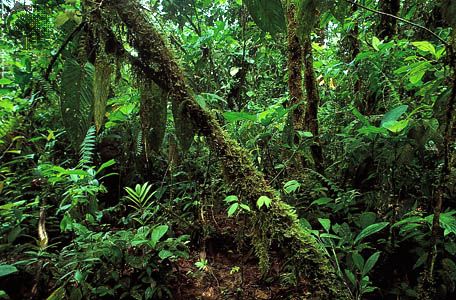
The extraction of phosphate has significantly altered the island’s landscape. Infrastructure supporting the industry, such as a railway used to transport ore from the southern plateau to the port at Flying Fish Cove, remains a prominent feature. While the island retains extensive rainforest cover, large portions of the land were historically cleared or disturbed for mining activities. Today, much of the western tip of the island is protected as a national park to preserve its unique biodiversity.1
Sources
- Christmas Island — Encyclopædia Britannica
- Australian External Territories — Encyclopædia Britannica
Published on · 2 min read