Rainforest
Rainforest ecosystems are defined by complex, long-evolving symbiotic relationships that are essential to the forest's structure and survival. Key examples…
What are some examples of symbiotic relationships found in rainforest ecosystems?
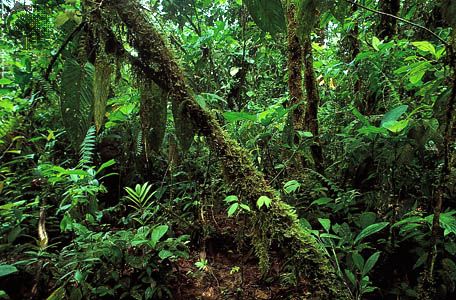
Rainforest ecosystems are defined by complex, long-evolving symbiotic relationships that are essential to the forest’s structure and survival. Key examples include:1
- Mycorrhizal Associations: Most rainforest trees form mycorrhizal associations with fungi that grow in contact with their roots. The fungi receive energy from the tree and, in exchange, efficiently absorb phosphorus and other nutrients from the soil for the tree.23
- Leaf-cutting Ants and Fungi: These ants maintain specialized fungus gardens on cut leaves. The ants provide the substrate and care for the fungi, which serve as their primary food source.24
- Ant-Plant Mutualism: Many plants produce extrafloral nectaries to attract ants. The ants feed on the nectar and, in return, protect the plant by killing insect herbivores.2
- Epiphytes: These plants grow on others for physical support to reach sunlight in the dense canopy. While they are not parasitic, they rely on the host for a position in the canopy and often derive nutrients from organic debris that collects on the host.563
How do rainforests compare to other terrestrial ecosystems in terms of productivity and carbon storage?
Tropical rainforests are among the most productive terrestrial ecosystems, benefiting from climatic conditions that are least limiting to plant growth. Their biological productivity—the rate at which organic matter is produced—is significantly higher than that of other vegetation types.9
Productivity Comparison
- Gross Primary Productivity (GPP): Rainforests exhibit GPP values approximately four times higher than those of temperate forests. While temperate forests have a GPP of 16 to 50 metric tons per hectare per year, tropical rainforests can reach much higher levels due to year-round growth.910
- Net Primary Productivity (NPP): Rainforests typically show NPP values about 2.5 times higher than temperate forests. However, because rainforests also have very high rates of plant respiration and herbivory, a large portion of the fixed carbon is consumed within the ecosystem.9
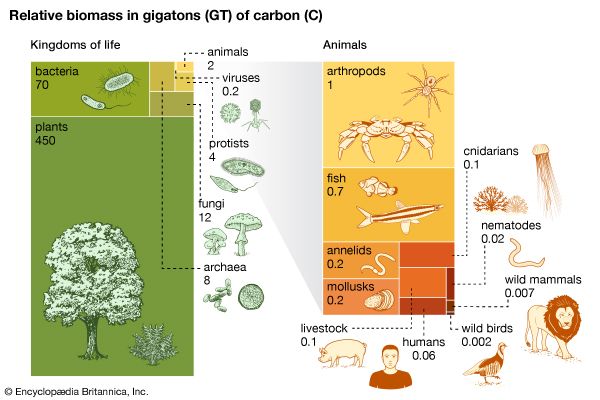
- Biomass: Rainforests maintain a larger biomass than other vegetation, typically ranging from 400 to 700 metric tons per hectare, compared to 190 to 380 metric tons in temperate deciduous forests.910
Carbon Storage
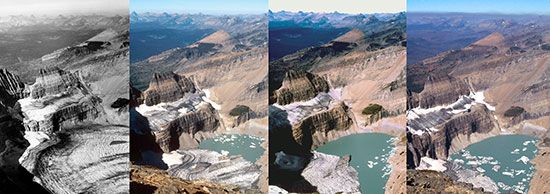
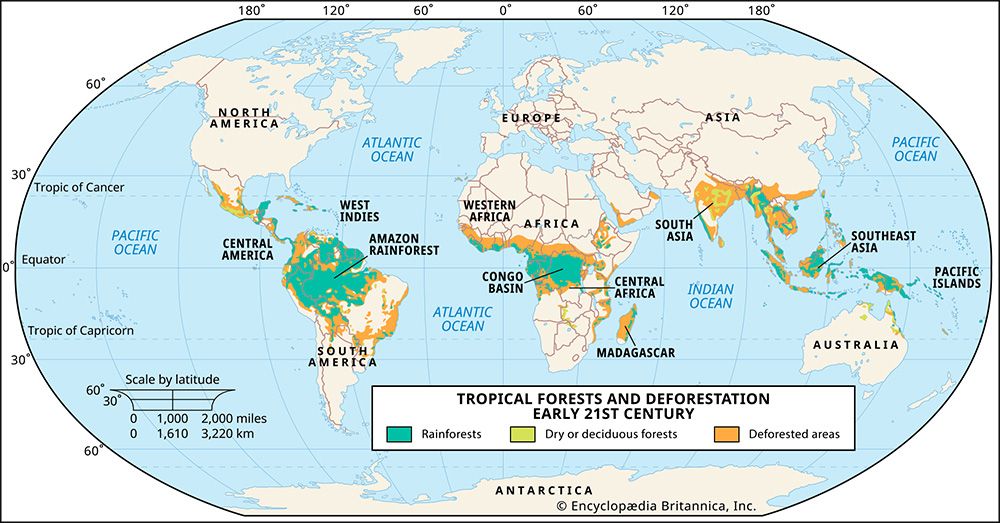
Forests are the primary terrestrial repositories for carbon, which is stored in biomass and soil humus. While rainforests are vital for carbon sequestration, their role is complex; they act as both sources and sinks for greenhouse gases. Deforestation, particularly in the tropics, significantly disrupts this balance, releasing stored carbon and reducing the ecosystem’s capacity to mitigate global warming.1112
How do the different layers of a rainforest contribute to its biodiversity?
Rainforests are characterized by a highly vertical stratification that creates distinct niches, allowing for an unparalleled diversity of life. Each layer offers unique environmental conditions that support specialized species:
- Emergent Layer: The tallest trees, sometimes reaching 60 meters, rise above the main canopy. These giants capture the most sunlight and provide a habitat for species adapted to high exposure and wind.7
- Canopy: This dense layer of foliage, typically 30 to 50 meters high, acts as the primary site for photosynthesis. It is the most biodiverse zone, housing a vast array of animals—such as monkeys and various birds—that have evolved to climb, glide, and leap to find food and escape predators without ever needing to descend to the ground.137
- Understory: Located beneath the canopy, this layer contains smaller trees, lianas, and epiphytes like orchids and ferns. The environment here is shaded, supporting animals that communicate primarily through sound rather than sight.1314
- Forest Floor: Contrary to popular belief, the floor is not impassable. It is a stable, humid environment where microorganisms and fungi decompose organic litter, recycling nutrients back into the soil. Larger ground-dwelling animals, such as gorillas and leopards, inhabit this layer, while burrowing species live beneath the surface.13
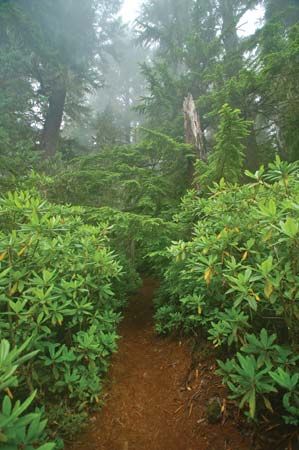
What are the main differences between tropical and temperate rainforests?
Tropical and temperate rainforests are both vital ecosystems characterized by high moisture levels, but they differ significantly in their geography, climate, and biological composition.
Key Differences
Feature
Tropical Rainforest
Temperate Rainforest
Latitude
Located near the
Equator
(equatorial belt).
Found in middle latitudes, typically 40° to 60° (North and South).
Temperature
Consistently hot (20–29 °C) with little seasonal variation.
Mild temperatures in both summer and winter.
Precipitation
High annual rainfall (1,800–2,500+ mm) distributed fairly evenly.
Abundant moisture from heavy rain and coastal fog (1,500–5,000 mm).
Biodiversity
Extremely high; structurally dense and complex.
Lower than tropical forests, though still rich in plant and animal life.
Vegetation
Primarily evergreen broad-leaved trees.
Mix of conifers and broad-leaved deciduous trees.
Environmental Context
- Climate Stability: Tropical rainforests experience constant day lengths and temperatures, whereas temperate rainforests are defined by their more equable, moderate temperature ranges.15716
- Biomass and Carbon: While tropical rainforests have high productivity and biomass, temperate rainforests are also significant carbon stores. In some cases, old-growth trees in temperate regions can produce even more biomass per hectare than those in tropical rainforests.717
- Structure: Tropical rainforests are generally denser and more complex in their vertical stratification compared to the lower, less dense structure of temperate rainforests.1516
Sources
- community ecology - The pervasiveness of mutualism — Encyclopædia Britannica
- epiphyte — Encyclopædia Britannica
- Did you know? — Merriam-Webster
- Tropical rainforest - Population and community development and structure — Encyclopædia Britannica
- Tropical rainforest - General structure of the rainforest — Encyclopædia Britannica
- Tropical rainforest - Flora — Encyclopædia Britannica
- Rainforest — Encyclopædia Britannica
- fungus - Parasitism in plants and insects — Encyclopædia Britannica
- Tropical rainforest - Biological productivity — Encyclopædia Britannica
- Temperate forest - Biological productivity — Encyclopædia Britannica
- soil - Soils and global warming — Encyclopædia Britannica
- Status of the world’s tropical forests - Global implications of deforestation — Encyclopædia Britannica
- Amazon River - Plant life — Encyclopædia Britannica
- Africa - Lowland rainforest — Encyclopædia Britannica
- Tropical rainforest - Environment — Encyclopædia Britannica
- Temperate rainforest — Encyclopædia Britannica
- South America - Tropical climates — Encyclopædia Britannica
- Tropical dry forest — Encyclopædia Britannica
Published on · 4 min read