Cockroach
Several cockroach species are recognized as common household pests distributed globally, primarily belonging to the families Blattidae and Ectobiidae.
What are some of the most common species of cockroaches found around the world?
Several cockroach species are recognized as common household pests distributed globally, primarily belonging to the families Blattidae and Ectobiidae.
Common Household Species
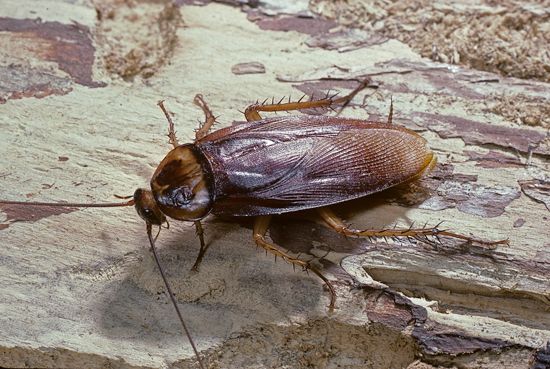
- American cockroach (Periplaneta americana): A reddish-brown insect measuring 30 to 50 mm. While native to Africa and the Middle East, it is now found worldwide, typically inhabiting dark, heated areas like basements.1
- Oriental cockroach (Blatta orientalis): Also known as the black cockroach, this shiny black or dark brown pest is roughly 25 to 30 mm long. It has spread from Eurasia to temperate regions globally via commerce.1
- German cockroach (Blattella germanica): A small, light brown species (about 12 mm) characterized by two dark stripes. It is a frequent household pest often transported into homes via grocery bags and shipping containers.2
- Brown-banded cockroach (Supella longipalpa): Similar in size to the German cockroach, this species is distinguished by two light-colored bands across its back. It has successfully adapted to cooler climates through the use of heated buildings.2
Other species, such as the Pennsylvania wood cockroach (Parcoblatta pennsylvanica), are typically found outdoors under logs and stones and are not considered pests.2
What ecological roles do cockroaches play in different environments?
While cockroaches are frequently viewed as household pests, the vast majority of species are not pests and serve as vital components of their natural ecosystems4. Their ecological contributions are primarily centered on their roles in food webs and nutrient cycling.4
Nutrient Cycling and Decomposition
Many cockroaches function as detritivores, feeding on dead and decomposing organic matter, such as fallen fruit, decaying wood, and plant or animal remains. By consuming this material, they play a critical role in breaking down organic matter and returning essential nutrients to the soil. Some specialized species, such as those in the genus Cryptocercus, further aid this process by digesting cellulose in decaying logs with the help of symbiotic protozoans in their intestines.54
Role in Food Webs
Cockroaches serve as a significant food source for a wide variety of animals, including frogs, lizards, birds, and small mammals. Additionally, they are subject to natural population control by parasitoid insects, such as ensign wasps, which prey on cockroach eggs.45
What methods are commonly used to control cockroach populations?
Controlling cockroach populations effectively often involves integrated pest management, a strategy that prioritizes ecological harmony by combining multiple methods to keep infestations within manageable limits while minimizing the use of chemical pesticides.7
Common Control Methods
- Biological Controls: This approach utilizes natural enemies, including parasites, predators, diseases, protozoa, and nematodes, to reduce pest populations. While these agents are effective, they often require a high population of the host species to be present before they can successfully expand.8
- Chemical Attractants and Traps: Pheromones, which are the pest’s own sex attractants, can be used in traps to lure insects into contact with small amounts of insecticide or sterilants.87
- Sterilization: The release of sterilized male insects into a wild population can significantly reduce reproduction rates, a technique that has proven successful for various insect species.8
- Resistant Varieties and Cultural Methods: Developing and planting varieties resistant to infestation and employing crop culture methods that inhibit pest proliferation are essential components of long-term management.87
- Integrated Control: The most effective solutions often involve coordinating multiple methods—such as combining preliminary chemical reduction with biological controls—to reduce reliance on insecticides and protect the environment.8
What is a cockroach?
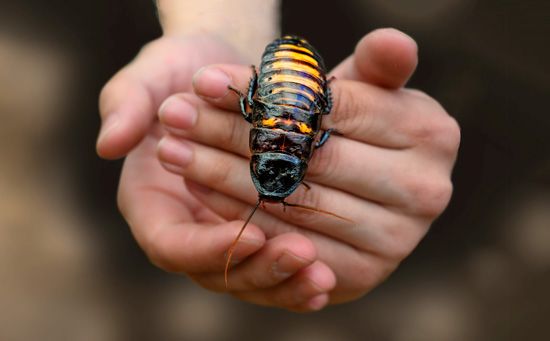
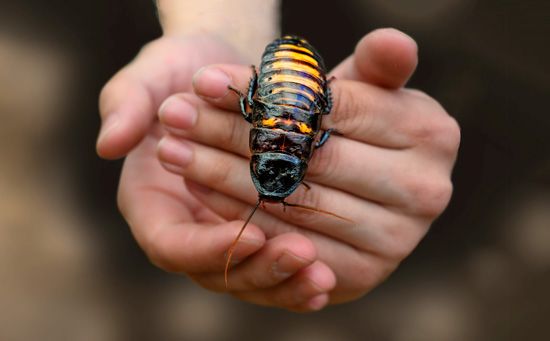
A cockroach is an insect belonging to the order Blattodea, which also includes termites. There are approximately 4,600 species, most of which live innocuously in wild, tropical, or mild environments rather than as pests. They are among the most primitive living winged insects, with a fossil record extending back more than 320 million years.9
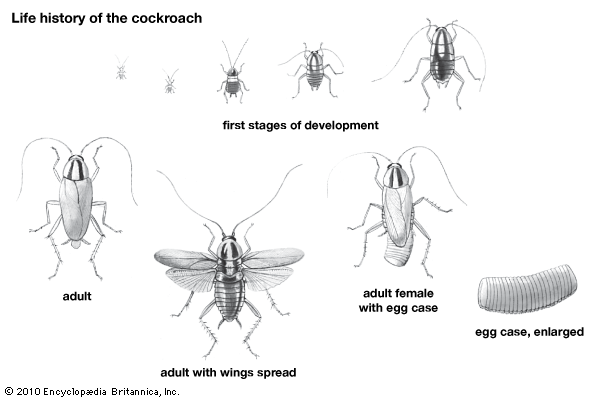
Physically, they are characterized by a flattened, oval body with a head, thorax, and abdomen. Their heads feature long, threadlike antennae and downward-pointing mouthparts. While some species are wingless, males typically possess two pairs of wings. Most species host a mutualistic bacterium called Blattabacterium, which helps them survive on nitrogen-poor diets.6
While some species are considered pests that can spread pathogens like Salmonella and E. coli, the vast majority are vital to their ecosystems, serving as essential components of food webs and nutrient cycling.10
Sources
- cockroach - Family Blattidae — Encyclopædia Britannica
- brown-banded cockroach — Merriam-Webster
- cockroach - Family Ectobiidae — Encyclopædia Britannica
- cockroach - Diet and ecology — Encyclopædia Britannica
- Madagascar hissing cockroach — Encyclopædia Britannica
- cockroach - Physical description — Encyclopædia Britannica
- Agricultural technology - Biological controls — Encyclopædia Britannica
- Integrated pest management — Encyclopædia Britannica
- cockroach — Encyclopædia Britannica
- cockroach - Mating and reproduction — Encyclopædia Britannica
Published on · 3 min read