Clearwing Moth
Clearwing moths (family Sesiidae) are able to fly during the day because they have evolved to be highly effective mimics of stinging insects, such as wasps…
What adaptations allow clearwing moths to fly during the day unlike most other moths?
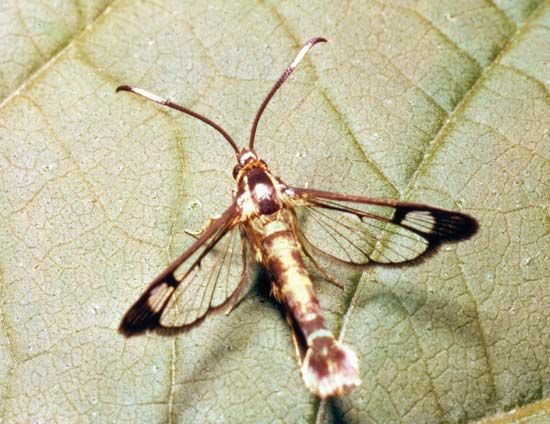
Clearwing moths (family Sesiidae) are able to fly during the day because they have evolved to be highly effective mimics of stinging insects, such as wasps and bees. Unlike most moths, which rely on nocturnal activity and cryptic coloration to avoid predators, clearwing moths utilize mimicry to gain protection while active in daylight.1
Their adaptation involves a striking physical resemblance to their models, which extends to the specific shape and coloration of their wings, abdomen, and legs. A defining feature of these moths is that their wings are largely transparent and devoid of the scales typically found on other moths. By mimicking the appearance of stinging insects, clearwing moths benefit from the fact that predators often avoid these models, allowing the moths to safely forage and fly during the day.12
How have humans utilized clearwing moths in pest control?
It is inaccurate to suggest that humans utilize clearwing moths for pest control. In fact, the opposite is true: many species within the family Sesiidae are considered significant agricultural pests rather than beneficial agents of control.4
The larvae of these moths are typically wood-boring insects that tunnel into the stems, roots, and trunks of various plants, often causing severe damage or death to the host. Notable examples of these destructive species include:4
- Currant borer (Synanthedon tipuliformis): A widespread pest that damages currants, gooseberries, and black alders.4
- Peach tree borer (Synanthedon exitiosa): A North American species that attacks fruit trees, where larval boring can kill the tree.4
- Raspberry crown borer (Pennisetia): These larvae tunnel into the roots and canes of raspberry and blackberry plants, causing the plants to wilt and die.4
- Squash vine borer (Melittia): A serious threat to squash, pumpkins, and cucumbers, where larvae bore into the stems and cause the vines to collapse.4
Because of their status as agricultural pests, human efforts are focused on managing or mitigating their populations rather than utilizing them.
What are the main predators of clearwing moths?
Clearwing moths (family Sesiidae) are primarily protected from visually hunting predators by their highly effective mimicry of stinging insects, such as wasps and bees. By resembling these noxious models, clearwing moths benefit from the fact that many predators learn to avoid stinging insects and will consequently leave the moths alone.15
Despite this defensive strategy, clearwing moths are not immune to predation. Like other insects, they face threats from a variety of generalist predators, including:
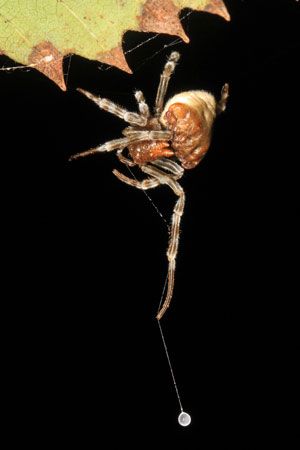
- Spiders: Many spiders capture insects in their webs or through ambush tactics. Some specialized predators, such as bolas spiders, are particularly adept at capturing moths by mimicking the sex-attractant pheromones of female moths to lure males into their reach.678
- Birds: While many birds avoid stinging insects, some species, such as those in the bee-eater family, have evolved behavioral mechanisms to safely consume stinging prey by removing the stinger before swallowing.9
- Other Predaceous Insects: Various predaceous insects, including ants and the larvae of ladybird beetles, are known to prey upon a wide range of insect eggs, larvae, and adults.6
What are the distinguishing characteristics of clearwing moths?
Clearwing moths, particularly those within the family Sesiidae, are defined by several distinct physical and behavioral characteristics:
- Transparent Wings: The most notable feature of these moths is that their wings are largely transparent and devoid of the scales typically found on other moth species.312
- Wasp and Bee Mimicry: Clearwing moths are often small and brightly colored, having evolved to resemble wasps and bees. This is a classic example of Batesian mimicry, where a palatable species gains protection by mimicking the appearance of a dangerous or inedible model, thereby deceiving potential predators.121314
- Behavioral Convergence: Beyond their physical appearance, these moths often exhibit behaviors similar to the stinging insects they mimic, further enhancing the effectiveness of their deceptive coloration.13
While the term “clearwing” can occasionally refer to certain species within the family Sphingidae, the Sesiidae family is the primary group recognized for these specific traits.312
Sources
- Lepidoptera - Protection against danger — Encyclopædia Britannica
- Lepidoptera - Thorax — Encyclopædia Britannica
- clearwing — Merriam-Webster
- clearwing moth — Encyclopædia Britannica
- mimicry - Batesian mimicry — Encyclopædia Britannica
- mimicry - Müllerian mimicry — Encyclopædia Britannica
- neuropteran - Ecology — Encyclopædia Britannica
- pyralid moth — Encyclopædia Britannica
- mimicry - The chemical basis for repulsion — Encyclopædia Britannica
- spider - Stalking prey — Encyclopædia Britannica
- Chemoreception - Sex-attractant pheromones — Encyclopædia Britannica
- community ecology - Mimicry complexes — Encyclopædia Britannica
- coloration - Mimicry — Encyclopædia Britannica
- Sesiidae — Merriam-Webster
Published on · 3 min read