Click Beetle
While click beetles (family Elateridae) are well-known for the audible "click" they produce to right themselves when flipped on their backs, this sound is a…
How do click beetles communicate with each other?
While click beetles (family Elateridae) are well-known for the audible “click” they produce to right themselves when flipped on their backs, this sound is a mechanical defense mechanism used to escape predators rather than a form of communication with other beetles.1
Regarding communication, some tropical species of click beetles in the genus Pyrophorus are bioluminescent, emitting greenish and red-orange light. While many insects use light flashes to advertise their presence to the opposite sex, specific details regarding the communicative social behaviors of click beetles are not extensively documented in the provided search results. In the broader context of insects, communication often involves courtship displays or the release of pheromones to facilitate mating, but these behaviors vary significantly across different beetle families.1234
What are the unique physical characteristics of click beetles?
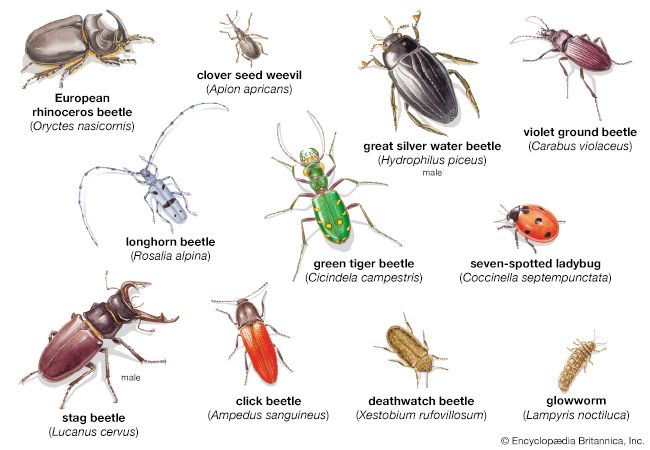
Click beetles, belonging to the family Elateridae, possess several distinct physical characteristics that define their morphology and behavior:
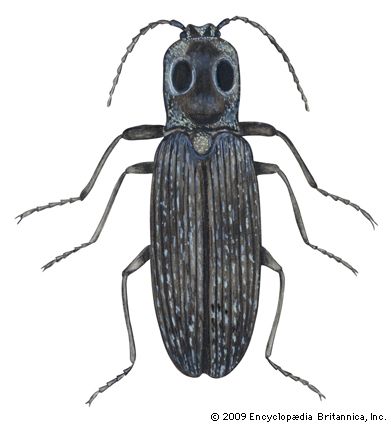
- Body Shape: They typically have elongated, slender bodies with parallel sides and bluntly rounded ends.1
- Size and Coloration: Most species range from 2.5 to 18 mm in length and are generally brown or black with little to no ornamentation. However, some tropical species exhibit bright colors or bioluminescence.1
- Clicking Mechanism: Their most unique physical feature is the articulation between the prothorax and mesothorax. When placed on their backs, they can right themselves by bending their head and thorax forward to hook a spine into a notch on the abdomen; releasing this spine produces a distinct clicking sound and hurls the beetle into the air.617
- Larval Form: The larvae, known as wireworms, are characterized by a hard exoskeleton and a long, cylindrical, slender shape.1
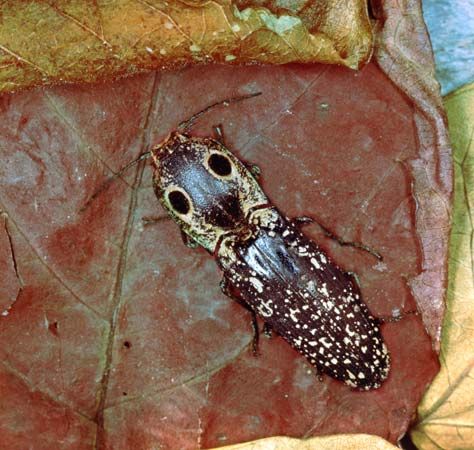
- Specialized Features: Some species, such as the eyed elator, feature large, eyelike spots on the prothorax1. Additionally, certain genera like Pyrophorus possess luminous organs capable of emitting greenish and red-orange light.18
How do click beetles impact agriculture and ecosystems?
Click beetles (family Elateridae) significantly impact agriculture primarily through their larval stage, known as wireworms.111
Agricultural Impact
Wireworms live in the soil for two to six years, where they can become destructive pests. They feed on the seeds, roots, and underground stems of various crops, particularly affecting slow-growing plants and cereals. This feeding behavior can severely damage young plants, leading to reduced crop yields.111
To manage these populations, farmers employ several strategies:
- Cultural Control: Plowing fields in the fall can expose and destroy wireworms by cutting open their pupal cases.1
- Chemical Control: Applications of insecticides and chemical seed dressings are often used to protect crops.111
- Fertilization: The use of nitrogenous fertilizers is sometimes employed to help mitigate the damage caused by these larvae.11
Ecological Role
While their larvae are often viewed as agricultural pests, click beetles are part of broader ecosystems where they serve as prey for various insectivorous animals, including birds, bats, reptiles, and frogs.12
How do click beetles defend themselves from predators?
Click beetles (family Elateridae) utilize a highly specialized physical mechanism to defend themselves from predators. When a click beetle is touched or seized, it typically falls on its back and plays dead to avoid further detection.1
To escape or right itself, the beetle employs a unique “clicking” mechanism:
- The Mechanism: The beetle bends its head and thorax forward, hooking a spine located on its body into a corresponding notch on its abdomen.1
- The Action: When the spine is suddenly released, it produces a distinct clicking sound and exerts enough force to hurl the beetle into the air, allowing it to quickly flip over or escape a predator’s grasp.1
Additionally, while many click beetles are brown or black, some tropical species possess bioluminescent organs that emit light, which may serve as a warning or deterrent to potential threats.1
Sources
- click beetle — Encyclopædia Britannica
- Animal social behavior - Social interactions involving sex — Encyclopædia Britannica
- Chemoreception - Aphrodisiac pheromones — Encyclopædia Britannica
- insect - Appearance and habits — Encyclopædia Britannica
- Hymenoptera - Social parasitism — Encyclopædia Britannica
- click beetle — Merriam-Webster
- Coleoptera - Light production — Encyclopædia Britannica
- Bioluminescence - The range and variety of bioluminescent organisms — Encyclopædia Britannica
- elaterid — Merriam-Webster
- Elateridae — Merriam-Webster
- Coleoptera - As plant feeders — Encyclopædia Britannica
- Cereal farming - Insects — Encyclopædia Britannica
- Coleoptera - Beetles as prey — Encyclopædia Britannica
- Coleoptera - Feeding habits and habitats — Encyclopædia Britannica
- Chemoreception - Defensive odors — Encyclopædia Britannica
- firefly — Encyclopædia Britannica
Published on · 3 min read