Cinnamon
Cinnamon was a primary driver of ancient commerce and the subsequent Age of Discovery. Valued for its use in embalming, religious rites, medicine, and as a…
What role did cinnamon play in ancient trade routes and exploration?
Cinnamon was a primary driver of ancient commerce and the subsequent Age of Discovery. Valued for its use in embalming, religious rites, medicine, and as a luxury flavoring, it was once considered more precious than gold.12
In antiquity, Arab traders maintained a lucrative monopoly by obscuring the spice’s origins, spreading myths that it grew in glens guarded by poisonous snakes to deter competitors. As demand grew in the Roman Empire and medieval Europe, the desire to bypass these middlemen and the Venetian monopoly on spice trade routes fueled European exploration.34
Explorers like Christopher Columbus, Vasco da Gama, and Ferdinand Magellan sought direct maritime paths to the spice-producing regions of the East. These voyages led to the establishment of powerful entities like the Dutch East India Company, which turned cinnamon into one of its most profitable commodities, fundamentally reshaping global trade networks and colonial history.31
How does the flavor profile of different types of cinnamon (e.g., Ceylon vs. Cassia) compare?
The flavor profiles of cinnamon and cassia differ significantly in intensity and nuance:
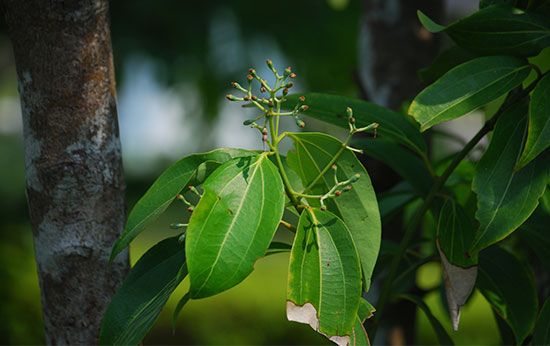
- Ceylon Cinnamon (Cinnamomum verum): Often referred to as “true cinnamon,” this variety is prized for its delicately fragrant aroma and a warm, mild, and sweet flavor. It is generally considered more subtle and refined than its counterparts.5672
- Cassia (Cinnamomum cassia): This spice is characterized by a more pungent, intense, and less delicate flavor compared to true cinnamon. While it also possesses a sweet and aromatic quality, its profile is bolder and more robust.2
These differences are largely due to their chemical composition. Both contain cinnamic aldehyde, but cassia is thicker and contains a higher concentration of volatile oils. Additionally, cassia contains significantly higher levels of coumarin, a compound that can be harmful to the liver in large quantities, whereas true cinnamon contains only trace amounts. Because of these distinct profiles, cassia is often preferred for specific culinary applications like liqueurs and chocolate, while true cinnamon is favored for its nuanced sweetness.27
What is the botanical origin of cinnamon, and which plant species are used to produce it?
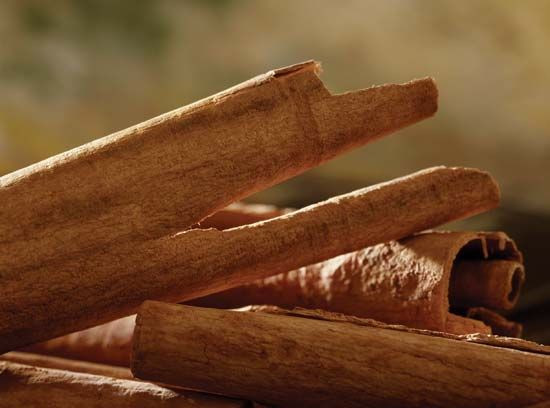
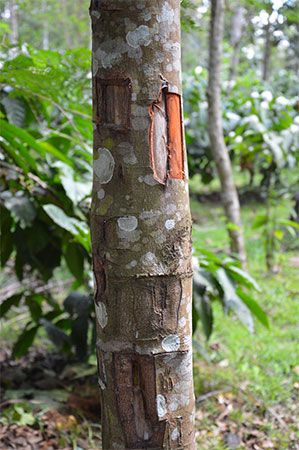
Cinnamon is derived from the dried inner bark of bushy evergreen trees belonging to the genus Cinnamomum, which is part of the laurel family (Lauraceae).552
While Cinnamomum verum—often called Ceylon or “true” cinnamon—is the most well-known source, several other species within the Cinnamomum genus are also cultivated and harvested to produce the spice:85
- Chinese cassia (Cinnamomum cassia)87
- Vietnamese, or Saigon, cinnamon (Cinnamomum loureiroi)85
- Indonesian cinnamon (Cinnamomum burmannii)85
- Malabar cinnamon (Cinnamomum citriodorum)85
These trees typically grow in tropical and subtropical regions, thriving in moist, well-drained soils. The spice is obtained by harvesting shoots, scraping the bark, and allowing it to dry, during which it naturally curls into characteristic quills.527
How is cinnamon used in different cuisines around the world?
Cinnamon is a versatile spice used globally to enhance both sweet and savory dishes. Its application varies significantly depending on regional culinary traditions:
- Savory Applications: In Indian cuisine, cinnamon is a foundational ingredient in many spice blends known as masala. It is a key component of garam masala, a northern Indian blend that typically includes cardamom, cloves, and black pepper. Beyond India, cinnamon is integral to the gravied dishes found in the cuisines of Thailand, China, Indonesia, Japan, and various Caribbean islands, where it helps build complex flavor profiles in curries and stews.59
- Sweet and General Uses: Cinnamon is widely popular in bakery goods and confections across many cultures. It is frequently used to flavor a variety of beverages and desserts.105
- Industrial and Other Uses: Beyond culinary preparation, the essential oil distilled from cinnamon bark fragments is utilized in the production of liqueur, perfume, and various drugs.1025
Sources
- spice trade — Encyclopædia Britannica
- cinnamon — Encyclopædia Britannica
- India - The Portuguese — Encyclopædia Britannica
- 11 Questions About Useful Plants Answered - What have spices been used for across human history? — Encyclopædia Britannica
- cinnamon: Top Questions — Encyclopædia Britannica
- Ceylon cinnamon — Merriam-Webster
- cassia — Encyclopædia Britannica
- Lauraceae — Encyclopædia Britannica
- Saigon cinnamon — Merriam-Webster
- Did you know? — Merriam-Webster
- curry — Encyclopædia Britannica
Published on · 3 min read