Magnoliid Clade
Magnoliid plants are highly adaptable and occupy a diverse range of habitats across most countries, excluding salt water environments where few angiosperms…
What types of habitats are magnoliid plants commonly found in?
Magnoliid plants are highly adaptable and occupy a diverse range of habitats across most countries, excluding salt water environments where few angiosperms can survive. They are found globally, with the greatest number of species native to tropical regions, though they also thrive in subtropical and temperate areas.12
Their habitats include:
- Forests: Tropical, subtropical, and temperate forests.1
- Wetlands: Bogs, marshes, and streambanks.1
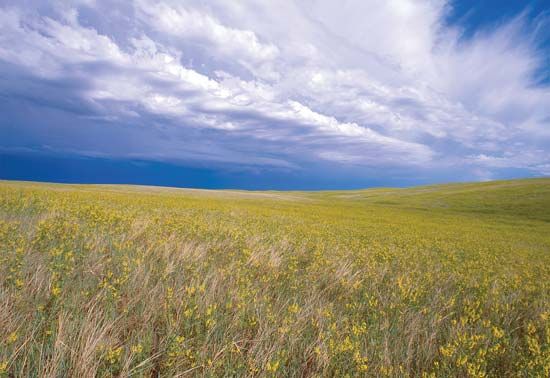
- Open Landscapes: Grasslands and shrublands.1
- High Altitudes: Mountain slopes and alpine regions.1
The structural diversity of these plants—ranging from tall trees and shrubs to vines, climbers, and herbs—allows them to occupy these varied ecological niches. While many are widespread, some species are highly specialized, such as those found in fog-swept forests or endemic to specific islands.13
How do magnoliid plants reproduce and disperse their seeds?
Magnoliid plants exhibit diverse reproductive strategies that reflect early stages in the evolution of angiosperms.
Reproduction
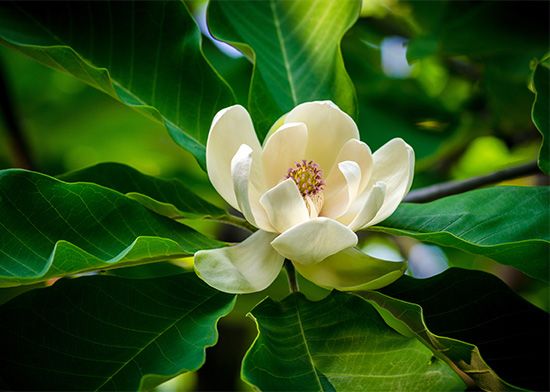
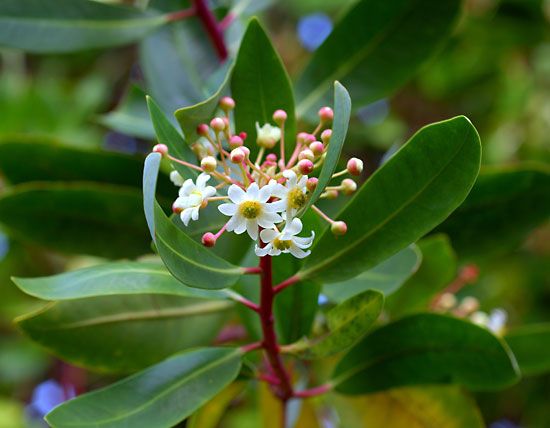
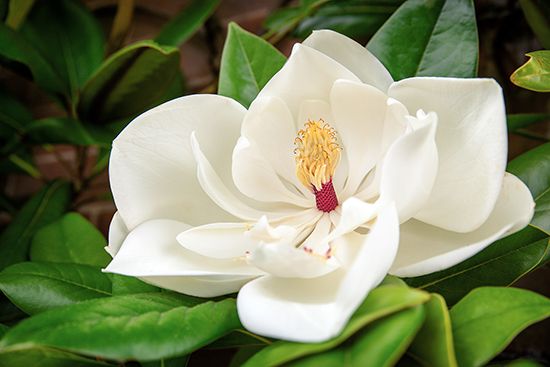
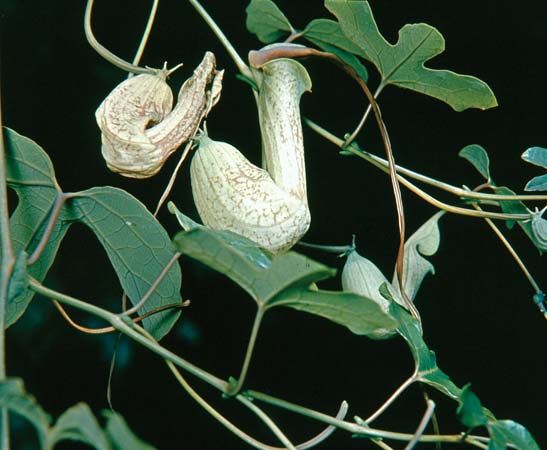
Most magnoliids produce bisexual flowers, though some primitive families have evolved unisexual flowers. Their floral structures are often simple, sometimes lacking distinct sepals and petals; instead, they may feature a “pseudoperianth” derived from sterile stamens, which releases odors to attract pollinators.5
Pollination is primarily insect-driven, a relationship that likely triggered the early diversification of flowering plants. Many primitive magnoliids, such as Magnolia and Eupomatia, rely on beetles for pollination, while others utilize flies, moths, thrips, or even caterpillars. Following pollination, these plants undergo double fertilization, a unique process that produces both an embryo and endosperm to nourish the developing seed.56
Seed Dispersal
Seed dispersal strategies vary across the group:
- Mechanical Release: Some primitive magnoliids produce follicles—a type of fruit that opens along a seam to release individual seeds.6
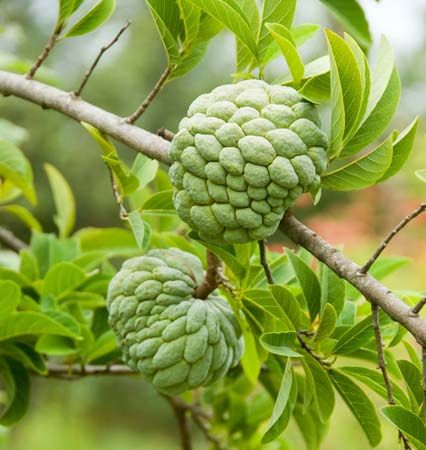
- Animal Dispersal (Zoochory): The majority of magnoliids produce indehiscent fleshy fruits, predominantly berries. These are primarily dispersed by birds through endozoochory, where animals consume the fruit and later excrete the intact seeds.67
What are some economically important plants that belong to the magnoliid clade?
The magnoliid clade includes a variety of plants that are economically significant as sources of food, timber, spices, and ornamental beauty.
Food and Spices
- Avocado (Persea americana): A highly nutritious fruit rich in fats, proteins, and vitamins, cultivated for thousands of years.8
- Cinnamon: Derived from the inner bark of the cinnamon tree (Cinnamomum zeylanicum), this spice is a major global commodity.8
- Bay laurel: The dried leaves of this Mediterranean plant are widely used as a culinary flavoring.8
- Camphor: Extracted from the wood of the camphor tree (Cinnamomum camphora), it is used in pharmaceuticals, insecticides, and formerly in the production of celluloid.8
- Champac (Michelia champaca): Valued for its fragrant flowers, which are used to produce perfume.9
Timber and Industrial Uses
- Lancewood (Oxandra lanceolata): A hard, heavy, and fine-textured wood used for scientific instruments, tool handles, and sporting goods like archery bows.10
- Greenheart: A durable, dense wood from South America, ideal for underwater applications such as wharf pilings and boats.8
- Tulip tree (Liriodendron tulipifera): Highly valued as an ornamental tree.9
- African Whitewood (Enantia chlorantha): Used for furniture, veneers, and as a source of yellow dye.10
What is the magnoliid clade and how does it fit into the broader classification of flowering plants?
The magnoliid clade is a significant taxonomic group of flowering plants that serves as a phylogenetic revision of the former subclass Magnoliidae. Under the Angiosperm Phylogeny Group IV (APG IV) system, this clade comprises four orders—Magnoliales, Canellales, Laurales, and Piperales—encompassing approximately 10,000 species.1
Classification and Characteristics
Magnoliids are dicotyledonous plants that retain several primitive anatomical and morphological features, offering insight into the early evolution of angiosperms. Unlike more advanced plant groups, magnoliids often display:
- Floral Structure: Flowers frequently lack a clear differentiation into typical sepals and petals, sometimes utilizing a “pseudoperianth” derived from sterile stamens.14
- Reproductive Morphology: Many species possess unfused carpels and leaflike stamens, features reminiscent of early fossil flowers.54
- Pollen: They typically produce pollen with a single aperture (monosulcate), whereas more advanced angiosperms often produce tricolpate pollen.4
- Biochemistry: They are distinguished by the presence of specific defensive alkaloids, such as benzylisoquinoline or aporphine, which are rare in other groups.5
Sources
- magnoliid clade — Encyclopædia Britannica
- magnoliid clade - Ecology and habitats — Encyclopædia Britannica
- magnoliid clade - Distribution — Encyclopædia Britannica
- magnoliid clade - Diversity of structure — Encyclopædia Britannica
- magnoliid clade - Reproductive structures — Encyclopædia Britannica
- magnoliid clade - Reproduction and life cycles — Encyclopædia Britannica
- seed dispersal - Zoochory: animal dispersal — Encyclopædia Britannica
- Magnoliaceae — Encyclopædia Britannica
- Laurales - Lauraceae — Encyclopædia Britannica
- Magnoliales - Timber — Encyclopædia Britannica
Published on · 3 min read