Clidastes
Clidastes was a genus of extinct marine lizards belonging to the mosasaur family of reptiles.
What is Clidastes and when did it live?
Clidastes was a genus of extinct marine lizards belonging to the mosasaur family of reptiles.1
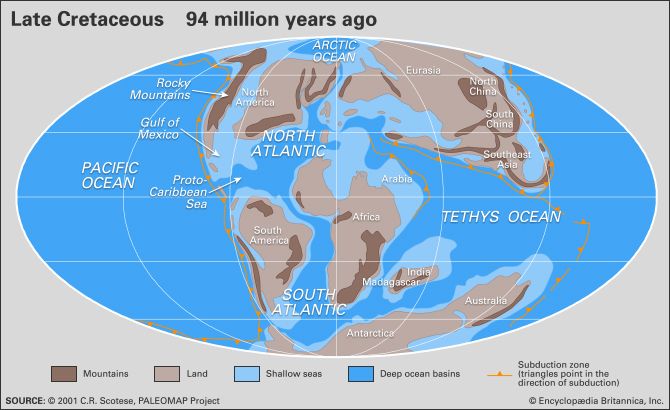
These predators lived during the Late Cretaceous Period, which spanned from approximately 99.6 million to 65.5 million years ago. Fossils of Clidastes have been discovered in marine rock formations across North America, with particularly well-preserved specimens found in the chalk deposits of Kansas.1
Physically, Clidastes reached lengths of 4 meters (13 feet) or more, featuring a slender body, a short neck, and a head equipped with sharp, curved teeth. As an efficient swimmer, it likely preyed on fish and ammonoids, using its broad, limb-like appendages for steering while undulating its body through the water.1
What significant fossil discoveries have been made of Clidastes?
Significant fossil discoveries of Clidastes have primarily been unearthed in North America, specifically within the marine rock formations of the Late Cretaceous Period.
The most notable findings include:
- Kansas Chalk Deposits: This region has yielded excellent, well-preserved specimens of the genus, providing paleontologists with critical insights into the anatomy of these marine lizards.1
- Anatomical Evidence: These fossils have revealed that Clidastes possessed a slender body and tail, a short neck, and a head measuring approximately 60 cm (24 inches) in length. The presence of numerous sharply pointed, curved teeth in these specimens suggests that the animal was an efficient predator that likely fed on fish and ammonoids.1
- Locomotion Insights: The discovery of broad, limb-like appendages in the fossil record indicates that these creatures used their limbs for directional control while undulating their bodies to swim.1
What was Clidastes’ habitat and diet?
Clidastes inhabited marine environments during the Late Cretaceous Period, as evidenced by fossils discovered in marine rock formations across North America, particularly within the chalk deposits of Kansas.1 While they were fully aquatic predators, it is possible that these mosasaurs occasionally went ashore to reproduce.1
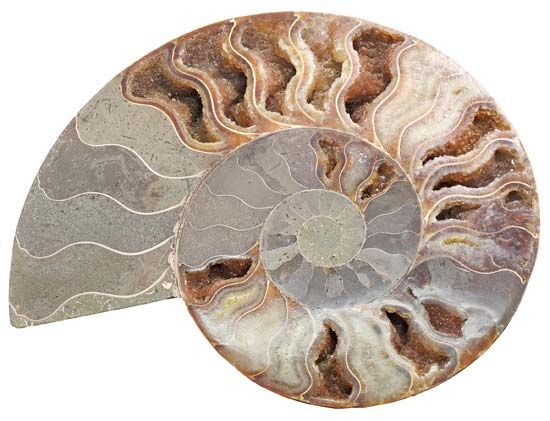
As an efficient swimmer, Clidastes utilized its slender body and tail to move through the water, while its broad, limb-like appendages provided necessary directional control. Its diet consisted primarily of fish and ammonoids—a type of cephalopod similar to the modern nautilus. The animal was well-adapted for this predatory lifestyle, possessing a head equipped with numerous sharply pointed, curved teeth.12
What adaptations did Clidastes have for aquatic life?
Clidastes possessed several specialized adaptations that allowed it to thrive as an efficient predator in the marine environments of the Late Cretaceous Period:
- Body Shape: The genus featured a long, relatively slender body and tail, paired with a short neck. This streamlined anatomy facilitated movement through the water.1
- Locomotion: Clidastes likely swam by undulating its body, a movement pattern similar to that of terrestrial lizards. To assist with navigation, its limbs terminated in broad, paddle-like appendages that provided essential directional control.1
- Predatory Features: Its head, which could reach approximately 60 cm (24 inches) in length, was equipped with numerous sharply pointed, curved teeth. These were well-suited for capturing and consuming fish and ammonoids, a type of cephalopod related to the modern nautilus.1
While these mosasaurs were highly adapted for life in the water, it is believed they may have still returned to land to reproduce.1
Sources
- Clidastes — Encyclopædia Britannica
- clidastes — Merriam-Webster
Published on · 2 min read