Ammonoid
Scientists use ammonoid fossils as index fossils to study Earth's geological history, particularly for the correlation and dating of marine sedimentary rocks…
How do scientists use ammonoid fossils in studying Earth’s geological history?
Scientists use ammonoid fossils as index fossils to study Earth’s geological history, particularly for the correlation and dating of marine sedimentary rocks from the Devonian to the Cretaceous Period.12
Their utility stems from three primary characteristics:
- Rapid Evolution: Ammonoids evolved quickly, allowing for the creation of precise biozones that represent relatively short intervals of geological time.13
- Wide Distribution: As pelagic (free-swimming or floating) organisms, they were geographically widespread and not restricted by specific seafloor substrates.13
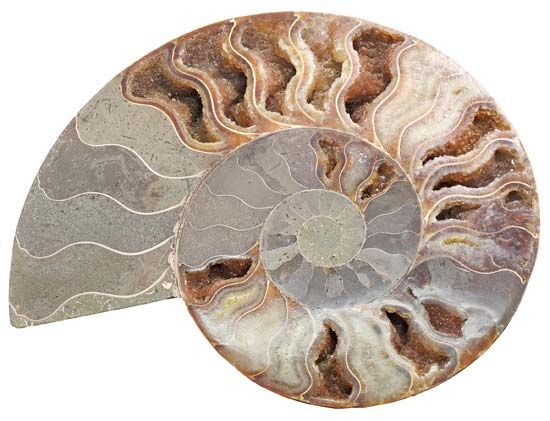
- Recognizable Features: Their shells, characterized by complex, evolving suture patterns, are easily identified.1
While highly effective, they are not perfect for global correlation. Their distribution was often limited by water temperature and depth, and they are rarely found in nonmarine or brackish environments. Furthermore, geological factors like tectonic complexity or post-depositional mixing can sometimes complicate the interpretation of ammonoid-rich fossil assemblages.23
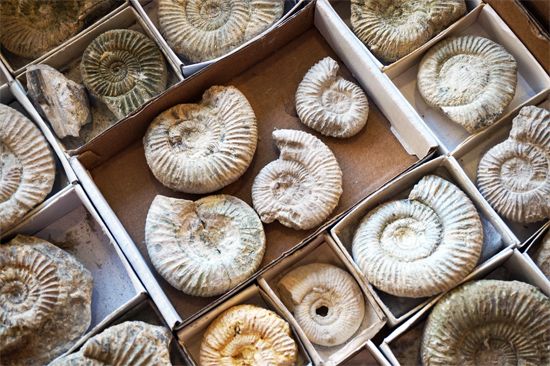
When did ammonoids first appear in the fossil record and when did they go extinct?
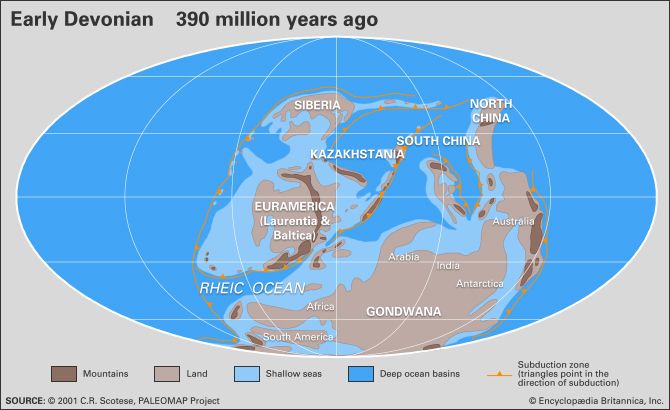
Ammonoids first appeared in the fossil record during the Devonian Period, which began approximately 419 million years ago. They emerged from their nautiloid ancestors, likely during the Emsian Age.14
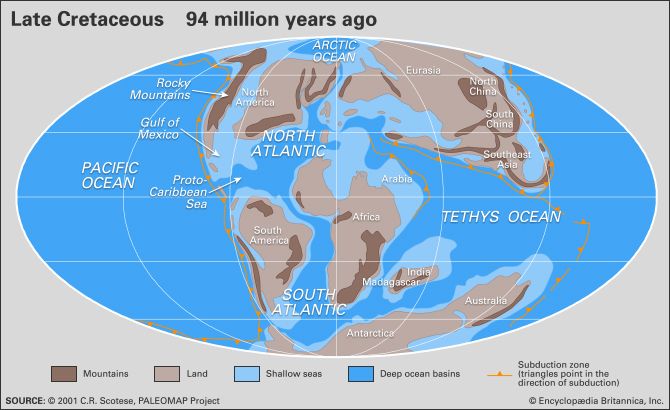
These cephalopods persisted through the remainder of the Paleozoic Era and the Mesozoic Era until they went extinct at the end of the Cretaceous Period, which concluded 66 million years ago. Their demise is widely hypothesized to have been caused by the sudden decline of plankton during the K–T extinction event.1
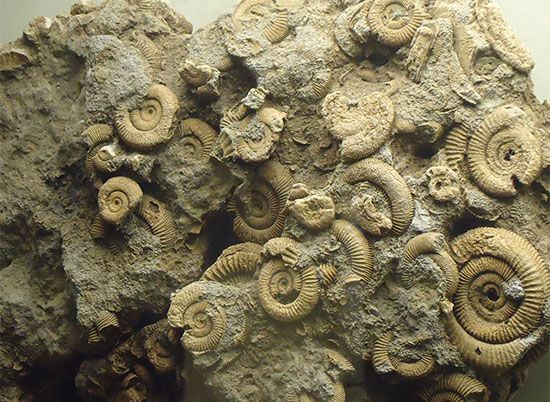
What are ammonoids and how are they related to modern cephalopods?
Ammonoids were a group of extinct cephalopods that lived from the Devonian Period until the end of the Cretaceous Period. They are closely related to the modern pearly nautilus, as both groups are characterized by the possession of a coiled or curved external calcareous shell used for protection and buoyancy.15
Like the Nautilus, ammonoids were relatively less-specialized, slow-moving animals compared to modern coleoids (such as octopuses and squids). While modern cephalopods have evolved active, aggressive lifestyles and complex nervous systems, ammonoids and nautiloids relied on their shells for survival in shallow marine environments.5
Ammonoids are distinguished from nautiloids by their complex, highly crenulated internal suture patterns, which represent the lines where internal partitioning walls met the outer shell. Unlike modern cephalopods, which possess sophisticated eyes and closed circulatory systems, ammonoids shared the more primitive anatomical traits associated with the Nautilus lineage.15
How did the extinction of ammonoids impact marine ecosystems and the evolution of other species?
The extinction of ammonoids at the end of the Cretaceous Period marked a significant transition in marine ecosystems. As prominent members of the nekton (swimming organisms), ammonoids served as both predators of free-swimming and benthic invertebrates and as a food source for larger marine reptiles, such as mosasaurs.11
Their disappearance is widely attributed to the K–T extinction event, which caused a sudden, drastic decline in plankton populations. Because ammonoid survival was closely linked to the availability of these microscopic organisms, the collapse of the planktonic food web likely triggered their demise.6
The loss of ammonoids removed a major group of cephalopods from the water column, fundamentally altering the structure of marine food webs. While ammonoids were highly successful and diverse, their extinction cleared ecological niches that were subsequently occupied by other marine life. This event occurred alongside the broader restructuring of ocean ecosystems, where modern groups of plankton and other invertebrates continued to evolve and diversify in the post-Cretaceous world.71
Sources
- ammonoid — Encyclopædia Britannica
- Cretaceous Period - Correlation — Encyclopædia Britannica
- Triassic Period - Alpine strata — Encyclopædia Britannica
- Devonian Period - Invertebrates — Encyclopædia Britannica
- cephalopod - Form and function — Encyclopædia Britannica
- Triassic Period - Invertebrates — Encyclopædia Britannica
- Jurassic Period - Protists and invertebrates — Encyclopædia Britannica
- Cretaceous Period - Marine life — Encyclopædia Britannica
- cephalopod - Evolution and paleontology — Encyclopædia Britannica
Published on · 3 min read