Coal Measures
In geological terms, Coal Measures refer to a specific sequence of sedimentary rocks—primarily shales, mudstones, and sandstones—that contain significant…
What are Coal Measures in geological terms, and when did they primarily form?
In geological terms, Coal Measures refer to a specific sequence of sedimentary rocks—primarily shales, mudstones, and sandstones—that contain significant beds of coal. These strata are characterized by a repetitive alternation of marine and nonmarine layers, reflecting the environments in which the organic material originally accumulated.12
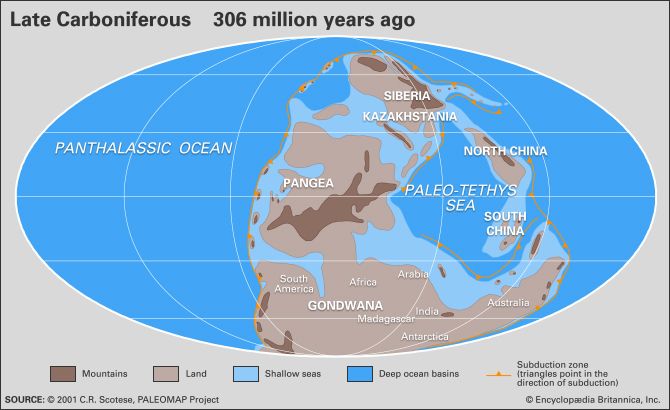
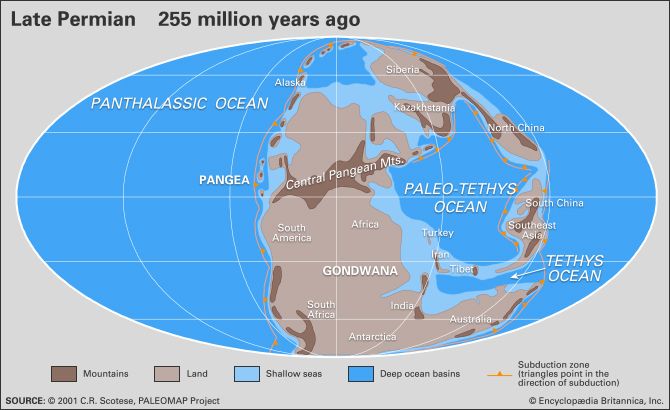
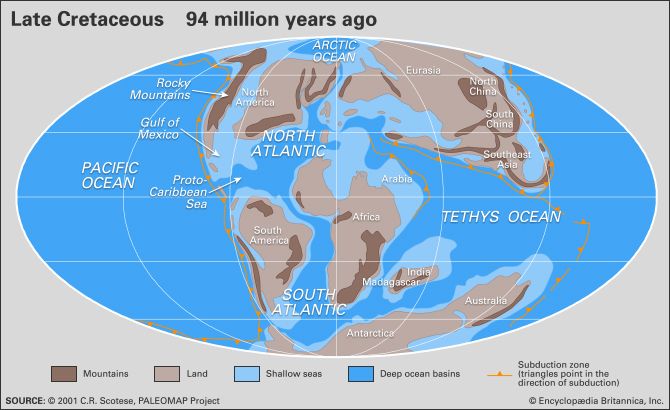
The term is most specifically applied to a major division of the Upper Carboniferous Period in Great Britain, which began approximately 318 million years ago. While the term is often associated with this specific British geological division, coal formation occurred globally during two primary eras. The older era, which includes the Carboniferous and Permian periods (roughly 359 million to 252 million years ago), produced much of the bituminous coal found in Europe and eastern North America. A younger era of coal formation began during the Cretaceous Period and peaked during the Cenozoic Era, resulting in the formation of younger, lower-rank coals like lignite.13
How are Coal Measures formed, and what types of rocks are typically associated with them?
Coal Measures are formed through a repetitive process of sedimentation known as cyclothems, which reflect the periodic advance and retreat of shallow seas over deltaic plains. The formation begins with the accumulation of plant debris in moist, low-lying environments such as swamps, where slow, continuous subsidence and protection from frequent flooding allow thick layers of peat to develop. As these areas are buried by new sediment or inundated by marine transgressions, the peat undergoes geochemical coalification, eventually transforming into coal.156
The rocks associated with these sequences are diverse, reflecting both marine and nonmarine environments. Typical associated rock types include:15
- Shales and Mudstones: These are the most abundant components, often containing plant and freshwater invertebrate fossils in nonmarine layers, or marine fossils in carbonaceous shales.15
- Sandstones: Frequently found in the lower, nonmarine portions of a cyclothem.5
- Limestones: Often present as fossiliferous beds, particularly in marine-influenced strata.15
- Underclay: A specific type of clay that represents the ancient soil in which the coal-forming plants originally grew.5
What is the significance of cyclothems in Coal Measures geology?
In geology, cyclothems are significant because they provide a structured, rhythmic record of alternating marine and nonmarine environments, which is essential for understanding the formation of coal seams. These repetitive stratigraphic successions reveal the complex interplay between deltaic out-building and sea-level fluctuations during the Carboniferous Period.896
The significance of cyclothems includes:
- Environmental Indicators: They document the transition between terrestrial conditions—where ancient forests and swamps thrived—and marine transgressions, which drowned the vegetation and facilitated its preservation through rapid burial.896
- Predictive Modeling: Because cyclothems follow a recognizable, systematic order (such as the sequence of sandstone, underclay, coal, and limestone), they allow geologists to predict the location and extent of coal seams across large areas.89
- Tectonic and Climatic Insights: The mechanisms driving these cycles—whether caused by episodic basin subsidence, global eustatic sea-level changes, or climatic shifts—offer critical data regarding the tectonic and environmental history of the Earth during the Paleozoic Era.896
By mapping these sequences, researchers can reconstruct the paleogeography of ancient coastal plains and the processes that led to the accumulation of vast organic-rich deposits.86
What are the main differences between bituminous coal and anthracite?
Bituminous coal and anthracite represent different stages in the process of coalification, with anthracite being the more highly metamorphosed form. Their primary differences are outlined below:1011
Chemical Composition
- Fixed Carbon: Anthracite contains the highest concentration of fixed carbon, typically 86 percent or greater on a dry, ash-free basis. Bituminous coal has a lower fixed carbon content, ranging from less than 69 percent to 86 percent depending on its specific group.101213
- Volatile Matter: Anthracite has the lowest amount of volatile matter (14 percent or less), whereas bituminous coal contains significantly higher levels.1013
Physical Properties and Combustion
- Appearance: Bituminous coal is dark brown to black and often appears banded or layered. Anthracite is black to steel gray with a brilliant, metallic luster.1210
- Handling: Anthracite is hard, brittle, and clean to the touch, while bituminous coal is generally less dense and can be dustier.1012
- Combustion: Bituminous coal is commonly agglomerating, meaning it softens and swells when heated, making it ideal for producing coke for steel manufacturing. Anthracite is nonagglomerating, difficult to ignite, and burns slowly with a pale blue flame.121310
Formation and Abundance
Anthracite forms under higher temperatures (170–250 °C) often associated with igneous intrusions or high geothermal gradients, whereas bituminous coal forms at lower temperatures. Consequently, anthracite is much less abundant than the widely available bituminous coal.101112
Sources
- Coal Measures — Encyclopædia Britannica
- coal measures — Merriam-Webster
- coal - The fossil record — Encyclopædia Britannica
- coal mining - Distribution worldwide — Encyclopædia Britannica
- coal - Peat — Encyclopædia Britannica
- Carboniferous Period - Pennsylvanian cyclothems , tillites , and turbidites — Encyclopædia Britannica
- Carboniferous Period - Pennsylvanian subsystem — Encyclopædia Britannica
- cyclothem — Encyclopædia Britannica
- sedimentary rock - Coal — Encyclopædia Britannica
- anthracite — Encyclopædia Britannica
- coal - Coalification — Encyclopædia Britannica
- bituminous coal — Encyclopædia Britannica
- coal - Chemical content and properties — Encyclopædia Britannica
Published on · 4 min read