Carboniferous Period
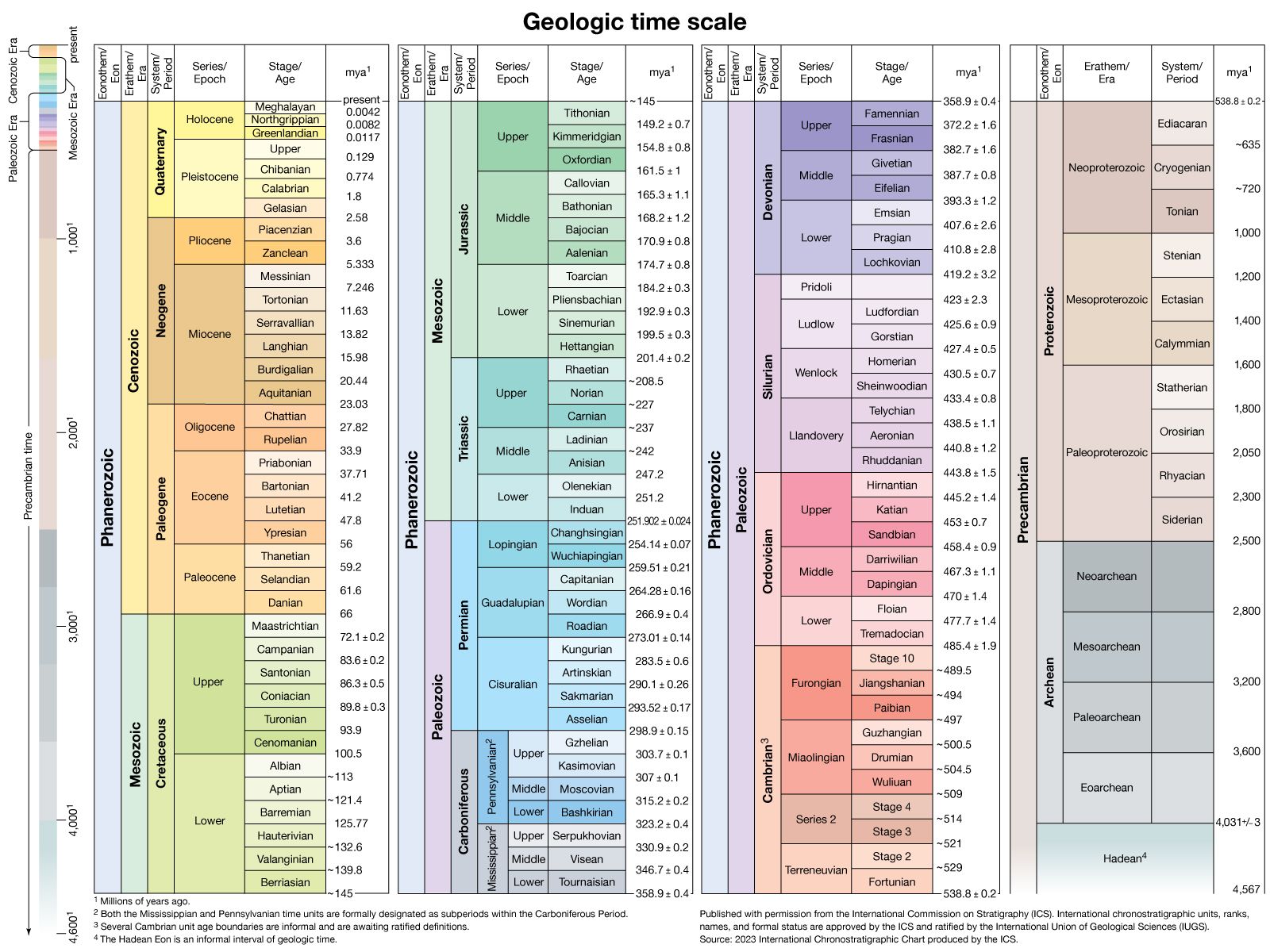
The transition from the Carboniferous Period to the Permian Period (approximately 298.9 million years ago) was marked by significant geological and climatic…
How did the end of the Carboniferous Period transition into the Permian Period, and what major changes occurred?
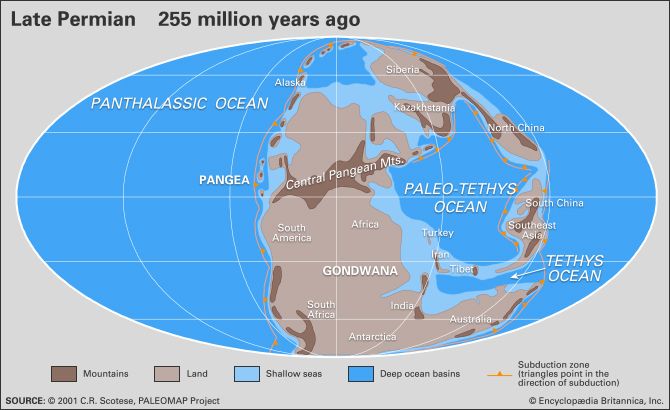
The transition from the Carboniferous Period to the Permian Period (approximately 298.9 million years ago) was marked by significant geological and climatic shifts that fundamentally altered Earth’s environments.12
Key Transitions and Changes
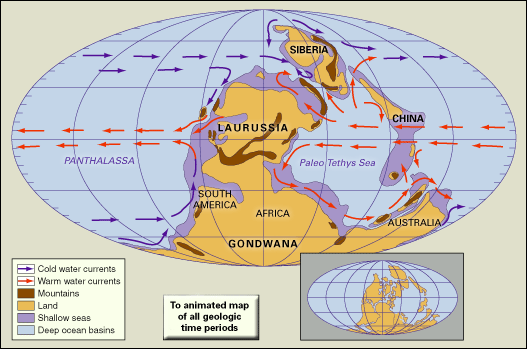
- Assembly of Pangea: The most profound geological change was the continued collision of landmasses to form the supercontinent of Pangea. This process triggered extensive mountain-building (orogenies), which disrupted atmospheric circulation, created rain-shadow effects, and closed marine seaways.134
- Climatic Warming: While the Carboniferous was characterized by widespread glaciation in the Southern Hemisphere, the early Permian saw a gradual warming trend. As Pangea consolidated, the climate shifted from the moist, coal-swamp conditions prevalent in the Carboniferous to increasingly dry and arid environments.1453
- Biological Evolution: The warming climate encouraged evolutionary expansion for species that survived the colder Carboniferous conditions. Terrestrial plants diversified, moving into drier habitats, which in turn drove the rapid evolution of insects. Additionally, the first reptile lineages appeared in the late Carboniferous and continued to diversify in the Permian, eventually giving rise to mammals.5126
How did the oxygen levels in the atmosphere change during the Carboniferous, and what caused this change?
During the Carboniferous Period, atmospheric oxygen levels are estimated to have risen significantly, reaching concentrations as high as 30 percent, compared to the approximately 21 percent observed in the early 21st century.7
This increase was primarily driven by the proliferation of vast, dense forests of vascular land plants. Through the process of photosynthesis, these plants converted carbon dioxide and water into organic matter, releasing free oxygen as a byproduct. During the Carboniferous, large quantities of this organic carbon were buried in sediments—forming the extensive coal deposits characteristic of the period—rather than being reoxidized through decay. Because the carbon was effectively “locked away” in the Earth’s crust, the oxygen produced by these plants remained in the atmosphere, leading to a net increase in its concentration.789410
This elevated oxygen environment is widely believed to have been a critical factor in the evolution of terrestrial life, potentially enabling insects, such as the ancestors of modern dragonflies, to reach exceptionally large sizes.7
What evidence do we have of the first reptiles evolving during the Carboniferous Period?
Evidence for the evolution of the first reptiles during the Carboniferous Period is primarily found in the fossil record of the Late Carboniferous, though the transition itself is poorly documented due to the nature of the evolutionary changes involved.
Fossil Evidence
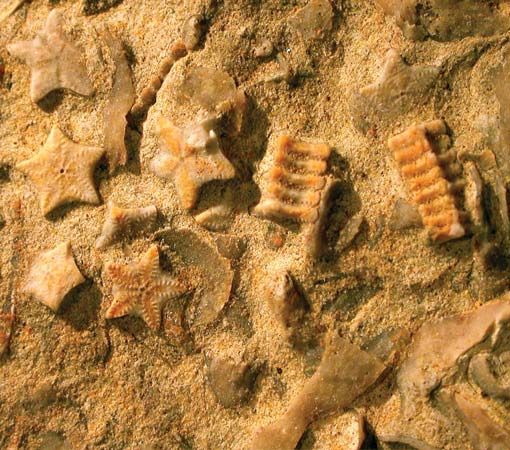
The earliest known reptiles, such as Hylonomus and Paleothyris, have been recovered from Late Carboniferous deposits in North America14. Notably, specimens of Hylonomus were discovered preserved within the cavities of rotting lycopod tree stumps in Nova Scotia, providing a rare glimpse into these small, lizardlike animals that inhabited forested environments.1213
Evolutionary Context
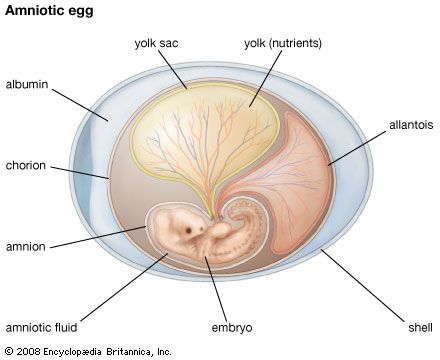
The emergence of reptiles was defined by the development of the Amniota clade, characterized by the evolution of extra-embryonic membranes (the amnion, chorion, and allantois). This adaptation allowed embryos to develop within a protective, fluid-filled sac, enabling tetrapods to reproduce on land rather than requiring a moist, aquatic habitat. While these soft-tissue reproductive improvements are not directly preservable in the fossil record, the presence of both early reptiles and synapsids in Middle Pennsylvanian fossil beds confirms that this transition had already occurred by that time.1415
How did the climate change during the Carboniferous Period, and what impact did it have on Earth’s ecosystems?
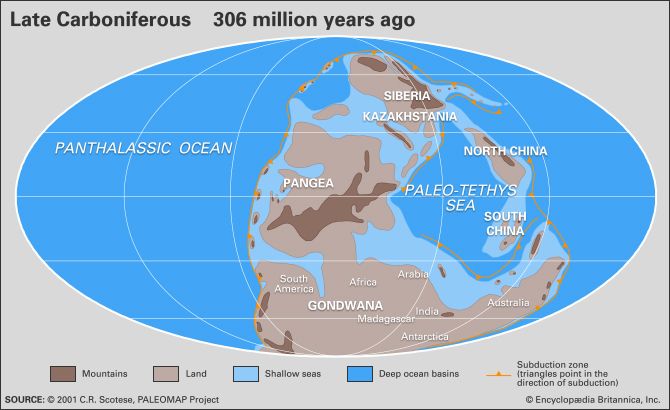
During the Carboniferous Period (358.9 to 298.9 million years ago), the Earth’s climate was highly variable and strongly influenced by the latitudinal positions of its landmasses. Equatorial regions generally experienced warm, humid conditions, while midlatitudes were dry, and higher latitudes were cooler and moist.7
Climatic Drivers and Impacts
- Glaciation: The supercontinent Gondwana, located largely in high southern latitudes, experienced widespread continental glaciations throughout much of the period. As the period progressed into the Pennsylvanian subperiod, these glaciers expanded into lower latitudes.74
- Greenhouse Effects: High concentrations of atmospheric carbon dioxide contributed to a warmer lower atmosphere, supporting the growth of extensive, lush vegetation in tropical regions.16
- Coal Formation: The combination of warm, humid climates and dense plant life led to the formation of vast coal swamps, particularly in equatorial settings. More coal was produced during the Pennsylvanian than at any other time in the geologic record.164
Ecosystem Responses
The climate directly shaped the distribution and evolution of life. While tropical coal swamps lacked seasonal growth rings in their flora, plants in higher latitudes exhibited clear seasonal growth patterns. The period saw the diversification of terrestrial insects, with some species reaching massive sizes—a trend potentially enabled by elevated atmospheric oxygen levels—and the peak development of amphibians alongside the emergence of the first reptiles.7174
Sources
- A Journey Through Time Since the Precambrian - Permian Period: 298.9 million to 252.2 million years ago — Encyclopædia Britannica
- Permian Period - Paleoclimate — Encyclopædia Britannica
- Permian Period — Encyclopædia Britannica
- Carboniferous Period - Paleoclimate — Encyclopædia Britannica
- Carboniferous Period - Distinctive features — Encyclopædia Britannica
- Permian Period - Marine and terrestrial life — Encyclopædia Britannica
- A Journey Through Time Since the Precambrian - Carboniferous Period: 358.9 million to about 298.9 million years ago — Encyclopædia Britannica
- geologic history of Earth - Formation of the secondary atmosphere — Encyclopædia Britannica
- Permian extinction - Alteration of the carbon cycle — Encyclopædia Britannica
- evolution of the atmosphere - Attainment of the modern O 2 level — Encyclopædia Britannica
- evolution of the atmosphere - Geologic carbon cycle — Encyclopædia Britannica
- Carboniferous Period - Amphibians and early reptiles — Encyclopædia Britannica
- reptile - Historical development — Encyclopædia Britannica
- reptile - Fossil distribution — Encyclopædia Britannica
- Amniota — Encyclopædia Britannica
- last glacial maximum — Encyclopædia Britannica
- Atmosphere - Carbon budget — Encyclopædia Britannica
- Pangea: Top Questions — Encyclopædia Britannica
- Carboniferous Period - Paleogeography — Encyclopædia Britannica
Published on · 4 min read