Permian Period
The Permian Period was the final geological period of the Paleozoic Era, spanning from 298.9 million to 252.2 million years ago. It followed the…
What is the Permian Period and when did it occur in Earth’s history?
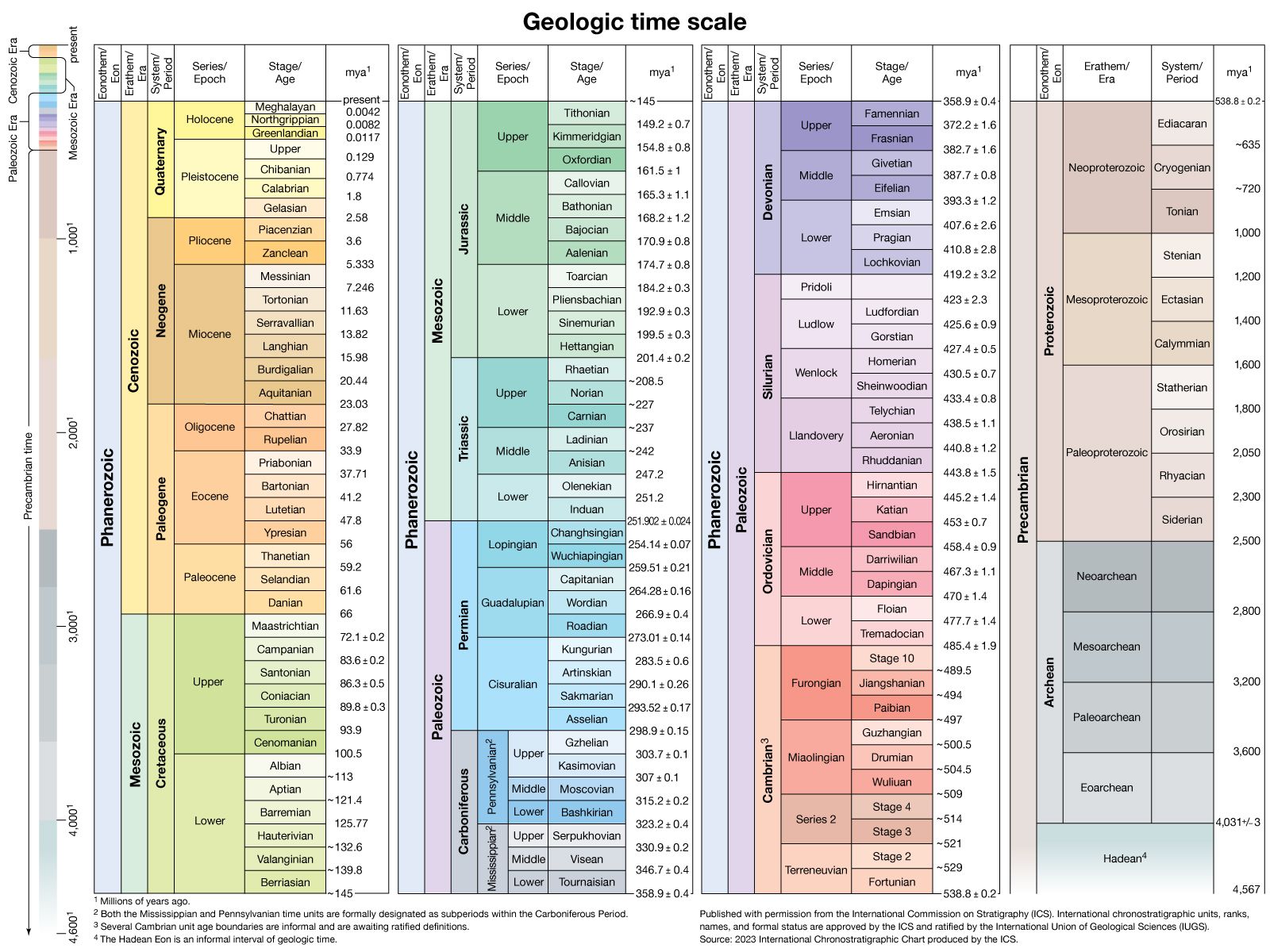
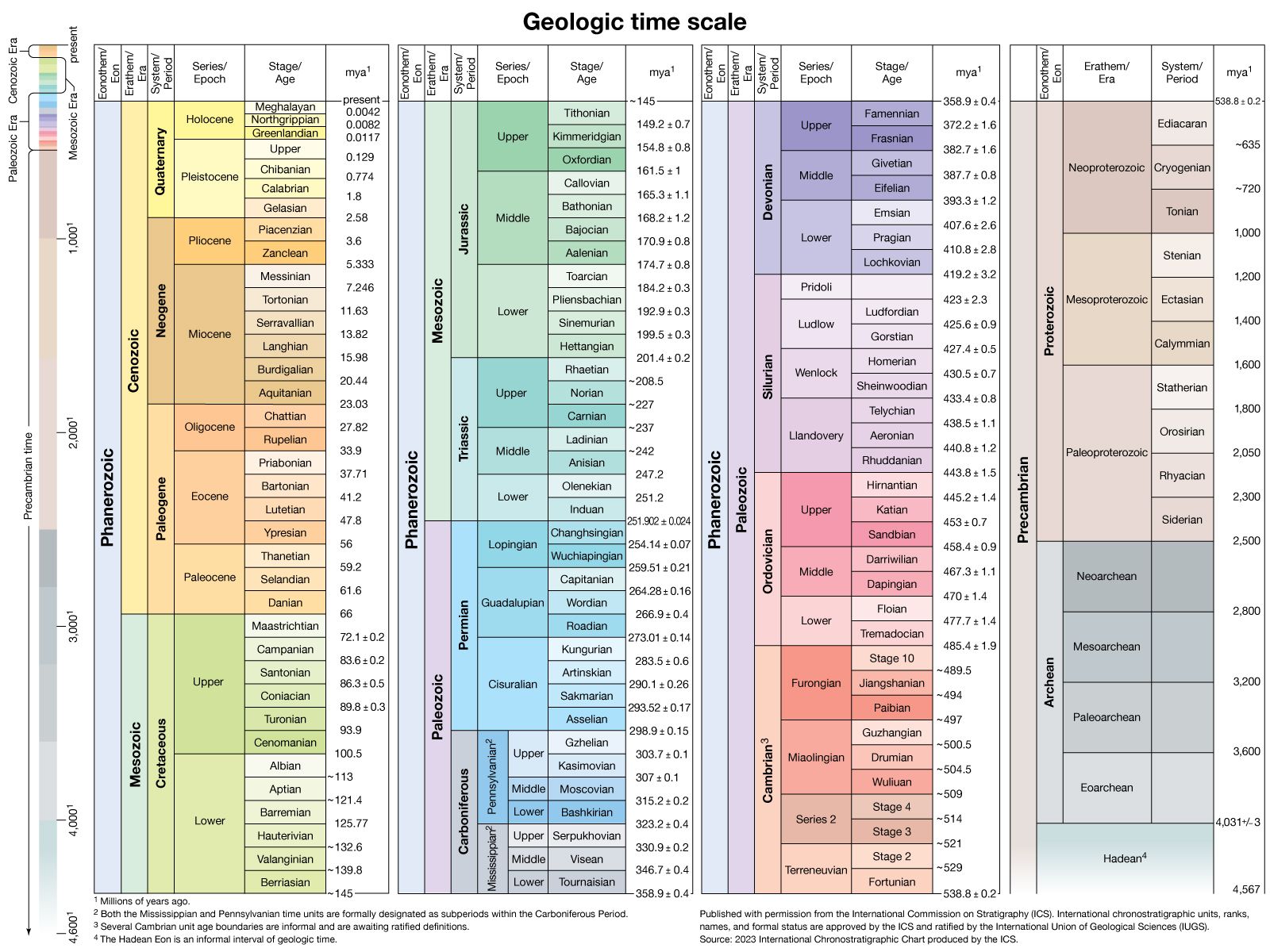
The Permian Period was the final geological period of the Paleozoic Era, spanning from 298.9 million to 252.2 million years ago. It followed the Carboniferous Period and preceded the Triassic Period. The period is named after the region of Perm in Russia, where rocks from this time were first studied.1
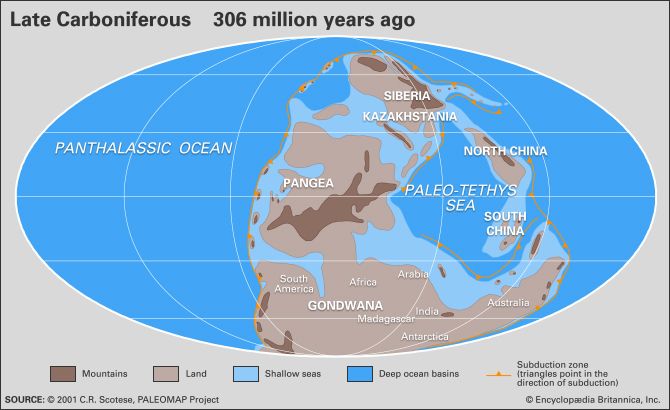
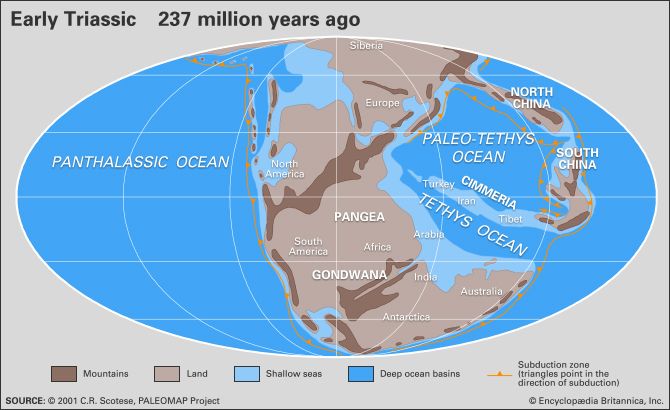
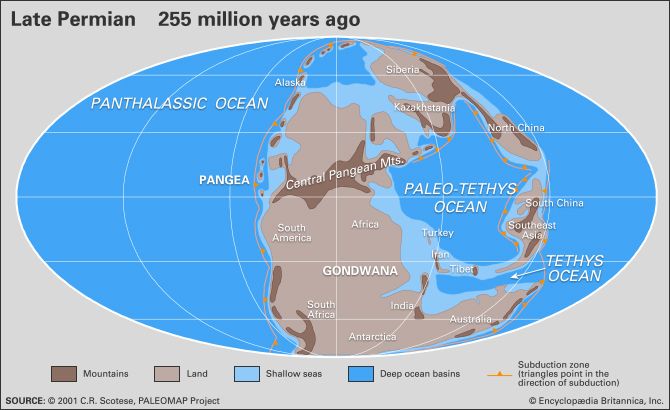
During this era, most of Earth’s landmasses converged to form the supercontinent of Pangea, which was surrounded by the massive Panthalassa ocean. The climate shifted significantly over time, beginning with widespread glaciation and evolving into increasingly hot and arid conditions.213
The Permian was a time of significant biological development, including the diversification of plants and insects, as well as the emergence of reptile lineages that would eventually lead to mammals) lineages that would eventually lead to mammals. However, the period concluded with the largest mass extinction in Earth’s history, which eliminated more than 90 percent of existing species.12
How does the end-Permian extinction compare to other mass extinction events in Earth’s history?
The end-Permian extinction, often called the “Great Dying,” stands as the most severe mass extinction event in Earth’s history. While Earth has experienced five major mass extinctions, the Permian-Triassic crisis is distinguished by its unparalleled scale of biodiversity loss.67
Comparison of Severity
- Permian-Triassic Extinction: Eliminated approximately 90 percent of all species, including 95 percent of marine species and 70 percent of terrestrial vertebrates. It caused the collapse of many biological communities and the extinction of entire groups, such as trilobites and rugose corals.678
- Other Major Events: While the Ordovician-Silurian, Late Devonian, End-Triassic, and Cretaceous-Paleogene extinctions were all catastrophic, none reached the magnitude of the Permian event. For instance, the K-Pg extinction, famous for the loss of dinosaurs, resulted in the loss of about 67 to 80 percent of species.67
Distinctive Characteristics
Unlike the K-Pg extinction, which is widely attributed to a single asteroid impact, the Permian extinction lacks consistent evidence of such an impact. Instead, it is largely linked to prolonged volcanism—specifically the Siberian flood basalts—which triggered severe climate change, oceanic anoxia, and disruptions to the carbon cycle.879
We could dive deeper into how the current sixth mass extinction compares to these historical events.
What were the major geological events that characterized the Permian Period?
The Permian Period (298.9 to 252.2 million years ago) was defined by transformative geological and climatic shifts that reshaped the Earth’s surface.
Tectonic Assembly and Landforms
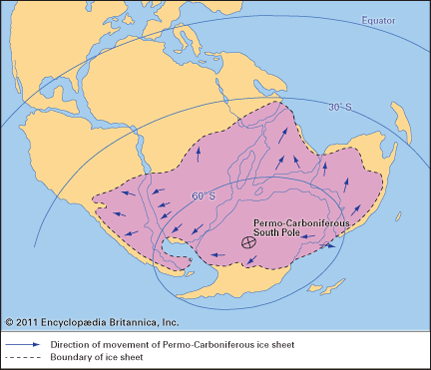
The most significant geological event was the assembly of the supercontinent of Pangea. This process involved massive continental collisions, which triggered extensive mountain-building events (orogenies) and closed various marine seaways. These newly formed high mountain ranges significantly altered atmospheric circulation and regional climates. In some regions, such as the Delaware and Zechstein basins, tectonic activity included transform faulting and extensional rifting, leading to the growth of limestone reefs and varied land relief.1412
Climate and Sedimentation
The period began with widespread glaciation in high-latitude regions like Australia, Antarctica, and Siberia, inherited from the Carboniferous Period. As Pangea consolidated, the climate transitioned toward global warming, resulting in hot, arid conditions and the widespread development of deserts in tropical and subtropical areas. This shift is reflected in the geological record by the progressive increase of evaporites, red beds, and eolian sands.4121
Volcanism
The end of the period was marked by massive volcanism in northeastern Siberia. The eruption of the Siberian flood basalts released vast quantities of volcanic ash and carbon dioxide, which likely contributed to severe environmental stress and the subsequent mass extinction.4
What caused the end-Permian extinction event, and how severe was it?
The end-Permian extinction, often referred to as the “Great Dying,” is the most severe mass extinction event in Earth’s history. It resulted in the loss of approximately 90 percent of all species, including more than 95 percent of marine species and 70 percent of terrestrial species. More than half of all taxonomic families present at the time disappeared, marking a catastrophic collapse of global biodiversity.7514
Potential Causes
While the exact triggers remain a subject of scientific debate, current research focuses on a combination of biological and physical disruptions to Earth’s cycles. Key hypotheses include:915
- Volcanism: The prolonged eruption of the Siberian flood basalts (the Siberian Traps) is widely considered a primary driver. These eruptions released massive amounts of carbon dioxide and volcanic gases, leading to significant climate change and global warming.1617
- Environmental Stressors: Increased temperatures, potentially exceeding 30–32 °C (86–90 °F) in surface waters, likely devastated marine life. Furthermore, oceanic anoxia—a lack of dissolved oxygen—is evidenced by carbon-rich, pyritic shales found at the Permian-Triassic boundary.91517
- Other Factors: Some scientists point to the assembly of Pangea, which altered ocean currents and destroyed shallow-water habitats. While some have proposed a bolide impact, there is no consistent evidence, such as an iridium anomaly, to support this theory.1615
Sources
- A Journey Through Time Since the Precambrian - Permian Period: 298.9 million to 252.2 million years ago — Encyclopædia Britannica
- Permian Period - Marine and terrestrial life — Encyclopædia Britannica
- Permian Period — Encyclopædia Britannica
- Permian Period - Paleoclimate — Encyclopædia Britannica
- Permian Period - Temperature crises — Encyclopædia Britannica
- Permian Period - Marine invertebrates — Encyclopædia Britannica
- Permian extinction - Other potential causes — Encyclopædia Britannica
- mass extinction event — Encyclopædia Britannica
- Triassic Period - Permian-Triassic extinctions — Encyclopædia Britannica
- Major Mass Extinctions — Encyclopædia Britannica
- Permian Period - Alteration of the carbon cycle — Encyclopædia Britannica
- Triassic Period - The Permian-Triassic boundary — Encyclopædia Britannica
- Permian Period - Basin sedimentation — Encyclopædia Britannica
- Permian extinction - Marine invertebrates — Encyclopædia Britannica
- Permian extinction - Alteration of the carbon cycle — Encyclopædia Britannica
- Permian extinction — Encyclopædia Britannica
- Permian Period - Mass extinction — Encyclopædia Britannica
- Cryogenian Period: Top Questions — Encyclopædia Britannica
- Ordovician-Silurian extinction — Encyclopædia Britannica
Published on · 4 min read