Cockchafer
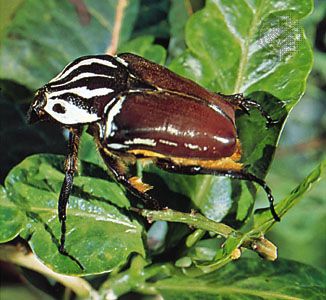
The cockchafer (Melolontha melolontha) is a large European beetle known for its destructive habits. As an adult, the insect feeds on foliage, flowers, and…
What is cockchafer?
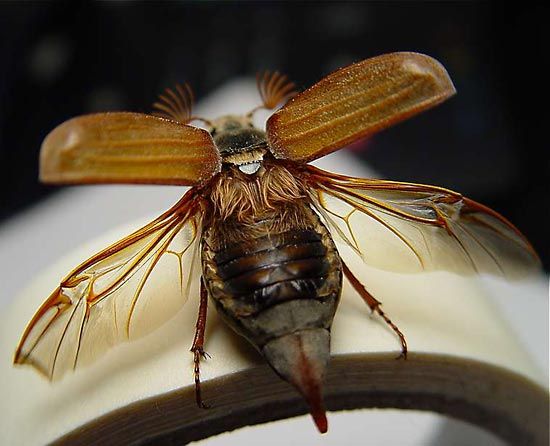
The cockchafer (Melolontha melolontha) is a large European beetle known for its destructive habits. As an adult, the insect feeds on foliage, flowers, and fruit, while its larva causes significant damage to plant roots.12
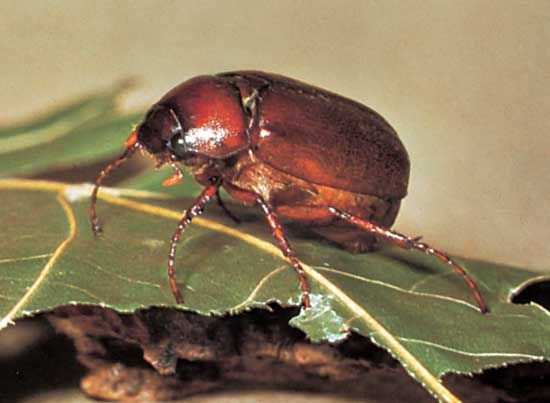
In the British Isles, the term is often used more broadly to describe various beetles within the subfamily Melolonthinae (family Scarabaeidae). These related insects are commonly referred to as June beetles, June bugs, or May beetles in North America.1
What is the life cycle of a beetle?
Beetles undergo a process known as complete metamorphosis (or holometabolous development), which consists of four distinct stages: egg, larva, pupa, and adult.34
The Four Stages of Development
- Egg: The life cycle begins when the female lays eggs, which are typically fertilized by sperm stored in her spermatheca after mating.3
- Larva: Upon hatching, the larva focuses entirely on feeding and growth. As it grows, its skin (cuticle) becomes too small and must be shed in a process called molting, which usually occurs three to five times. Larval forms vary significantly depending on their habitat and diet, ranging from predatory runners to wood-boring or root-feeding types.35
- Pupa: After the final larval stage, the insect enters a nonfeeding, inactive period. It forms a pupa, often within a protective cell or cocoon. During this stage, larval tissues are broken down and reorganized into adult structures, such as wings and reproductive organs.364
- Adult: The adult emerges from the pupal skin, its skeleton hardens, and its wings expand to their full size.3
How do June beetles differ from European cockchafers?
It is inaccurate to treat June beetles and European cockchafers as entirely distinct, unrelated entities. In reality, the term “cockchafer” is often used as a broad classification for beetles within the subfamily Melolonthinae, which includes the insects commonly referred to as June beetles, June bugs, or May beetles in North America.1
The primary distinction is geographical and linguistic rather than biological:
- European Cockchafer (Melolontha melolontha): This specific species is native to Europe and is widely recognized by the name “cockchafer.”1
- June Beetles/Bugs: This is the common name used in North America for various beetles within the same subfamily, Melolonthinae (family Scarabaeidae).1
Both groups share similar characteristics, such as being members of the family Scarabaeidae and causing damage to plants—adults typically feed on foliage and flowers, while their larvae are known for damaging plant roots. Essentially, “June beetle” is the North American regional name for the same group of insects that are classified under the broader “cockchafer” category in the British Isles.1
What makes a beetle considered a garden pest?
Beetles are considered garden pests primarily because they are phytophagous, meaning they feed on various parts of plants, often causing significant damage to crops, lawns, and ornamental vegetation. Their status as pests is determined by their feeding habits at different life stages:8
- Larval Damage: Many beetle larvae, such as the white grubs of June beetles, live in the soil and feed on plant roots. This can kill lawns and pastures by severing grasses from their root systems and destroy crops like corn, potatoes, and strawberries.89
- Adult Feeding: Adult beetles often consume foliage and flowers, which can lead to considerable aesthetic and structural damage to garden plants.9
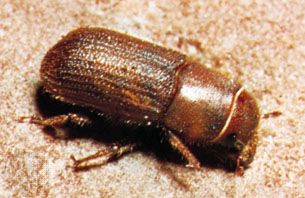
- Boring Habits: Certain groups, such as bark beetles, metallic wood-boring beetles, and long-horned beetles, bore into stems, trunks, and branches. This activity can kill trees or branches by damaging vital areas like the cambium.8
Ultimately, these insects are classified as pests because their natural life cycles—specifically their need to consume plant tissues for growth and development—directly conflict with human efforts to maintain healthy gardens and agricultural yields.8
Sources
- cockchafer — Encyclopædia Britannica
- cockchafer — Merriam-Webster
- Coleoptera - General features — Encyclopædia Britannica
- Metamorphosis — Encyclopædia Britannica
- Coleoptera - Pupae — Encyclopædia Britannica
- Coleoptera - Larval features — Encyclopædia Britannica
- Melolonthidae — Merriam-Webster
- Coleoptera - As plant feeders — Encyclopædia Britannica
- June bug — Encyclopædia Britannica
Published on · 3 min read