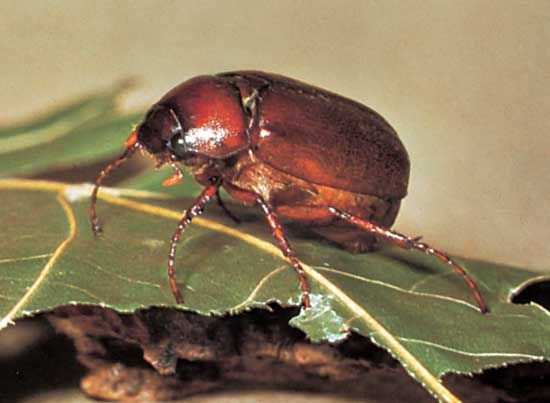
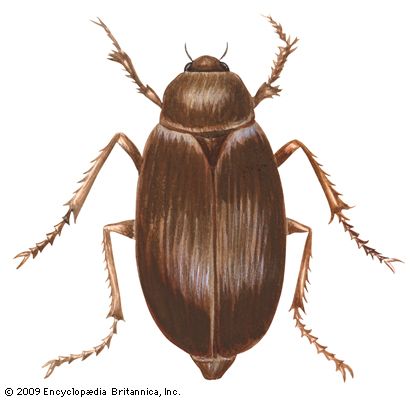
June Bug
Yes, June bugs (genus Phyllophaga) have several natural predators that target them at different stages of their life cycle.
Are there any natural predators of June bugs?
Yes, June bugs (genus Phyllophaga) have several natural predators that target them at different stages of their life cycle.
The waved light fly (Pyrgota undata) acts as a specialized predator; the female fly deposits an egg beneath the beetle’s wing covers (elytra), where the larva hatches and consumes the beetle, ultimately causing its death.1
Additionally, the larvae of the June bug, known as white grubs, are consumed by small mammals such as moles. Because these grubs live in the soil, they are also frequently utilized as bait for fish.1
How do June bugs impact gardens and agriculture?
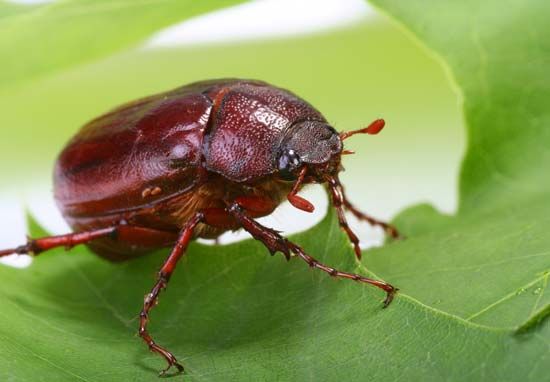
June bugs (Phyllophaga) impact gardens and agriculture through damage caused by both adults and their larvae, known as white grubs.1
Impact on Plants
- Adults: These beetles emerge in the spring and feed on foliage and flowers at night, which can result in significant damage to plants.1
- Larvae: The grubs live in the soil for three years, where they feed on plant roots. This feeding behavior can destroy various crops, including corn, small grains, potatoes, and strawberries. Additionally, they can kill lawns and pastures by severing grasses from their root systems.1
Management
Because June bugs are a persistent agricultural pest, various methods are used to manage their populations. While biological controls—such as natural predators or pathogens—are a subject of ongoing research, they often cannot replace insecticides entirely. Modern approaches often favor integrated control, which coordinates multiple strategies, such as using resistant plant varieties, chemical attractants, or targeted pesticide applications to minimize environmental impact.34
What is the life cycle of a June bug?
The life cycle of the June bug (Phyllophaga) is a multi-year process that transitions through several distinct stages within the soil and above ground.
Life Cycle Stages
- Egg: The cycle begins when a female buries between 50 and 200 small, pearl-like eggs into the soil.1
- Larva: Upon hatching, the larvae—commonly known as white grubs—spend three years living underground. During this extended period, they feed on plant roots, which can cause significant damage to grasses, corn, potatoes, and strawberries.1
- Pupa and Emergence: After the three-year feeding phase, the larvae pupate and emerge as adults in late summer. These adults then bury themselves again to survive the winter.1
- Adult: In the following spring, the adults emerge from the soil to feed on foliage and flowers. Adult June bugs have a relatively short lifespan, living for less than one year.1
Where are June bugs commonly found, and what is their habitat like?
June bugs, belonging to the genus Phyllophaga, are widely distributed across the Northern Hemisphere. They are commonly encountered during warm spring evenings, when the adults emerge and are frequently attracted to artificial lights.1
Their habitat is defined by two distinct environments corresponding to their life stages:
- Soil: The larval stage, known as white grubs, lives exclusively underground. This environment provides them with access to the roots of grasses, corn, potatoes, and strawberries, which serve as their primary food source for three years.12
- Above Ground: As adults, June bugs inhabit areas with abundant foliage and flowers, which they consume at night. They are commonly found in gardens, lawns, and agricultural fields where these plants are present.12
Sources
- June bug — Encyclopædia Britannica
- june bug — Merriam-Webster
- Agricultural technology - Biological controls — Encyclopædia Britannica
- white grub — Merriam-Webster
- Origins of agriculture - Integrated control — Encyclopædia Britannica
Published on · 3 min read