Cockle
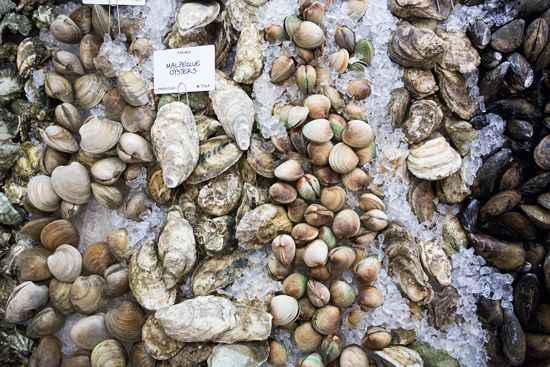
Cockles are marine bivalve mollusks belonging to the family Cardiidae. As members of the class Bivalvia, they are defined by several key characteristics:
What are the key characteristics that define cockles as mollusks?
Cockles are marine bivalve mollusks belonging to the family Cardiidae. As members of the class Bivalvia, they are defined by several key characteristics:
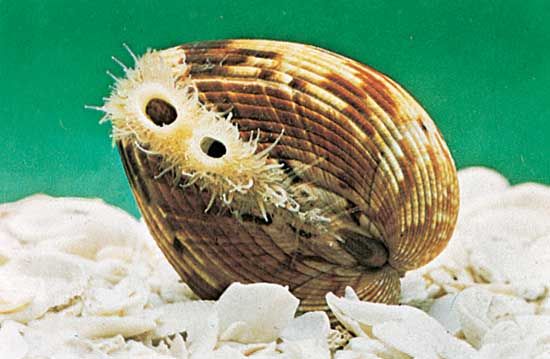
- Shell Structure: They possess two valves (shells) that are equal in size and shape. These shells are typically convex and often feature radial ribs, though some species are smooth.12
- Habitat and Behavior: Most species live in sandy or muddy environments, where they remain shallowly buried. They are filter feeders that collect microscopic organisms from the water.1
- Anatomy: Like other bivalves, their body form is adapted to their environment. They possess a mantle, a foot often used for burrowing, and internal organs protected by their shells.13
- Reproduction: Most cockles reproduce by shedding eggs and sperm into the water, where fertilization occurs. They typically pass through a free-swimming larval stage before metamorphosing into their adult form on the sea floor.14
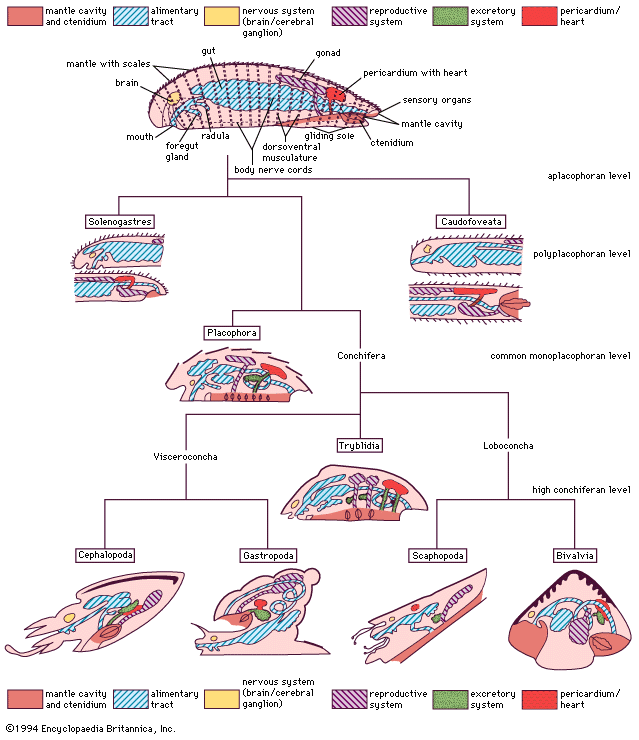
Because they are mollusks, they share the phylum’s general traits, such as a soft body and the development of a shell, though their specific bivalved form is a specialized adaptation within the phylum.14
In which habitats are cockles typically found, and how do they adapt to their environment?
Cockles are bivalve mollusks that inhabit sandy or muddy environments worldwide. Most species reside just below the low-tide line, though some are found in the intertidal zone or at depths exceeding 500 meters. They typically remain shallowly buried, usually no deeper than three centimeters.1
To adapt to these environments, cockles utilize a specialized, bladelike foot for burrowing. By extending the foot into the sediment and dilating its tip to create an anchor, they use pedal retractor muscles to pull their shell downward. This process is aided by the sharp closure of their valves, which forces water into the sediment to fluidize it, making movement more efficient.6
For nutrition, cockles are filter feeders, using their gills to strain microscopic organisms from the surrounding water. If threatened or dislodged, they can perform rapid movements, such as twists or jumps, through the violent flexion of their foot.178
What are some common species of cockles, and how do they differ from one another?
There are approximately 250 species of marine bivalve mollusks in the family Cardiidae, commonly known as cockles. While they share a basic body plan, they are often distinguished by their size, shell ornamentation, and geographic distribution.1
Distinguishing Characteristics
Cockles are primarily categorized by the physical features of their shells, which help identify their specific genus:
- Genus Clinocardium: These species are characterized by beaks that point sharply forward. A notable example is the large basket cockle (Clinocardium nuttalli), found in Puget Sound and Washington state, and the smaller fucan cockle (Clinocardium fucanum).1
- Genus Trachycardium: Members of this group are defined by their spined ribs. Examples include the prickly cockle (Trachycardium egmontianum) of the Atlantic coast and the giant Pacific cockle (Trachycardium quadragenarium), which can reach 15 centimeters in diameter.1
- Genus Laevicardium: These cockles are distinguished by valves with smooth margins. This group includes the common Pacific egg cockle and the smooth giant cockle (Laevicardium elatum), which is among the largest species at 15 centimeters.1
Notable Species
Species vary significantly in size and habitat:
Species
Common Name
Notable Feature
Cerastoderma edule
Common edible cockle
Important food source in Britain and Europe.
Dinocardium robustum
Great heart cockle
Large species reaching up to 15 cm.
Americardia media
Atlantic strawberry cockle
Smaller species, typically 2.5 cm.
Acanthocardium aculeata
Spiny, or red-nose, cockle
Found on the south Devon coast; up to 10 cm.
How do bivalves like cockles feed using their gills?
Bivalves, including cockles, utilize their gills—which have evolved into specialized filtering devices called ctenidia—to obtain nutrients from the water.110
The process relies on the following mechanisms:
- Water Circulation: The gill lamellae are covered in complex arrays of cilia. These hairlike filaments beat rhythmically to create a constant flow of water through the gill structure.110
- Filtration: As water passes through, the gills act as a filtration barrier. Microscopic organisms, bacteria, and plant detritus are strained from the water and trapped against the gill face.110
- Transport: Once trapped, the food particles are bound in mucus. Cilia then move these particles along the gill surface into specialized food grooves located at the dorsal axes or ventral margins of the ctenidia.110
- Ingestion: The food-laden mucus is transported to the mouth via the [labial palps], where further selection of particles occurs before ingestion.1
While the gills are essential for this filter-feeding process, they also continue to serve their primary function of respiration.110
Sources
- cockle — Encyclopædia Britannica
- bivalve - Classification — Encyclopædia Britannica
- cockle — Merriam-Webster
- bivalve - Size range and diversity of structure — Encyclopædia Britannica
- mollusk - Reproduction and life cycles — Encyclopædia Britannica
- bivalve - Locomotion — Encyclopædia Britannica
- Filter feeding — Encyclopædia Britannica
- mollusk - Locomotion — Encyclopædia Britannica
- bivalve - External features — Encyclopædia Britannica
- bivalve - Food and feeding — Encyclopædia Britannica
Published on · 3 min read