What’s the Difference Between Clams, Mussels, and Oysters?
While clams, mussels, and oysters are all bivalve mollusks that share a similar anatomy—two shells joined by a hinge and a reliance on filter feeding—they…
What’s the difference between clams, mussels, and oysters?
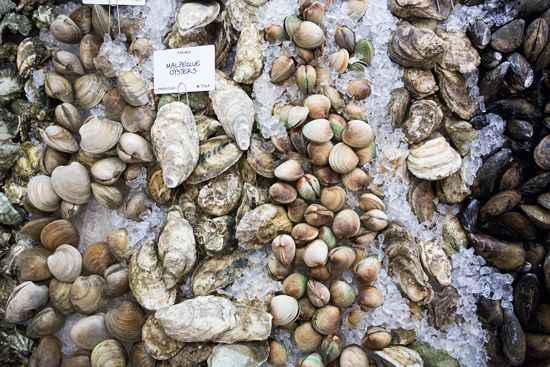
While clams, mussels, and oysters are all bivalve mollusks that share a similar anatomy—two shells joined by a hinge and a reliance on filter feeding—they differ significantly in their habitats, movement, and physical structure.1
Key Differences
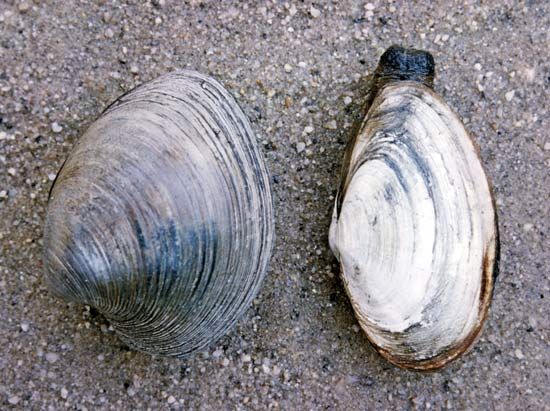
- Habitat and Attachment: Clams burrow into sand or mud using a muscular foot. Oysters are sessile, permanently fusing their shells to hard surfaces in marine or brackish waters. Mussels anchor themselves to surfaces or each other using strong, proteinaceous byssal threads.1
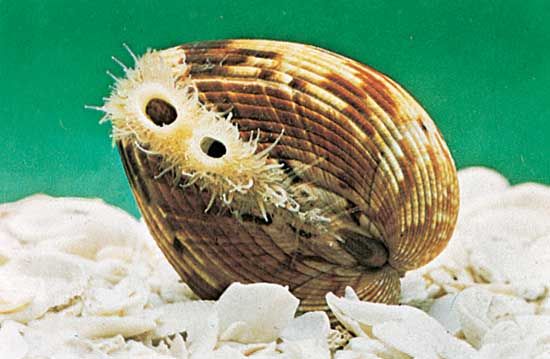
- Shell Structure: Clams typically have smooth, symmetrical, rounded shells. Mussel shells are oblong or triangular, often dark blue or black. Oyster shells are the most irregular, featuring a rough, bumpy texture.1
- Movement: Adult clams can move via their muscular foot, while oysters remain fixed in place. Mussels are largely sedentary but capable of limited repositioning.1
Culinary Profiles
All three are popular shellfish. Clams are often chewier with a bold, salty flavor. Mussels are typically cooked and have a sweeter taste, while oysters are frequently served raw for their tender, buttery texture.1
How do bivalves filter feed to get their nutrients?
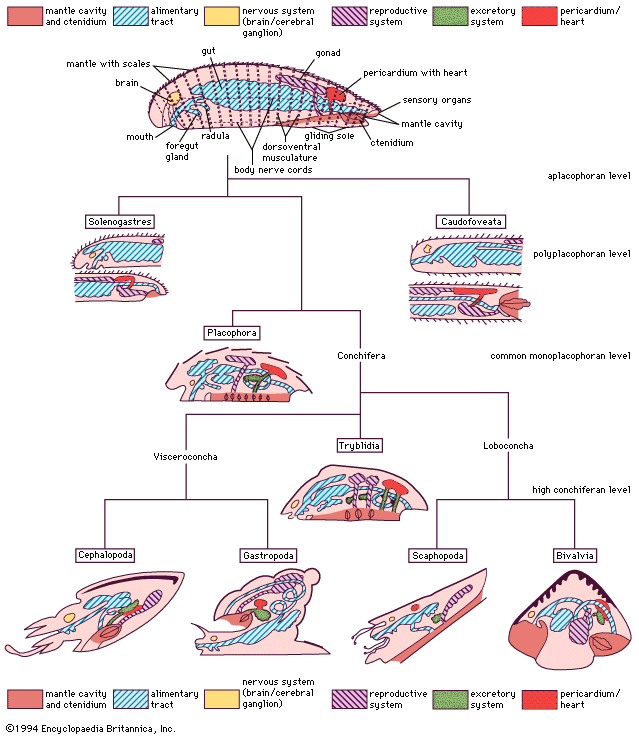
Most modern bivalves are suspension feeders that obtain nutrients by straining organic particles—such as bacteria, algae, and plant detritus—from the surrounding water. This process relies on specialized structures within the mantle cavity known as ctenidia (gills).45
The Filtration Process
The mechanism functions through the following steps:
- Water Circulation: Hairlike filaments called cilia, located on the gill lamellae, beat in a coordinated fashion to create a constant water current. This current draws water into the mantle cavity through an inhalant siphon or opening.645
- Particle Trapping: As water passes through the gills, the ctenidia act as a filtration barrier. The gills are often folded into complex shapes (plicae) to maximize surface area for trapping suspended material.45
- Transport and Selection: Once particles are captured, they are bound in mucus and moved by ciliary currents along specific tracts toward the labial palps4. These palps serve as a sorting mechanism, selecting suitable food particles to be directed into the mouth while rejecting others as pseudofeces.45
- Waste Removal: Waste products and rejected material are eventually expelled from the animal through the exhalant stream.5
While this is the standard method for most bivalves, some species have evolved alternative strategies, such as the predatory feeding seen in certain deepwater bivalves or the symbiotic relationship with zooxanthellae found in giant clams.45
What are some other examples of bivalve mollusks?
Beyond the common clams, mussels, and oysters, the class Bivalvia includes a diverse array of species adapted to various marine and freshwater environments. Here are some notable examples:
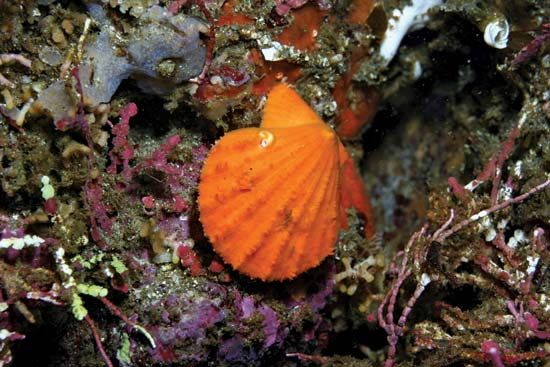
- Scallops: Unlike most bivalves that remain sedentary or burrow, scallops are unique for their ability to swim freely as adults. They move through the water via jet propulsion by rapidly clapping their fan-shaped shells together using a powerful adductor muscle.7
- Cockles: These marine bivalves of the family Cardiidae are found worldwide in sandy or muddy areas. They are characterized by equal-sized valves that may be smooth or feature ribs radiating from the hinge area.8
- Razor Clams: Members of the family Solenidae, these bivalves possess narrow, elongated, razorlike shells. They are equipped with a large, active foot that allows them to move rapidly up and down within their burrows in intertidal sands and muds.9
- Shipworms: These marine bivalves of the family Teredidae are known for their long, tubelike bodies. They use a small, specialized shell to burrow into submerged wood, which can cause significant destruction to wooden ship hulls and wharves.10
- Giant Clams: Specifically the species Tridacna gigas, these are massive bivalves found on coral reefs in the Indian and Pacific oceans, sometimes weighing over 500 pounds.1
Why are some shellfish considered unsafe to eat if not prepared correctly?
Shellfish can be unsafe to eat due to two primary factors: the accumulation of natural toxins and contamination by disease-causing organisms.
Natural Toxins
Some shellfish, particularly bivalve mollusks like mussels, clams, and scallops, feed on plankton. During certain times of the year, these shellfish may ingest toxic algae, such as dinoflagellates, which produce potent neurotoxins. These toxins concentrate in the shellfish tissue and can cause severe illnesses in humans, including:121314
- Paralytic shellfish poisoning: Characterized by tingling, numbness, and potential respiratory paralysis.1213
- Amnesic shellfish poisoning: Caused by domoic acid, leading to symptoms ranging from vomiting to memory loss and death.13
- Diarrheic shellfish poisoning: Caused by okadaic acids.13
Pathogenic Contamination
Shellfish can also become contaminated with bacteria, viruses, and parasites from their environment, often due to water pollution or poor hygiene practices. Consuming raw or undercooked shellfish puts individuals at risk for infections such as cholera, hepatitis A, and norovirus.15
While proper cooking can kill many bacteria and viruses, it is important to note that it does not always neutralize the natural algal toxins mentioned above.15
Sources
- What’s the difference between clams, mussels, and oysters? — Encyclopædia Britannica
- clam — Encyclopædia Britannica
- shellfish — Encyclopædia Britannica
- Filter feeding — Encyclopædia Britannica
- bivalve - Food and feeding — Encyclopædia Britannica
- bivalve - Internal features — Encyclopædia Britannica
- bivalve — Encyclopædia Britannica
- cockle — Encyclopædia Britannica
- shipworm — Encyclopædia Britannica
- razor clam — Encyclopædia Britannica
- giant clam — Merriam-Webster
- shellfish poisoning — Encyclopædia Britannica
- nutritional disease - Foodborne illnesses — Encyclopædia Britannica
- Algae - Toxicity — Encyclopædia Britannica
- Harmful Algal Blooms — Encyclopædia Britannica
Published on · 4 min read