Cockscomb
Cockscomb (Celosia cristata) plants typically grow to a height of approximately 23 to 81 centimeters (9 to 32 inches), with the specific height depending on…
How tall do cockscomb plants typically grow?
Cockscomb (Celosia cristata) plants typically grow to a height of approximately 23 to 81 centimeters (9 to 32 inches), with the specific height depending on the variety.1
Can cockscomb flowers be used in dried flower arrangements?
Yes, cockscomb flowers are excellent for use in dried flower arrangements. Because of their dense, showy inflorescences, they retain their structure and vibrant colors well after the drying process is complete.1
How did the cockscomb plant get its unusual name?
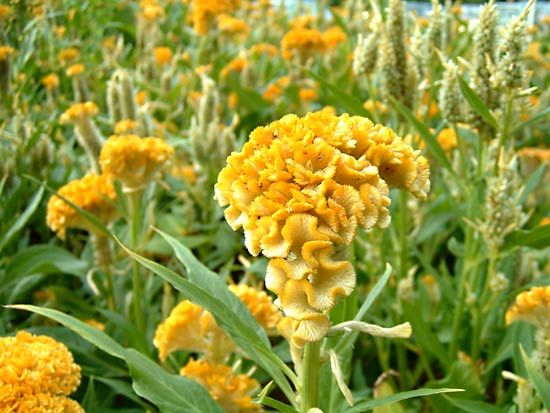
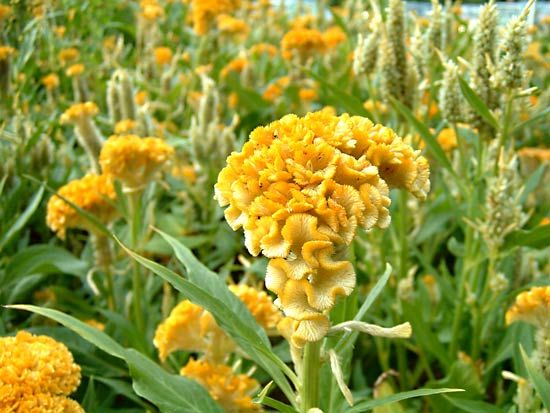
The cockscomb plant (Celosia cristata) derives its common name from the appearance of its dense, undulating inflorescences, which bear a striking resemblance to the red, fleshy combs found on the heads of roosters.1
What are the distinctive features of the cockscomb flower?
The cockscomb (Celosia cristata) is a member of the Amaranthaceae family, recognized for several distinctive botanical features:
- Inflorescences: The plant is best known for its dense, undulating, and often flattened flower clusters. These showy structures resemble the fleshy combs of roosters, which is the origin of the plant’s common name.13
- Color Palette: The flowers, which are composed of small blooms with colorful bracts, appear in a wide range of hues, including white, yellow, orange, red, and purple.1
- Foliage: Cockscombs feature simple, oval-shaped leaves arranged alternately along the stem. These leaves are frequently supported by a reddish petiole.1
- Growth Habit: These herbaceous plants typically reach heights between 23 and 81 cm (9 to 32 inches). While they are tender perennials, they are commonly cultivated as annuals in cooler regions.1
- Reproduction: The plants are prolific producers of seeds and can readily reseed themselves under favorable conditions.13
Sources
- cockscomb — Encyclopædia Britannica
- cockscomb — Merriam-Webster
- Celosia — Encyclopædia Britannica
Published on · 1 min read