Celosia
Celosia is a genus comprising approximately 45 species of herbaceous plants within the Amaranthaceae family, native to tropical regions of Africa and the…
What is Celosia?
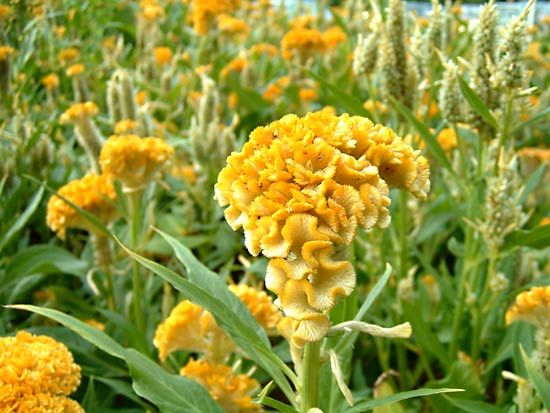
Celosia is a genus comprising approximately 45 species of herbaceous plants within the Amaranthaceae family, native to tropical regions of Africa and the Americas. These plants are characterized by their alternate, simple or lobed leaves and dense, showy flowers that often form feathery or crested clusters.12
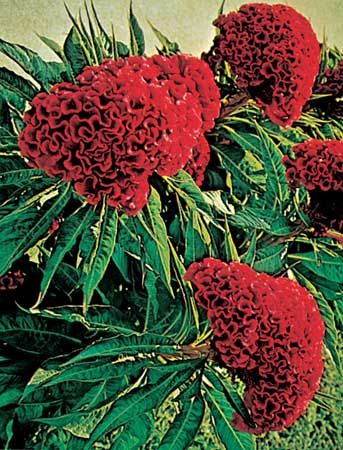
The genus is widely recognized for its ornamental value, particularly the cockscomb, which is prized for its undulating, rooster-comb-like inflorescences that appear in vibrant shades of red, yellow, orange, and purple. Because of their dense, chaffy spikes, some varieties are also known as woolflowers. Beyond aesthetics, certain species like the Lagos spinach (Celosia argentea) serve as important food crops in West Africa, where they are cultivated for their nutritious leafy greens.13
These plants are typically grown as annuals in cooler climates and are known for their ability to produce copious amounts of seeds, allowing them to reseed readily.13
What are the differences between annual and perennial plants?
The primary difference between annual and perennial plants lies in the duration of their life cycles.
Annual Plants
An annual is a plant that completes its entire life cycle—from germination to seed production and death—within a single growing season. Because the plant dies after one season, the only part that survives to the next year is the dormant seed. This category includes many common garden flowers, such as marigolds and zinnias, as well as major food crops like corn and wheat5.45
Perennial Plants
A perennial is a plant that persists for several years. These plants typically regrow and rebloom year after year from a perennating part that survives the dormant season.46
- Woody Perennials: Trees and shrubs are perennials that maintain their structure year-round.6
- Herbaceous Perennials: In cold climates, these plants often die back to the ground in autumn, surviving the winter through underground structures like bulbs, tubers, or rhizomes.6
How is Lagos spinach used as a food source?
Lagos spinach, also known as silver cockscomb (Celosia argentea), serves as a significant food crop in West Africa. It is primarily cultivated for its nutritious leafy greens, which are harvested and consumed as a vegetable.1
Why are some Celosia varieties called cockscombs?
Some Celosia varieties are called cockscombs because of their distinctive, dense, and undulating inflorescences. These flower clusters bear a striking resemblance to the red, fleshy combs found on the heads of roosters, which is the origin of the common name cockscomb.
While the term is most famously associated with Celosia cristata, the genus Celosia includes various species with diverse flower shapes. In some cultivated forms, these inflorescences can appear flattened, feathery, or spikelike, sometimes leading to the nickname woolflowers due to their dense, glistening appearance.21
Sources
- Celosia — Encyclopædia Britannica
- cockscomb — Encyclopædia Britannica
- celosia — Merriam-Webster
- Is That Plant 'Perennial' or 'Annual'? — Merriam-Webster
- annual — Encyclopædia Britannica
- perennial — Encyclopædia Britannica
- cockscomb — Merriam-Webster
Published on · 2 min read