Nasturtium
The term "nasturtium" commonly refers to the common nasturtium (Tropaeolum majus), an annual plant in the family Tropaeolaceae native to the Andes Mountains…
What is nasturtium?
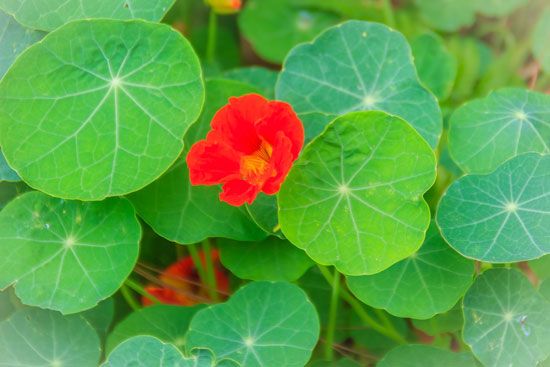
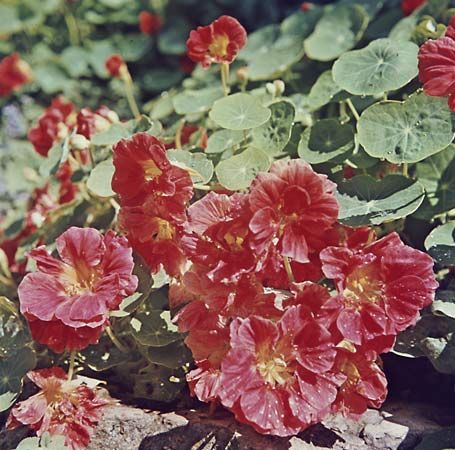
The term “nasturtium” commonly refers to the common nasturtium (Tropaeolum majus), an annual plant in the family Tropaeolaceae native to the Andes Mountains of South America. It is widely cultivated as an ornamental for its vibrant yellow, orange, or red flowers and attractive, nearly circular leaves.12
Both the leaves and flowers are edible and prized for their peppery flavor, often used in salads or as a garnish. The plant can grow in compact or trailing forms and is sometimes considered an invasive species outside its native range.1
It is important to note that the genus Nasturtium is taxonomically distinct; it consists of aquatic herbs in the family Brassicaceae, such as watercress, and should not be confused with the garden nasturtium of the genus Tropaeolum.1
How does watercress differ from the garden nasturtium?
While both plants are known for their peppery flavor, watercress and the garden nasturtium are biologically unrelated and belong to different families.41
Feature
Watercress
Garden Nasturtium
Scientific Name
Nasturtium officinale
Tropaeolum majus
Family
Brassicaceae
(Mustard family)
Tropaeolaceae
Life Cycle
Perennial
Annual
Habitat
Aquatic; thrives in cool, flowing streams
Terrestrial; native to the
Andes Mountains
Leaf Structure
Pinnately compound with 3–9 leaflets
Nearly circular, peltate leaves
Flowers
Tiny, four-petaled white flowers
Funnel-shaped yellow, orange, or red flowers
Watercress is an aquatic plant that grows submerged or on mud surfaces. In contrast, the garden nasturtium is a terrestrial ornamental that can grow in compact or trailing forms. While both are edible, they occupy distinct ecological niches and possess different botanical characteristics.41
What makes a plant considered an invasive species?
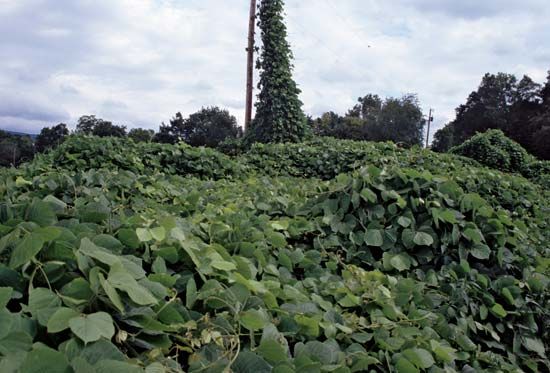
An invasive species is any nonnative organism that significantly disrupts or modifies the ecosystems it colonizes. While many species are introduced to new areas—often through human activities like global commerce—most fail to survive because they lack the necessary adaptations to thrive in their new environment.5
A species becomes invasive when it gains a competitive advantage over indigenous organisms, particularly in ecosystems that lack natural predators to keep its population in check. These species may disrupt their new environment by:
- Outcompeting native species: They may monopolize essential resources like food, water, and living space, often displacing native plants and animals.56
- Predation: Invasive predators can be so efficient that they cause native prey populations to decline or face local extinction.56
- Disease transmission: They can act as vectors for parasites and pathogens that harm native life.5
- Habitat alteration: Some species, such as the common buckthorn, physically change the environment, for example by blocking sunlight with dense vegetation.6
Why do some plants produce nectar to attract pollinators?
Plants produce nectar primarily as a food reward to attract pollinators, such as insects, birds, and bats, which facilitate cross-pollination. By offering this sugar-rich solution, plants encourage animals to visit multiple flowers, ensuring the transfer of pollen between individuals, which promotes genetic diversity and species survival.78
This relationship is a classic example of coevolution, where plants and their pollinators have developed specialized traits in tandem. To guide visitors, many plants have evolved “nectar guides”—such as specific colors, patterns, or scents—that point the way to the nectar hidden at the base of the flower.798
Beyond pollination, some plants produce nectar on vegetative structures to attract protective animals. For instance, certain plants secrete nectar to draw ants that defend the plant against herbivores. Conversely, some carnivorous plants use nectar to lure prey into their traps.7
Sources
- nasturtium — Encyclopædia Britannica
- nasturtium — Merriam-Webster
- garden nasturtium — Merriam-Webster
- watercress — Encyclopædia Britannica
- invasive species — Encyclopædia Britannica
- habitat loss — Encyclopædia Britannica
- Nectar — Encyclopædia Britannica
- Pollination - Evolution of insect pollination — Encyclopædia Britannica
- Botanical Sex: 9 Alluring Adaptations — Encyclopædia Britannica
- Cross-pollination — Encyclopædia Britannica
Published on · 3 min read