Colorado National Monument
The Ute people have deep historical connections to the region encompassing the Colorado National Monument. Traditionally, the Ute were a Numic-speaking group…
What Native American tribes have historical connections to the area of the Colorado National Monument?
The Ute people have deep historical connections to the region encompassing the Colorado National Monument. Traditionally, the Ute were a Numic-speaking group that inhabited the plateaus and canyonlands of the upper Colorado River basin, which includes the area where the monument is situated in west-central Colorado.12
Historically, the Ute subsisted by collecting wild foods and, following the acquisition of horses in the early 19th century, organized into bands of hunters that traversed the region. Their presence in the area is reflected in the local geography, including the naming of Ute Canyon within the monument itself. Additionally, the Southern Paiute, who share linguistic roots with the Ute, also historically utilized the plateaus and canyonlands of the upper Colorado basin for hunting and gathering.132
What recreational activities are available for visitors to the Colorado National Monument?
Visitors to the Colorado National Monument can enjoy several recreational activities centered on the area’s unique geological features and scenic wilderness:
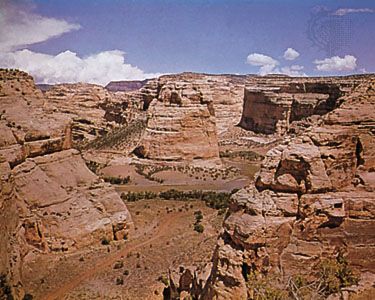
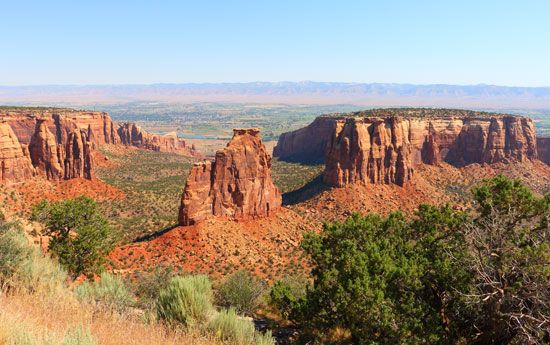
- Scenic Driving: The 23-mile (37 km) Rim Rock Drive is a primary attraction, skirting the walls of canyons such as No Thoroughfare, Red, Ute, and Monument canyons at elevations exceeding 6,500 feet.
- Hiking: The monument features a network of hiking trails that provide access to the backcountry, allowing visitors to explore the area’s wind-eroded sandstone formations, towering monoliths, and steep-walled canyons.
- Wildlife Viewing: The backcountry is home to diverse wildlife, including mule deer, bighorn sheep, and coyotes, which visitors may encounter while exploring the trails.
- Sightseeing: Visitors can view notable rock formations such as the 600-ton Balanced Rock, the domes of the Coke Ovens, Sentinel Spire, the 450-foot-high Independence Monument, and Window Rock.
Are there any notable fossils or archaeological discoveries within the Colorado National Monument?
It appears there is a common point of confusion regarding the specific features of various Colorado monuments. While other sites in Colorado are renowned for their extensive fossil beds or archaeological ruins, the Colorado National Monument is primarily celebrated for its dramatic geological landscape rather than being a dedicated fossil or archaeological site.
However, it is accurate to note that petrified logs and dinosaur fossils have been exposed within the locality of the monument. Unlike Dinosaur National Monument, which was specifically established to preserve vast, world-renowned fossil beds, or Yucca House National Monument, which protects prehistoric Native American pueblo ruins, the Colorado National Monument’s primary significance lies in its wind-eroded sandstone formations, towering monoliths, and steep-walled canyons.782
How does the Colorado National Monument compare to other national monuments in terms of size and visitor numbers?
The Colorado National Monument occupies an area of 32 square miles (83 square km). While the provided search results detail the size of this specific monument, they do not contain comparative data regarding the size or specific annual visitor numbers for other individual national monuments within the National Park Service system.
The national park system as a whole has seen significant growth in attendance over the last century, with total annual visits across all units surpassing 300 million by 2015. However, because the available data does not provide a breakdown of visitor statistics for individual monuments, I cannot offer a direct comparison of how the Colorado National Monument ranks against others in terms of popularity or physical scale.
Sources
- Ute — Encyclopædia Britannica
- Colorado National Monument — Encyclopædia Britannica
- Indigenous peoples of the American Southwest - Language — Encyclopædia Britannica
- Colorado River - Early inhabitants — Encyclopædia Britannica
- Colorado - The earliest inhabitants — Encyclopædia Britannica
- Vermilion Cliffs National Monument — Encyclopædia Britannica
- Dinosaur National Monument — Encyclopædia Britannica
- Florissant Fossil Beds National Monument — Encyclopædia Britannica
- Yucca House National Monument — Encyclopædia Britannica
- National Park Service - Years of growth — Encyclopædia Britannica
Published on · 2 min read