Columbiform
The evolutionary history of Columbiformes—the order containing pigeons, doves, and the extinct dodoes and solitaires—remains difficult to trace with…
What is the evolutionary history of columbiform birds?
The evolutionary history of Columbiformes—the order containing pigeons, doves, and the extinct dodoes and solitaires—remains difficult to trace with certainty because these birds appear in the fossil record already highly differentiated. The earliest known fossil, Gerandia calcaria, dates to the early Miocene of France, approximately 23 million years ago. Scientists believe the group likely originated in the Australasian region, where the greatest diversity of modern species is found.1
Adaptive radiation has driven the evolution of columbiforms toward either specialized arboreal lifestyles or ground-feeding niches. In regions like Australasia and South America, the relative scarcity of mammalian carnivores may have facilitated the evolution of ground-dwelling forms, such as quail doves, which convergently resemble partridges. Conversely, specialized island forms like the dodo and solitaires evolved in the Mascarene Islands, where they lost the power of flight in the absence of predators.231
What are the unique nesting habits of columbiform birds?
Columbiform birds, which include pigeons and doves, exhibit distinct nesting behaviors characterized by simplicity and shared parental responsibility.78
Nest Construction and Site Selection
Most columbiforms build their own nests, which are typically simple, flat platforms constructed from twigs, leaves, and other plant materials. While many species nest in trees, scrub, or woodland, others are ground-nesters. Some species have adapted to nest in holes or crevices, a strategy that helps reduce egg predation but can leave the adult vulnerable to being cornered by predators. In species that nest in cavities, such as the rock dove, the territory defended is often limited to the immediate vicinity of the nest site, leading to a semi-colonial lifestyle when suitable sites are scarce.7
Parental Care and Incubation
- Shared Duties: Once eggs are laid, both members of the pair typically share incubation duties, often changing over at the nest site to ensure the eggs are rarely left uncovered. In many species, the female generally incubates at night, while the male takes the day shift.79
- Clutch Size: Columbiforms typically lay only one or two eggs. This small clutch size is linked to the physiological limitations of producing pigeon’s milk, a highly proteinaceous, nutritive secretion from the crop wall that parents use to feed their young.78
- Feeding: Nestlings, or squabs, are fed by regurgitation. They obtain the crop milk by inserting their bills into the parent’s throat.79
- Defense: To protect their eggs from predators, some ground-nesting species lay brown or cream-colored eggs rather than the white eggs common to many other pigeons. Once hatched, the young are capable of a threat display where they inflate their crops, hiss, and snap their mandibles to deter potential threats.7
What are the distinguishing characteristics of columbiform birds?
Columbiform birds, which include pigeons, doves, and the extinct dodoes and solitaires, are defined by several unique physiological and anatomical traits.
Unique Physiological Traits
- Crop Milk: These birds are unique in their ability to produce a nutritive secretion from the crop wall known as pigeon’s milk. Similar in composition to mammalian milk, its production is stimulated by the hormone prolactin.1
- Drinking Method: Unlike most birds that sip water and tilt their heads back to swallow, columbiforms drink by sucking water in a continuous draft, aided by muscular contractions of the esophagus. continuous draft, aided by muscular contractions of the esophagus.1
Anatomical Characteristics
- Bill Structure: In the family Columbidae, the basal part of the bill is covered by soft, swollen skin that forms a cap, or operculum, over the slitlike nostrils.6
- Skeletal Features: They are characterized by a schizognathous palate (where the palatine processes of the maxillae do not meet in the midline) and a complex hypotarsus. They also possess a well-developed, often bilobed, crop.6
- Plumage and Wings: Their plumage is close and thick, with feathers loosely set in the skin. They are diastataxic, meaning the fifth secondary quill is absent.6
What are some of the most well-known examples of columbiform birds?
The order Columbiformes includes a diverse array of birds, ranging from familiar urban species to unique, extinct island dwellers. Because the names “pigeon” and “dove” are used interchangeably and imply no biological distinction, these birds are often categorized simply by their size and common names.12
Well-Known Living Examples
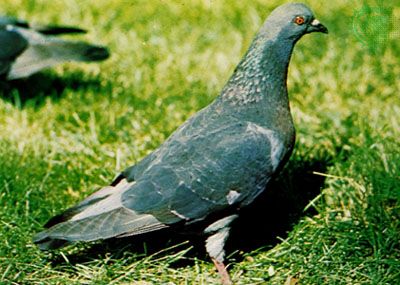
- Rock Dove: The ancestor of all domesticated pigeons, this species is the source of the common street pigeons found in urban areas worldwide.14
- Mourning Dove: A common North American game bird recognized by its long, pointed tail and distinctive, plaintive coo.1516
- Crowned Pigeons: Found in New Guinea, these are the largest of all living pigeons, reaching sizes comparable to a turkey comparable to a turkey.1417
- Fruit Pigeons: A group of colorful, arboreal birds found primarily in Africa, Asia, and the Pacific, including the vibrant fruit doves and the heavyset imperial pigeons.14
Notable Extinct Examples
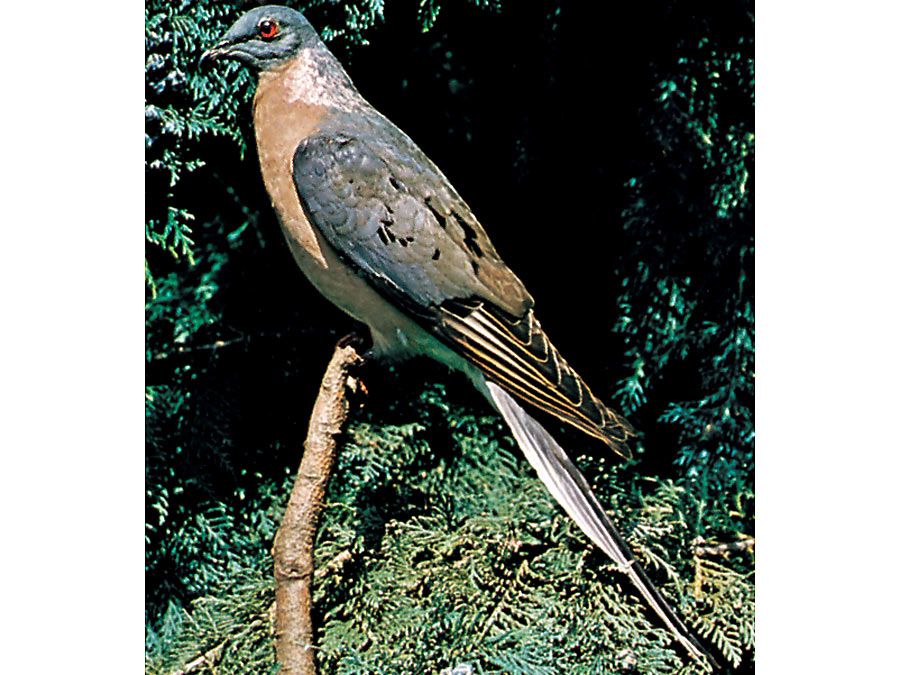
- Passenger Pigeon: Once incredibly numerous in North America, this species became an icon of the conservation movement after being hunted to extinction in the early 20th century.1417
- Dodo and Solitaires: Highly specialized, flightless birds from the Mascarene Islands that vanished in the 17th and 18th centuries due to human activity and introduced predators.417
Sources
- Columbiform — Encyclopædia Britannica
- Columbiform - Evolution and paleontology — Encyclopædia Britannica
- Columbiform - General habits — Encyclopædia Britannica
- Columbiform - General features — Encyclopædia Britannica
- Columbiform - Distinguishing taxonomic features — Encyclopædia Britannica
- Columbiform - Annotated classification — Encyclopædia Britannica
- Columbiform - Behaviour — Encyclopædia Britannica
- Columbiform - Distinguishing characteristics — Encyclopædia Britannica
- Pigeon: Top Questions — Encyclopædia Britannica
- Passeriform - Territoriality and courtship — Encyclopædia Britannica
- Reproductive behaviour - Caring for offspring — Encyclopædia Britannica
- Nest — Encyclopædia Britannica
- Bird - Nesting — Encyclopædia Britannica
- Pigeon — Encyclopædia Britannica
- mourning dove — Merriam-Webster
- Mourning dove — Encyclopædia Britannica
- Dove — Encyclopædia Britannica
Published on · 4 min read