Coppice
A coppice is a dense grove of trees or shrubs that develop from sprouts or suckers rather than from seeds. This growth pattern is typically the result of…
What is Coppice?
A coppice is a dense grove of trees or shrubs that develop from sprouts or suckers rather than from seeds. This growth pattern is typically the result of human woodcutting activity, where plants are periodically cut to ground level to encourage new, uniform stems to emerge.1
As a gardening and woodland management technique, coppicing relies on the ability of certain species to regenerate after severe pruning. These stems are harvested on a rotation for various purposes, including fuel, fencing, basketry, and crop production. Beyond utility, this practice benefits the forest by allowing more sunlight to reach the ground, which supports diverse plant life and creates varied habitat structures for wildlife.1
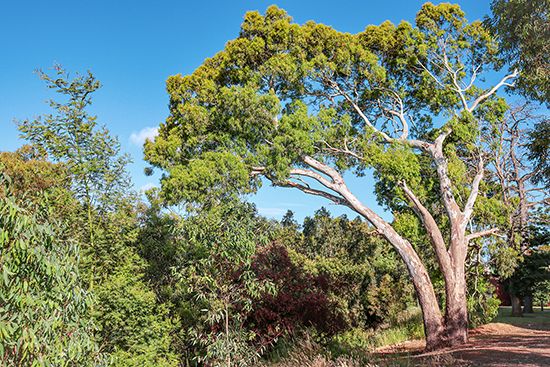
Commonly coppiced species include birch, hornbeam, oak, willow, mulberry, and eucalyptus, each valued for specific products ranging from timber to foliage.1
How does pollarding differ from coppicing?
While both pollarding and coppicing are pruning techniques used to manage plant growth and harvest materials, they differ primarily in the height at which the cutting occurs.
- Coppicing: This technique involves cutting trees or shrubs back to ground level. This encourages the plant to send up multiple new shoots from the base, which are then harvested on a rotation for uses like fuel, fencing, or basketry.2
- Pollarding: This method involves cutting the top branches of a tree back to the trunk or a main framework of branches, typically at a height above the ground. This creates a club-headed stem that produces a dense crown of new branches. Pollarding is often used in urban settings to manage tree size, prevent interference with infrastructure like overhead wires, or to harvest boughs.3
Both practices exploit the natural ability of certain species to regenerate after severe pruning, ensuring a sustainable supply of materials while influencing the plant’s structural development.32
Which types of trees are best suited for coppicing?
Many tree and shrub species are well-suited for coppicing because they possess the natural ability to regenerate vigorously from stumps or roots after being cut back. The choice of species often depends on the intended use of the harvested material.1
Commonly coppiced trees and their primary uses include:
- Birch and Hornbeam: Traditionally harvested on short cycles to produce bundles of brushwood for fuel.1
- Oak: Often coppiced over several decades to yield stout poles for fencing. Historically, red oak was specifically valued for producing curved regrowth suitable for boat keels.1
- Willow: Managed to foster the growth of thin, flexible young stems ideal for basketry and weaving.1
- White Mulberry: Frequently cut back to promote the development of large leaves, which are used to feed silkworms.1
- Eucalyptus: Widely used in the floral industry, where coppicing encourages the growth of the specific foliage used in flower arrangements.1
Additionally, many ornamental plants are coppiced to maintain dense, privacy-providing hedges. This practice is highly productive when combined with intensive management, such as fertilization and disease control, to maximize the growth of new sprouts.14
How does coppicing help increase forest biodiversity?
Coppicing enhances forest biodiversity by creating a dynamic and varied environment that supports a wider range of species than a static, closed-canopy woodland.
The practice contributes to ecological diversity in two primary ways:
- Increased Light Availability: By periodically cutting trees back to ground level, coppicing allows significantly more sunlight to reach the forest floor. This influx of light facilitates the growth of a diverse array of ground-level plants, wildflowers, and shrubs that would otherwise be shaded out in a dense forest.
- Structural Complexity: The rotational nature of coppicing creates a mosaic of different stem sizes and growth stages within the woodland. This structural variety provides diverse habitats for various animals, insects, and birds, as different species rely on specific stages of regrowth for nesting, foraging, and shelter.1
By maintaining this cycle of disturbance and regrowth, coppicing prevents the forest from becoming a uniform environment, thereby fostering a richer and more resilient ecosystem.1
Sources
- coppice — Encyclopædia Britannica
- pollarding — Encyclopædia Britannica
- pollard — Merriam-Webster
- coppice — Merriam-Webster
- Rainforest regeneration in PanamaRegeneration in Panama — Encyclopædia Britannica
- forestry - Natural regeneration — Encyclopædia Britannica
Published on · 3 min read