Heterotroph
A heterotroph is an organism in ecology that cannot produce its own organic substances from inorganic materials. Instead, it must obtain energy and nutrients…
What is heterotroph?
A heterotroph is an organism in ecology that cannot produce its own organic substances from inorganic materials. Instead, it must obtain energy and nutrients by consuming other organisms or organic matter.12
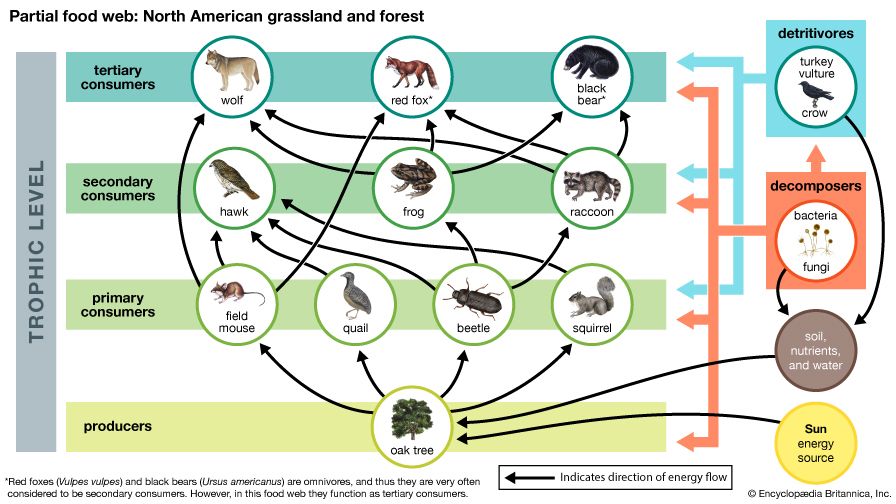
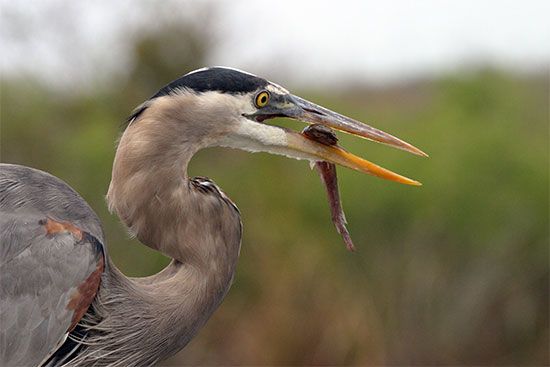
Unlike autotrophs—which produce their own food through processes like photosynthesis—heterotrophs rely on an organic source of carbon derived from other living things. Within an ecosystem, heterotrophs are often referred to as consumers and occupy various trophic levels in a food web, ranging from herbivores and omnivores to carnivores. They depend on producers, either directly or indirectly, to sustain their life processes.12
How do autotrophs produce their own food?
Autotrophs are primary producers that synthesize energy-rich organic compounds from inorganic substances, such as carbon dioxide (CO2CO_2). They achieve this through two primary methods:34
- Photoautotrophs: These organisms, including green plants, algae, and some bacteria, harness sunlight to drive photosynthesis. Plants absorb light to generate ATP and split water molecules into oxygen and hydrogen. The hydrogen is then combined with CO2CO_2 to produce organic molecules like sugars, amino acids, and nucleotides.54
- Chemoautotrophs: These organisms, primarily specific bacteria, obtain energy through the oxidation of inorganic chemicals. They use substances such as ammonia, methane, or hydrogen sulfide combined with oxygen to generate the energy required to fix carbon dioxide into organic matter.34
By converting inorganic carbon into energy-rich molecules, autotrophs provide the essential foundation for food chains and support heterotrophic life-forms.354
What is the difference between a food chain and a food web?
A food chain and a food web both describe the transfer of matter and energy within an ecosystem, but they differ in complexity and scope:
- Food Chain: This is a linear sequence that tracks the transfer of energy from one organism to another. It typically follows a single path of consumption, such as a plant being eaten by a herbivore, which is then consumed by a carnivore. Because energy is lost as heat at each trophic level, these chains are usually limited to four or five steps.67
- Food Web: This represents the totality of interacting food chains within a community. It is a complex network that illustrates how multiple food chains overlap and intertwine. Unlike a simple chain, a food web accounts for the fact that most organisms consume—or are consumed by—more than one species, providing a more accurate picture of the feeding relationships in an ecosystem.7
What role do decomposers play in an ecosystem?
Decomposers are essential components of an ecosystem that facilitate the breakdown of dead organic material, such as plant and animal tissues, into simpler organic and inorganic compounds.910
Their primary roles include:
- Nutrient Cycling: By breaking down complex substances, decomposers—such as fungi and bacteria—release vital chemical elements like nitrogen, carbon, calcium, and phosphorus back into the environment. These nutrients are then made available for producers to use for growth, effectively rejuvenating the environment.910
- Waste Removal: Decomposers and detritivores remove dead organic matter, or detritus, from the ecosystem. This process prevents the accumulation of waste and ensures that energy and matter continue to circulate through the food web.102
- Soil Health: In terrestrial environments, soil organisms contribute to soil fertility, structure, and aeration. They transform complex plant matter into humus, a nutrient-rich organic complex that supports plant life.9
Through these processes, decomposers act as a critical bridge in the cycle of life, death, and decay.911
Sources
- heterotroph — Encyclopædia Britannica
- food web — Encyclopædia Britannica
- autotroph — Encyclopædia Britannica
- plant - Photosynthesis — Encyclopædia Britannica
- life - Energy , carbon, and electrons — Encyclopædia Britannica
- food chain — Encyclopædia Britannica
- food chain — Merriam-Webster
- food web — Merriam-Webster
- soil organism — Encyclopædia Britannica
- saprotroph — Encyclopædia Britannica
- detritus — Encyclopædia Britannica
Published on · 3 min read