Cordillera Domeyko
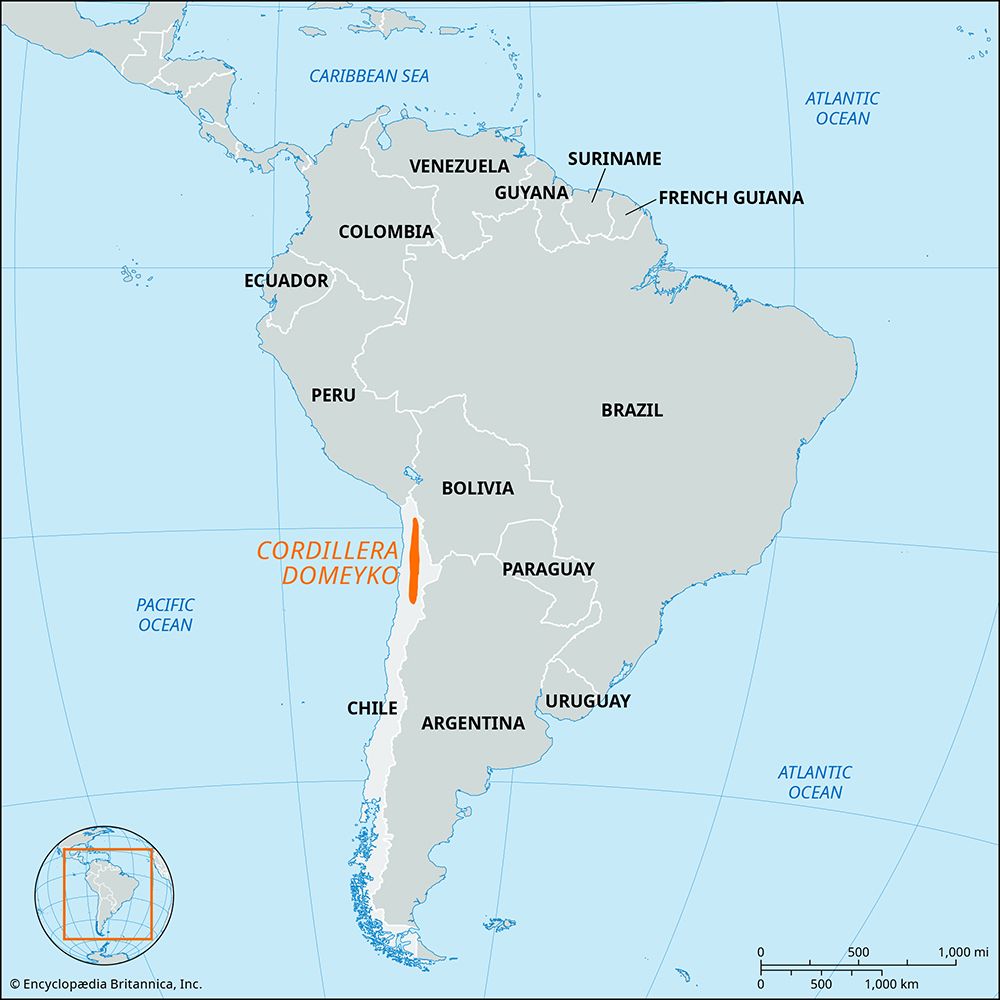
The Cordillera Domeyko is a mountain range within the Andes Mountains located in northern Chile. Stretching approximately 230 miles (370 km), the range…
What is Cordillera Domeyko?
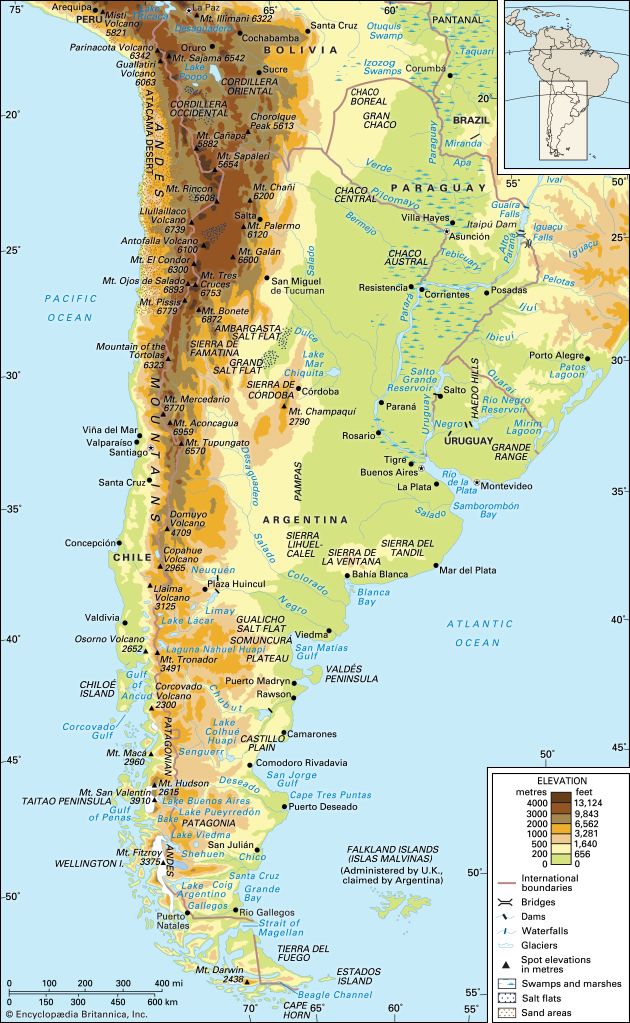
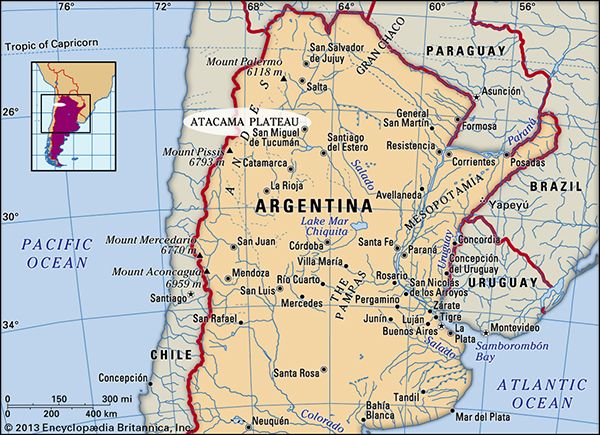
The Cordillera Domeyko is a mountain range within the Andes Mountains located in northern Chile. Stretching approximately 230 miles (370 km), the range reaches elevations exceeding 16,000 feet (4,900 meters) and is situated between the Atacama Desert to the west and the Atacama Plateau to the east.1
The range is characterized by rugged terrain, including the El Bordo Escarpment, and is notable for experiencing the lowest humidity levels in the world. It is named after Ignacy Domeyko, a prominent geologist, mineralogist, and educator who established the University of Santiago.1
Who was Ignacy Domeyko?
Ignacy Domeyko (1802–1889) was a distinguished Polish-Chilean geologist, mineralogist, and educator. After moving to Chile, he made significant contributions to the scientific understanding of the region’s natural resources and topography.
Beyond his geological research, he is recognized for his pivotal role in the development of Chilean higher education, most notably as a founder of the University of Santiago. His legacy is preserved in the geography of the Andes Mountains, where the Cordillera Domeyko mountain range is named in his honor.1
What makes the Atacama Desert so dry?
The extreme aridity of the Atacama Desert is primarily the result of three major atmospheric and geographic factors:
- High-Pressure Subsidence: The region is dominated by the South Pacific high-pressure cell. This semipermanent anticyclone creates stable, subsiding air conditions that prevent the formation of rain-bearing clouds, leading to minimal precipitation across the area.234
- Cold Ocean Currents: The Peru (Humboldt) Current flows northward along the coast, bringing cold water from the ocean depths to the surface. This cold water cools the air at sea level, creating a thermal inversion where stable, warmer air sits above the cooler surface air. While this process often produces fog and stratus clouds, it inhibits the vertical atmospheric movement necessary for rainfall.34
- Rain Shadow Effect: The Andes Mountains act as a significant orographic barrier. By forcing air masses to rise and release their moisture on the windward side, the mountains create a rain shadow that contributes to the dry conditions in the interior regions of the desert.4
How do mountain ranges like the Andes form?
Mountain ranges like the Andes Mountains are primarily formed through plate tectonics, specifically at convergent margins where tectonic plates collide.56
The formation of the Andes is a classic example of mountain building via subduction. This process occurs when an oceanic plate, such as the Nazca Plate, is forced beneath a continental plate, like the South American Plate. This interaction triggers several key mechanisms:57
- Magmatism: Subduction causes significant melting in the mantle and crust, leading to volcanic activity and the intrusion of magma, which builds up the mountain structure.57
- Crustal Uplift: The convergence squeezes and thermally weakens the continental crust, causing it to rise. This uplift often occurs in discrete, intense episodes rather than a constant rate.78
- Sedimentary Deformation: Over millions of years, sediments deposited in troughs or basins are compressed, heated, and metamorphosed into resistant rock, which is then pushed upward to form the mountain peaks.58
Beyond subduction, mountain building can also involve the accretion of crustal fragments known as terranes or the collision of two large continents.6
Sources
- Cordillera Domeyko — Encyclopædia Britannica
- Chile - The northern desert — Encyclopædia Britannica
- Atacama Desert — Encyclopædia Britannica
- South America - Factors influencing climate — Encyclopædia Britannica
- Andes Mountains - Geology — Encyclopædia Britannica
- South America - The Southern Andes — Encyclopædia Britannica
- plate tectonics - Mountain building — Encyclopædia Britannica
- plate tectonics - Mountains by subduction — Encyclopædia Britannica
- Andean Geosyncline — Encyclopædia Britannica
Published on · 2 min read