Coeur d’Alene Mountains
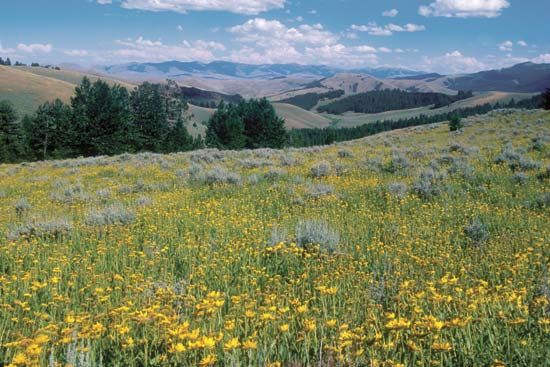
The Coeur d’Alene Mountains are a segment of the northern Rocky Mountains located in northern Idaho, United States. These mountains extend in a roughly…
What is Coeur d’Alene Mountains?
The Coeur d’Alene Mountains are a segment of the northern Rocky Mountains located in northern Idaho, United States. These mountains extend in a roughly triangular shape for approximately 60 miles (100 km) along the Montana border, stretching from Pend Oreille Lake to the St. Joe River1.1
The range features high peaks reaching 6,000 to 7,000 feet (1,800 to 2,100 metres) in the east, while the western portion consists primarily of a high plateau carved by narrow canyons and river valleys. The region is economically significant for its production of silver, lead, and zinc, and the Coeur d’Alene National Forest covers the majority of the range.1
What are the main characteristics of the Northern Rocky Mountains?
The Northern Rocky Mountains, which include ranges such as the Lewis and Bitterroot in western Montana and northeastern Idaho, are defined by several distinct geological and physical characteristics:
- Geological Formation: These ranges were created during the Laramide Orogeny (65 to 35 million years ago), when thick sheets of Paleozoic limestones were thrust eastward over Mesozoic rocks. Some of these thrust sheets moved as far as 20 to 30 miles from their original positions.1
- Physiography: The western margin of the region is marked by the Rocky Mountain Trench, a deep, glaciated graben valley. The landscape is characterized by high elevations, significant local relief, and spectacular scenery shaped by past glaciation.41
- Climate: Unlike the southern portions of the Rockies, which often experience dry conditions and rain-shadow effects, the Northern Rockies receive precipitation more evenly throughout the year due to Pacific cyclonic storms.5
- Shared Attributes: Like other subdivisions of the Rocky Mountains, the Northern Rockies feature shallow soils, considerable mineral wealth, and a short growing season.4
How did the mining industry shape the history of northern Idaho?
The mining industry was a primary catalyst for the settlement and economic development of northern Idaho. Following the discovery of gold in 1860, the region experienced a significant influx of settlers, which helped transition the area from a frontier territory to a state. By the 1880s, the focus shifted toward the extraction of lead and silver, particularly around Coeur d’Alene, which spurred the arrival of railroads and the growth of new urban centers.238
However, this rapid industrialization also fostered intense social and political conflict. The 1890s were marked by the Coeur d’Alene riots, a series of violent clashes between unionized miners and mine owners who employed nonunion labor and armed guards. These disputes necessitated the intervention of state and federal troops on multiple occasions to restore order. The era’s labor struggles became a defining feature of the region’s history, culminating in high-profile legal battles involving prominent figures such as William D. (“Big Bill”) Haywood and attorney Clarence Darrow.93
Today, while mining remains an important component of the northern economy alongside lumbering and agriculture, the industry’s historical legacy continues to shape the region’s identity.10
What types of wildlife are found in the Coeur d’Alene National Forest?
The Coeur d’Alene National Forest, located within the Coeur d’Alene Mountains of northern Idaho, supports a diverse array of wildlife typical of the Northern Rocky Mountains.
The region’s forested terrain and watercourses provide habitats for various species:
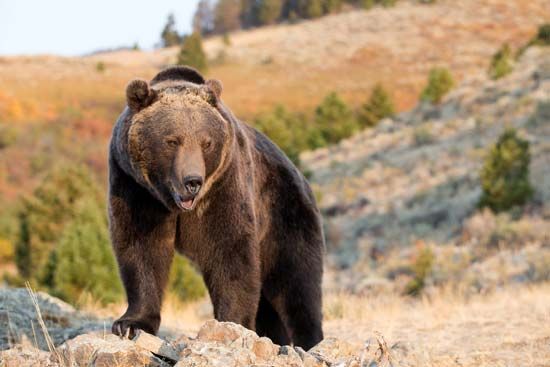
- Mammals: Large mammals found in the broader Rocky Mountain ecosystem include black bears, grizzly bears, mountain lions, and wolverines. The area also supports populations of elk, mule deer, white-tailed deer, and moose, as well as smaller mammals like chipmunks and ground squirrels. Gray wolves are also present in the state.132
- Birds: The forest is home to various raptors, including bald eagles, golden eagles, and ospreys. Woodland birds such as grouse and various jay species are common.2
- Fish: The region’s rivers and streams are known for cold-water fish, including trout varieties.132
Sources
- Coeur d’Alene Mountains — Encyclopædia Britannica
- Coeur d’Alene — Encyclopædia Britannica
- Coeur d’Alene riots — Encyclopædia Britannica
- Rocky Mountains — Encyclopædia Britannica
- Rocky Mountains - Physiography — Encyclopædia Britannica
- Rocky Mountains - Climate — Encyclopædia Britannica
- Colorado - Climate of Colorado — Encyclopædia Britannica
- Idaho - Resources and power — Encyclopædia Britannica
- Idaho - Settlement patterns — Encyclopædia Britannica
- Idaho - Early history and settlement — Encyclopædia Britannica
- Silver City — Encyclopædia Britannica
- Idaho - Territorial period — Encyclopædia Britannica
- Idaho - Plant and animal life — Encyclopædia Britannica
- Rocky Mountains - Animal life — Encyclopædia Britannica
Published on · 3 min read